
Why Protein-Rich Foods Matter for Balanced Daily Meals
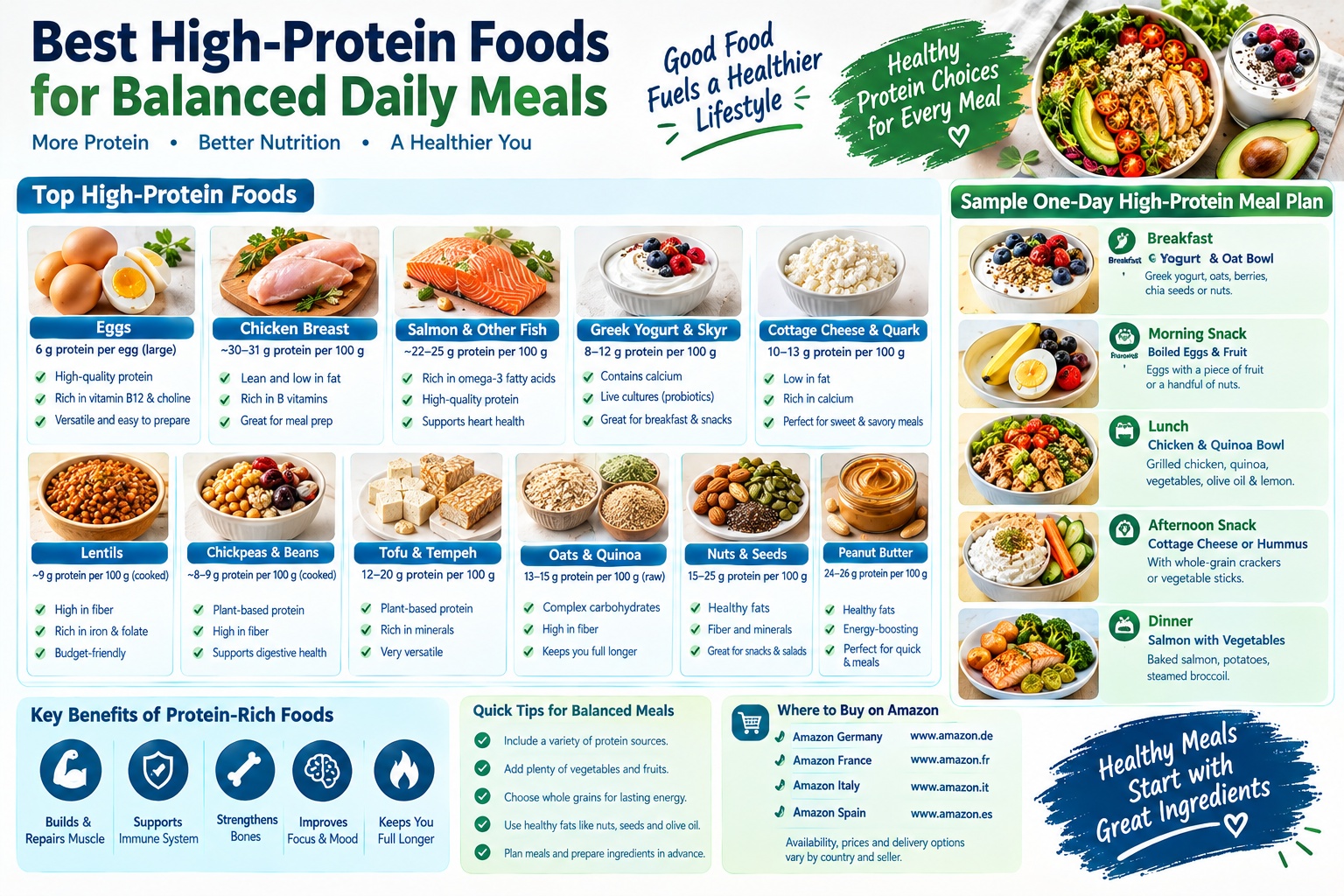
Choosing the best high-protein foods for balanced daily meals is an important step toward developing healthier eating habits. Protein is an essential nutrient that helps the body maintain and repair tissues, support muscle function, and produce enzymes and hormones. Including suitable protein sources in your daily diet can also help you feel satisfied after meals.
The good news is that you do not need expensive supplements or complicated recipes to enjoy protein-rich meals. Everyday foods such as eggs, chicken, fish, Greek yogurt, lentils, chickpeas, beans, tofu, nuts, and seeds can provide valuable protein while contributing other essential nutrients.
The best approach is to combine different protein sources with vegetables, fruits, whole grains, and healthy fats. This creates balanced meals that provide a wider range of nutrients rather than focusing on protein alone. The Centers for Disease Control and Prevention recommends including varied protein foods as part of a healthy eating pattern.
In this guide, you will discover the best protein-rich foods, their nutritional characteristics, their main benefits, practical meal ideas, and useful products available through Amazon Germany and selected European Amazon marketplaces.
1. Eggs: An Affordable and Versatile Protein Source
Eggs are among the most practical foods for preparing balanced daily meals. They contain high-quality protein and provide nutrients such as vitamin B12, selenium, and choline.
One large egg typically provides around 6 grams of protein, although the exact amount depends on its size. Eggs are also easy to prepare and can be incorporated into breakfast, lunch, dinner, or snacks.
Key Features and Benefits of Eggs
One of the main advantages of eggs is their versatility. You can boil, poach, scramble, or bake them, making them suitable for many different meal styles.
Eggs can help make breakfast more satisfying when paired with whole-grain bread and vegetables. For lunch, a boiled egg can be added to a salad containing leafy greens, tomatoes, cucumbers, and chickpeas.
They are also convenient for meal preparation because hard-boiled eggs can be prepared ahead of time and refrigerated appropriately.
How to Include Eggs in Your Daily Diet
For breakfast, try scrambled eggs with spinach and whole-grain toast. For lunch, prepare an egg and vegetable salad. For dinner, serve an omelet with mushrooms, peppers, and a side of whole grains.
To keep meals balanced, combine eggs with vegetables and fiber-rich foods rather than relying on eggs alone.
Amazon Germany: Egg storage containers and egg cookers
Amazon France: Egg cookers and kitchen accessories
2. Chicken Breast: A Lean Protein Choice for Everyday Meals
Chicken breast is a popular protein source because it provides substantial protein and is relatively low in fat when prepared without excessive oil or rich sauces.
A 100-gram portion of cooked chicken breast commonly provides approximately 30–31 grams of protein. Actual values vary according to the cut, cooking method, and preparation.
Key Features and Benefits of Chicken Breast
Chicken breast is particularly useful for people who want to prepare filling meals with a high protein content. It contains essential amino acids and provides nutrients such as vitamin B6 and niacin.
Its mild flavor makes it easy to combine with vegetables, whole grains, potatoes, beans, and a variety of herbs and spices.
Chicken is also suitable for batch cooking. You can prepare several portions in advance and use them in salads, wraps, rice bowls, and homemade sandwiches throughout the week.
Healthy Ways to Prepare Chicken
Grilling, baking, roasting, and cooking chicken in a pan with a moderate amount of oil are practical options.
For a balanced lunch, combine grilled chicken breast with brown rice and roasted vegetables. For dinner, prepare a chicken and vegetable tray bake with potatoes, carrots, and broccoli.
Choose a variety of seasonings, such as garlic, paprika, lemon, black pepper, and herbs, to add flavor without relying on excessive salt.
Amazon Germany: Food storage containers for chicken meal preparation
Amazon Italy: Food storage containers for meal preparation
3. Salmon and Other Fish: Protein with Beneficial Nutrients
Fish is an excellent addition to a balanced diet because it provides protein and a range of other nutrients. Salmon is particularly valued for its omega-3 fatty acids, while other options, including cod, sardines, and trout, offer different nutritional advantages.
A 100-gram serving of cooked salmon often contains around 22–25 grams of protein, depending on the species and preparation.
Key Features and Benefits of Salmon
Salmon provides complete protein, meaning it contains all nine essential amino acids. It is also a source of vitamin B12 and, depending on the variety, vitamin D and omega-3 fatty acids.
Omega-3 fats are important components of a healthy diet. Including oily fish regularly can help you obtain these fats without relying entirely on supplements.
Fish also offers variety for people who want alternatives to chicken or red meat.
How to Include Fish in Balanced Meals
For lunch, serve baked salmon with quinoa and steamed broccoli. For dinner, prepare grilled fish with roasted potatoes and a mixed vegetable salad.
Canned fish can also be convenient for sandwiches, salads, and quick meals. When choosing canned products, compare the sodium content and select options that suit your dietary needs.
For variety, alternate salmon with sardines, trout, cod, and other fish.
Amazon Germany: Canned tuna and salmon products
Amazon Spain: Canned fish products
4. Greek Yogurt and Skyr: Convenient Protein for Breakfast and Snacks
Greek yogurt and skyr are useful dairy options for people who want to increase their protein intake through everyday foods.
Their protein content varies by brand and product type. Many plain Greek yogurts provide approximately 8–10 grams of protein per 100 grams, while some skyr products provide around 10–12 grams.
Key Features and Benefits of Greek Yogurt
Greek yogurt provides protein and calcium, which supports normal bone health. Some varieties also contain live bacterial cultures.
Plain Greek yogurt is especially versatile because it can be used in both sweet and savory meals. You can combine it with berries, oats, nuts, or seeds for breakfast, or use it as the base for a sauce with cucumber, garlic, and herbs.
Skyr is another useful choice for breakfast and snacks because many products offer a relatively high protein content.
Healthy Ways to Enjoy Greek Yogurt
Prepare a breakfast bowl with plain Greek yogurt, oats, berries, and a small portion of nuts. For a savory option, mix yogurt with lemon juice, garlic, and herbs to create a dressing for chicken or vegetable bowls.
When buying flavored yogurt, check the nutrition label for added sugar. Plain varieties allow you to control sweetness by adding fresh fruit or a small amount of honey if desired.
Dairy-free alternatives are available, but their protein content can differ considerably. Soy-based alternatives often provide more protein than products made mainly from almonds, oats, or coconut.
Amazon Germany: Greek yogurt bowls and breakfast accessories
Amazon France: Breakfast bowls and meal preparation accessories
5. Cottage Cheese and Quark: Protein-Rich Dairy Staples
Cottage cheese and quark are popular dairy foods that can help make everyday meals more protein-rich.
Depending on the product, cottage cheese commonly provides around 10–13 grams of protein per 100 grams. Low-fat quark can provide approximately 11–13 grams per 100 grams, although product labels should always be checked.
Key Features and Benefits
These foods provide protein and calcium, and many varieties are relatively low in fat. They are particularly useful when you want a simple snack or an ingredient that can be combined with other foods.
Quark is widely available in Germany and can be an economical option for preparing breakfast bowls, spreads, and desserts.
Cottage cheese has a mild, slightly creamy texture that works well in both sweet and savory recipes.
How to Use Cottage Cheese and Quark
For breakfast, mix quark with berries, oats, and cinnamon. For lunch, spread cottage cheese on whole-grain toast and add tomatoes, cucumber, and black pepper.
You can also add cottage cheese to omelets, baked dishes, or vegetable-filled wraps.
For a simple snack, combine cottage cheese with sliced fruit or serve it with whole-grain crackers and fresh vegetables.
Amazon Germany: Food preparation bowls and containers
6. Lentils: An Excellent Plant-Based Protein Source
Lentils are among the best plant-based foods for balanced daily meals. They provide protein, dietary fiber, complex carbohydrates, and nutrients such as folate and iron.
Cooked lentils typically provide approximately 9 grams of protein per 100 grams, although the exact amount varies by variety and preparation.
Key Features and Benefits of Lentils
Lentils offer an affordable way to add plant-based protein to your diet. Their fiber content supports digestive health and helps make meals more filling.
They are available in different varieties, including red, green, brown, and black lentils. Red lentils often cook relatively quickly and work well in soups and curries, while green and brown varieties can retain more of their shape in salads and side dishes.
Dried lentils are convenient pantry staples because they can be stored for extended periods when kept in a cool, dry place.
Healthy Lentil Meal Ideas
Prepare lentil soup with carrots, onions, tomatoes, and spices. For lunch, make a lentil salad with cucumber, parsley, tomatoes, and lemon dressing.
You can also combine lentils with brown rice or whole-grain bread to create a satisfying meal.
For busy days, cook a large batch of lentils and refrigerate or freeze suitable portions for later meals.
Amazon Germany: Dried lentils and organic lentils
Amazon Italy: Dried lentils and legumes
7. Chickpeas and Beans: Protein, Fiber, and Everyday Versatility
Chickpeas, kidney beans, black beans, and white beans are useful protein-rich ingredients for people who want to prepare balanced meals on a budget.
Cooked chickpeas generally provide around 8–9 grams of protein per 100 grams. Many cooked beans offer similar amounts, although the precise values depend on the variety.
Key Features and Benefits of Chickpeas and Beans
Legumes provide plant-based protein, fiber, complex carbohydrates, and minerals such as iron and magnesium.
Their versatility makes them suitable for soups, salads, curries, wraps, grain bowls, and homemade spreads.
Canned chickpeas and beans can save time because they are already cooked. If you choose canned products, compare sodium levels and rinse the contents when appropriate to remove some of the surface salt.
Dried legumes may be more economical, although they usually require more preparation and cooking time.
Healthy Meal Ideas
Prepare a chickpea salad with tomatoes, cucumber, parsley, olive oil, and lemon juice. For dinner, cook a bean and vegetable chili and serve it with brown rice.
You can also mash chickpeas with lemon juice, garlic, and tahini to make homemade hummus.
For a quick lunch, combine canned beans with whole grains, vegetables, and a simple dressing.
Amazon Germany: Chickpeas, beans, and dried legumes
Amazon France: Chickpeas and dried legumes
8. Tofu and Tempeh: Practical Protein Options for Plant-Based Meals
Tofu and tempeh are soy-based foods that can help vegetarians, vegans, and anyone seeking more variety include protein in daily meals.
Firm tofu often provides around 12–17 grams of protein per 100 grams, while tempeh commonly provides approximately 18–20 grams. Actual values vary by product and preparation.
Key Features and Benefits of Tofu
Tofu has a mild flavor and absorbs seasonings well. It can be grilled, baked, pan-fried, scrambled, or added to soups and stir-fries.
Tofu also provides minerals, and products made with calcium salts may be a useful source of calcium. Check the product label because nutritional content differs between brands.
Tempeh is made from fermented soybeans and has a firmer texture and stronger flavor. It can be sliced, marinated, and cooked in a pan or oven.
Soy foods provide a useful alternative to animal protein and can add variety to vegetarian and vegan eating patterns.
How to Prepare Tofu and Tempeh
For lunch, combine baked tofu with brown rice, broccoli, and a ginger-soy dressing.
For dinner, prepare a tofu and vegetable stir-fry with peppers, mushrooms, carrots, and whole-grain noodles.
Tempeh can be marinated with garlic, lemon, paprika, and a small amount of soy sauce before cooking.
Amazon Germany: Tofu press and tofu cooking accessories
Amazon Spain: Tofu presses and kitchen accessories
9. Oats and Quinoa: Protein Sources That Also Provide Carbohydrates
Oats and quinoa are not usually as protein-dense as chicken, fish, or many soy products, but they can contribute to daily protein intake while providing carbohydrates and other nutrients.
Oats generally provide around 13 grams of protein per 100 grams in their dry form. Dry quinoa often contains approximately 13–15 grams per 100 grams, although values vary by variety and brand. Their protein content per cooked serving is lower because they absorb water during preparation.
Key Features and Benefits of Oats
Oats provide carbohydrates, some protein, and soluble fiber, including beta-glucan. They are useful for preparing breakfasts that can be combined with dairy, soy products, nuts, seeds, and fruit.
Quinoa provides protein, carbohydrates, and minerals. It can be used as an alternative to rice or couscous in many meals.
Both foods are easy to incorporate into a balanced diet and can help make meals more varied.
Healthy Ways to Use Oats and Quinoa
Prepare overnight oats with milk or fortified soy milk, Greek yogurt, berries, and chia seeds.
For lunch or dinner, serve quinoa with chickpeas, vegetables, and grilled chicken or tofu.
You can also add oats to homemade pancakes, smoothies, or baked recipes.
Amazon Germany: Rolled oats and whole-grain oats
Amazon Germany: Quinoa grains
10. Nuts and Seeds: Small Ingredients with Useful Nutrients
Almonds, peanuts, pumpkin seeds, chia seeds, and hemp seeds can contribute protein, healthy fats, fiber, and minerals to everyday meals.
Pumpkin seeds and peanuts are particularly notable for their protein content. However, nuts and seeds are also energy-dense, so portions should fit your overall dietary needs.
Key Features and Benefits
Nuts and seeds are convenient because they require little preparation and can be stored for use in breakfasts, snacks, salads, and homemade recipes.
They provide unsaturated fats and minerals such as magnesium. Chia seeds also provide fiber and plant-based omega-3 fatty acids.
Although nuts and seeds contain protein, they are generally best used as part of a varied meal rather than as the only protein source.
How to Include Nuts and Seeds
Add a small handful of almonds or walnuts to a breakfast bowl. Sprinkle pumpkin seeds over a salad or roasted vegetables.
Mix chia seeds into overnight oats or yogurt, allowing them to absorb liquid before eating.
Peanut butter can be spread on whole-grain toast or added to oatmeal. Choose products with little or no added sugar and salt when possible.
Amazon Germany: Mixed nuts and almonds
Amazon Germany: Pumpkin seeds and chia seeds
Amazon France: Nuts and seeds
11. Peanut Butter: A Convenient Addition to Protein-Rich Meals
Peanut butter is a convenient food that provides protein, unsaturated fats, and energy. It commonly contains around 24–26 grams of protein per 100 grams, although the exact amount varies by brand.
Because peanut butter is energy-dense, a practical serving is often around one or two tablespoons, depending on your needs.
Key Features and Benefits
Peanut butter is easy to store and can be used in breakfast dishes, snacks, sauces, and homemade energy bites.
It pairs well with oats, whole-grain bread, bananas, and yogurt. It can also be used in savory sauces for tofu, vegetables, and noodle dishes.
For a simpler ingredient list, choose peanut butter made mainly from peanuts, with little or no added sugar or salt.
Healthy Meal Ideas
Spread peanut butter on whole-grain toast and serve it with fruit.
Add a spoonful to oatmeal with sliced banana and cinnamon, or mix a small amount into a homemade peanut sauce for a tofu and vegetable bowl.
Remember that peanut butter contains useful nutrients but should complement other protein sources rather than replace a varied diet.
Amazon Germany: Natural peanut butter
Amazon Italy: Natural peanut butter
12. How Much Protein Do You Need Each Day?
Protein requirements depend on age, body size, activity level, health status, and personal goals. There is no single target that is appropriate for everyone.
For many healthy adults, the European Food Safety Authority uses a population reference intake of approximately 0.83 grams of protein per kilogram of body weight per day. Individual requirements may differ, especially during certain life stages or in particular health circumstances.
For example, a healthy adult weighing 70 kilograms would calculate this reference amount as approximately 58 grams of protein per day. This is a general reference, not a personalized prescription.
People who perform regular strength training, older adults, pregnant people, and individuals recovering from illness may have different needs. Anyone with kidney disease or another condition that affects protein metabolism should seek individualized guidance from a qualified healthcare professional.
The aim is to meet your needs through a balanced eating pattern rather than automatically consuming as much protein as possible.
13. How to Build a Balanced High-Protein Plate
Including a protein-rich food in a meal is useful, but balance matters too. A practical approach is to combine protein with vegetables or fruit, fiber-rich carbohydrates, and a suitable source of healthy fat.
Include a Protein Source
Choose foods such as eggs, chicken, fish, Greek yogurt, lentils, beans, tofu, or tempeh.
Vary your choices throughout the week so that your diet includes both animal and plant-based sources, if these fit your preferences.
Add Vegetables or Fruit
Vegetables and fruit provide vitamins, minerals, fiber, and other beneficial compounds.
Include colorful vegetables in lunch and dinner, and add fruit to breakfast or snacks.
Choose Whole-Grain Carbohydrates
Whole-grain bread, oats, brown rice, and other whole grains provide carbohydrates for energy and can contribute fiber and additional protein.
Potatoes and other starchy vegetables can also form part of balanced meals.
Include Healthy Fats
Olive oil, nuts, seeds, and avocado can contribute unsaturated fats to your diet.
Use portions that fit your energy needs, and remember that fats are an important part of a varied eating pattern.
Keep Portions Flexible
Portion sizes should reflect your appetite, activity, body size, and overall nutritional requirements.
You do not need to calculate every gram of protein to eat well. For many people, a consistent pattern of balanced meals and varied ingredients is a practical starting point.
14. A Simple One-Day High-Protein Meal Plan
The following example shows how different protein sources can be included throughout a typical day. Portion sizes should be adjusted to individual needs.
Breakfast: Greek Yogurt and Oat Bowl
Combine plain Greek yogurt with oats, berries, and a small serving of pumpkin seeds or almonds.
This breakfast provides protein, carbohydrates, fiber, and fats, while fruit adds variety and flavor.
Morning Snack: Boiled Eggs and Fruit
Enjoy a boiled egg with a piece of fruit if you need a snack between meals.
Alternatively, choose yogurt, a small handful of nuts, or another food that fits your appetite and preferences.
Lunch: Chicken and Quinoa Bowl
Combine cooked chicken breast with quinoa, mixed vegetables, and a dressing made with olive oil and lemon juice.
This meal provides protein alongside carbohydrates, fiber, and a range of micronutrients.
For a plant-based alternative, replace the chicken with tofu, chickpeas, or lentils.
Afternoon Snack: Cottage Cheese or Hummus
Choose cottage cheese with whole-grain crackers or hummus with carrot and cucumber sticks.
These options provide different combinations of protein, carbohydrates, and other nutrients.
Dinner: Salmon with Vegetables and Potatoes
Serve baked salmon with potatoes and steamed broccoli or another vegetable.
For a plant-based dinner, use tofu or beans instead of salmon.
This meal combines protein with carbohydrates, vegetables, and fats, creating a varied and satisfying dinner.
15. Best High-Protein Foods for Budget-Friendly Meal Preparation
Eating protein-rich meals does not have to be expensive. Several affordable ingredients can be used in multiple recipes throughout the week.
Choose Lentils and Dried Beans
Dried lentils and beans are often economical, especially when purchased in larger packages. They can be used in soups, curries, salads, and stews.
Cook a larger quantity when convenient and freeze portions for later use.
Buy Eggs and Plain Dairy Products
Eggs, plain yogurt, quark, and cottage cheese can be practical sources of protein, depending on local prices.
Compare the protein content, serving size, and price per kilogram rather than choosing a product solely because it is advertised as high-protein.
Use Canned Fish Carefully
Canned tuna, sardines, and salmon can be convenient pantry ingredients.
Compare prices, sodium content, and the type of oil or liquid used in the product. You can add canned fish to salads, sandwiches, pasta, and grain bowls.
Use Frozen Foods
Frozen fish, vegetables, and edamame can reduce preparation time and help limit food waste.
Frozen products can be a practical alternative to fresh ingredients, particularly when they are stored and prepared according to the package instructions.
Plan Meals Around Shared Ingredients
Choose recipes that use some of the same ingredients. For example, cooked chickpeas can be used in a salad one day and a curry the next.
Planning meals in this way can simplify shopping, make better use of ingredients, and reduce the amount of food discarded.
16. Tips for Buying Protein-Rich Foods on Amazon Germany and in the European Union
Amazon Germany and other European Amazon marketplaces offer a range of pantry ingredients, kitchen accessories, food storage containers, and meal preparation tools. Availability depends on the product, seller, and delivery destination.
Before purchasing food products online, review the ingredient list, nutritional information, allergens, package size, expiry information where available, and seller details.
Compare Protein Content and Serving Size
A product with a high protein figure per 100 grams may still provide a modest amount in the portion you normally eat.
Compare products using the same serving size and check the full nutrition label.
Check Added Salt and Sugar
Some packaged foods contain considerable amounts of added salt or sugar. Compare similar products and choose options that fit your dietary preferences.
For canned beans and legumes, low-sodium options may be useful. Rinsing canned legumes can also remove some surface sodium.
Check the Price per Kilogram
A large package is not always the best value if you cannot use it before it expires.
Compare the price per kilogram or per serving, and consider storage requirements and shipping costs.
Review Regional Delivery Options
The following marketplaces can help you find products available in different European countries:
Product availability, prices, and delivery options vary between marketplaces. Check whether the seller ships to your location before completing a purchase.
17. Common Mistakes to Avoid When Eating More Protein
Focusing on Protein Alone
Protein is important, but a healthy diet also needs fiber, vitamins, minerals, carbohydrates, and fats.
Build meals around a variety of foods instead of choosing products based only on their protein content.
Ignoring Plant-Based Protein
Chicken, fish, eggs, and dairy can provide useful protein, but legumes, tofu, tempeh, nuts, and seeds also have a place in a balanced diet.
Including plant-based foods adds variety and can increase fiber intake.
Depending Too Much on Processed Meat
Processed meats may provide protein, but frequent consumption is not the best foundation for a healthy eating pattern.
Choose a variety of less processed protein sources, including beans, lentils, fish, eggs, poultry, and suitable dairy or soy products.
Buying Unnecessary Protein Supplements
Many people can meet their protein needs through ordinary foods. Protein powders and bars may be convenient in specific situations, but they are not essential for everyone.
Before buying supplements, consider whether your normal meals already provide sufficient protein.
Forgetting Food Safety
Store and prepare meat, fish, eggs, dairy, and leftovers safely. Follow package instructions, refrigerate perishable foods promptly, and cook foods thoroughly where required.
Good food safety practices help make meal preparation both convenient and safe.
Frequently Asked Questions About High-Protein Foods
What Are the Best High-Protein Foods for Everyday Meals?
Eggs, chicken breast, fish, Greek yogurt, quark, cottage cheese, lentils, chickpeas, beans, tofu, and tempeh are all practical choices. The best options depend on your preferences, budget, dietary requirements, and availability.
Which Plant-Based Foods Contain Protein?
Lentils, chickpeas, beans, tofu, tempeh, edamame, peanuts, nuts, seeds, oats, and quinoa can all contribute plant-based protein.
Combining a variety of plant foods throughout the day can help provide the essential amino acids your body needs.
Are High-Protein Foods Good for Weight Management?
Protein can help meals feel more satisfying, and protein-rich foods can fit into a weight-management plan. However, results depend on overall food intake, physical activity, sleep, and individual circumstances.
No single food guarantees weight loss.
Can I Eat Protein at Every Meal?
Including a source of protein in breakfast, lunch, and dinner can be a practical way to distribute protein intake throughout the day.
The amount you need depends on your individual requirements. You do not need to force yourself to eat when you are not hungry or follow a rigid protein schedule.
Are Plant-Based Proteins as Useful as Animal Proteins?
Many plant-based foods provide valuable protein and other nutrients. Their protein content and amino acid profiles vary, so eating a variety of sources is helpful.
Soy foods, such as tofu and tempeh, are particularly versatile protein options.
What Are the Best Affordable Protein Foods in Germany?
Eggs, lentils, dried beans, chickpeas, oats, plain quark, and selected canned fish products can be economical choices.
Compare prices and nutritional labels at local supermarkets and online retailers to find the best value for your needs.
Conclusion: Choose the Best High-Protein Foods for Balanced Daily Meals
The best high-protein foods for balanced daily meals include eggs, chicken breast, salmon, Greek yogurt, cottage cheese, quark, lentils, chickpeas, beans, tofu, tempeh, oats, quinoa, nuts, and seeds. Each offers different nutritional characteristics, preparation options, and benefits.
Animal-based foods can provide concentrated sources of protein, while plant-based foods offer additional variety and, in the case of legumes, valuable dietary fiber. Combining different protein sources with vegetables, fruits, whole grains, and healthy fats helps create meals that are more balanced and satisfying.
You can simplify meal preparation by planning a few recipes each week, preparing ingredients in advance, and keeping convenient staples such as oats, lentils, beans, and canned fish in your kitchen. Amazon Germany and other European marketplaces can also help you find pantry ingredients and practical meal preparation accessories, although prices and delivery availability vary.
Most importantly, focus on variety, suitable portions, and consistency rather than trying to maximize protein intake at every meal. A balanced eating pattern built around nutritious foods can help you meet your nutritional needs and make healthy daily meals easier to maintain.


