
to the Mediterranean Diet for Beginners
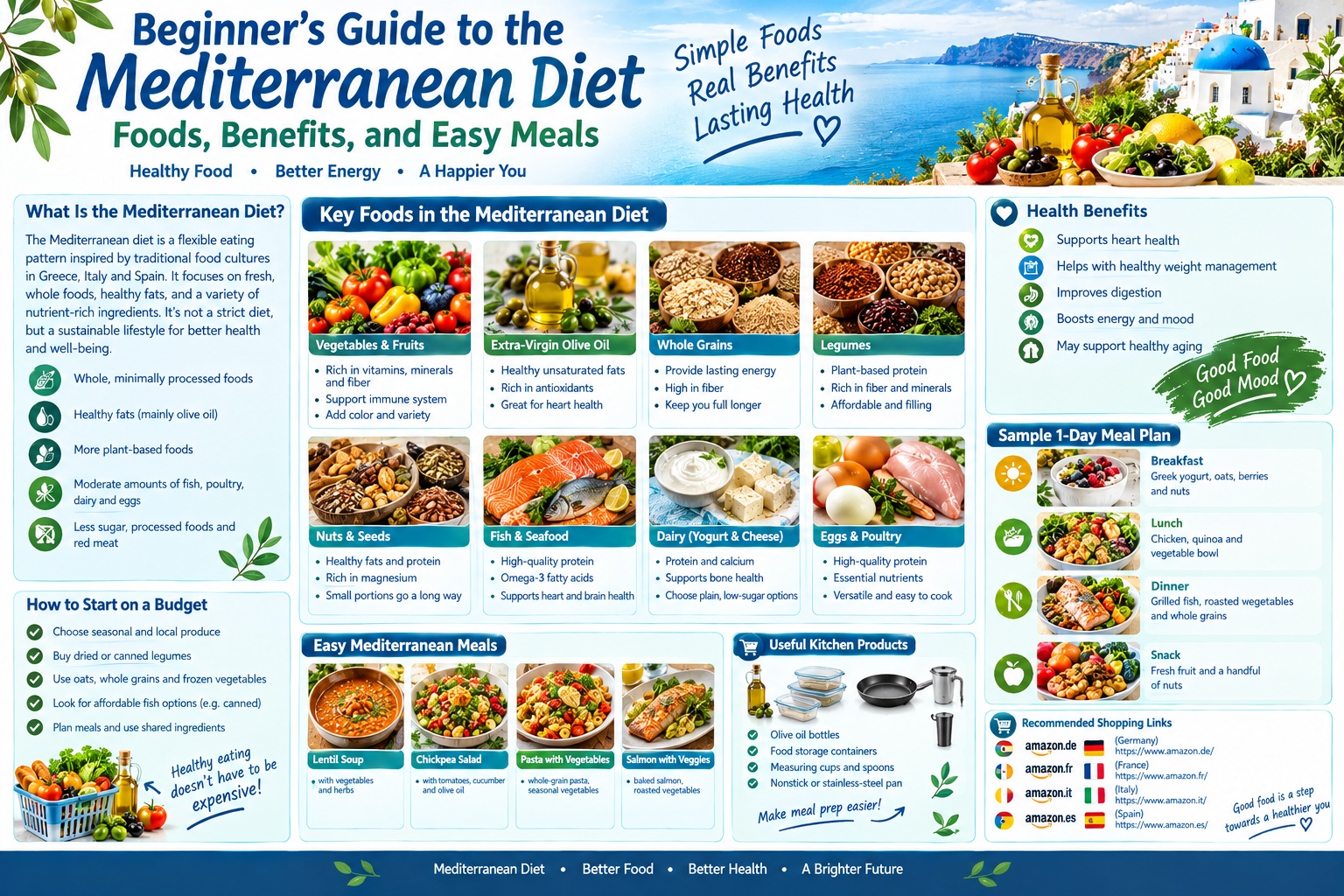
The Mediterranean diet for beginners is a practical way to build healthier eating habits without following a strict or restrictive diet. Inspired by traditional eating patterns in countries such as Greece, Italy, and Spain, this approach emphasizes vegetables, fruits, whole grains, legumes, nuts, seeds, olive oil, and fish. It also includes moderate amounts of foods such as yogurt, cheese, eggs, poultry, and other animal-based proteins.
Unlike diets that require counting every calorie or eliminating entire food groups, the Mediterranean diet focuses on food quality, variety, and balance. It encourages people to prepare meals using fresh or minimally processed ingredients while limiting highly processed foods, excessive added sugar, and processed meats.
One of its greatest advantages is flexibility. You can adapt Mediterranean-style meals to your budget, cooking skills, cultural preferences, and local food availability. Many ingredients, including lentils, chickpeas, oats, seasonal vegetables, canned fish, and whole-grain bread, are widely available and can be used to prepare affordable meals.
This beginner-friendly guide explains what to eat on the Mediterranean diet, the characteristics and benefits of its main foods, how to plan simple meals, and where to find useful Mediterranean diet ingredients and kitchen accessories through Amazon Germany and selected European marketplaces.
What Is the Mediterranean Diet?
The Mediterranean diet is an eating pattern rather than a rigid meal plan. It emphasizes plant-based foods, healthy fats, whole grains, and varied protein sources. Meals often include vegetables, beans, lentils, fish, olive oil, herbs, and seasonal fruit.
The traditional Mediterranean eating pattern also values cooking at home, enjoying meals with others, and maintaining an active lifestyle. These habits can make healthy eating more enjoyable and sustainable over time.
According to the Mayo Clinic and the American Heart Association, Mediterranean-style eating can support cardiovascular health when it emphasizes vegetables, fruits, whole grains, legumes, nuts, fish, and unsaturated fats while limiting excess sodium, added sugar, and saturated fats.
The Mediterranean diet does not require expensive specialty foods, imported ingredients, or complicated recipes. You can start with familiar foods and gradually introduce new ingredients as your preferences develop.
Main Characteristics of the Mediterranean Diet
Understanding the basic principles makes it easier to follow the Mediterranean diet consistently.
1. Vegetables and Fruits Every Day
Vegetables and fruits form a central part of the Mediterranean diet. They provide vitamins, minerals, dietary fiber, and various plant compounds that support overall health.
Popular vegetables include tomatoes, spinach, broccoli, zucchini, peppers, cucumbers, eggplant, carrots, and leafy greens. Fruits such as apples, oranges, berries, grapes, pears, and seasonal varieties can be enjoyed at breakfast, as snacks, or as desserts.
Eating a variety of colors helps introduce different nutrients into your meals. Fresh, frozen, and suitable canned vegetables and fruits can all be practical options.
2. Extra-Virgin Olive Oil as a Main Fat Source
Extra-virgin olive oil is one of the best-known ingredients in Mediterranean cooking. It contains predominantly monounsaturated fats and naturally occurring compounds, including polyphenols.
It can be used in salad dressings, vegetable dishes, marinades, and many everyday cooking methods. Replacing butter or other sources of saturated fat with unsaturated fats, where appropriate, can help improve the overall quality of your diet.
Choose olive oil in a properly sealed container and store it away from excessive heat and light. You do not need to use large quantities; moderate portions can add flavor and help create satisfying meals.
Amazon Germany: Extra-virgin olive oil
Amazon France: Extra-virgin olive oil
Amazon Italy: Extra-virgin olive oil
Amazon Spain: Extra-virgin olive oil
3. Whole Grains for Energy and Fiber
Whole grains are another important part of the Mediterranean diet. They include oats, whole-grain bread, brown rice, barley, bulgur, and whole-wheat pasta.
Unlike refined grains, whole grains retain more of their original structure and provide fiber alongside carbohydrates and other nutrients. Fiber helps support normal digestive function and can contribute to a satisfying eating pattern.
You can use oats for breakfast, whole-grain bread for sandwiches, brown rice for lunch bowls, and whole-wheat pasta for easy dinners.
Amazon Germany: Whole-grain oats and rolled oats
Amazon Germany: Whole-wheat pasta
Amazon France: Whole-grain pasta
Amazon Italy: Whole-wheat pasta
Best Mediterranean Diet Foods for Beginners
Building a Mediterranean-style kitchen does not mean buying everything at once. Start with versatile foods that can be combined in different ways throughout the week.
1. Leafy Greens and Colorful Vegetables
Spinach, lettuce, kale, broccoli, tomatoes, peppers, zucchini, carrots, and eggplant are useful ingredients for everyday Mediterranean meals.
Key Features and Benefits
Vegetables provide fiber, vitamins, minerals, and a variety of plant compounds. Leafy greens can contribute folate and vitamin K, while vegetables such as carrots and peppers provide carotenoids and other beneficial compounds.
Vegetables are also versatile. They can be eaten raw in salads, roasted in the oven, steamed, grilled, or added to soups, pasta dishes, and grain bowls.
Easy Meal Ideas
Prepare a tomato and cucumber salad with olive oil, lemon juice, and fresh herbs. Roast zucchini, peppers, and eggplant to serve alongside fish or chickpeas. Add spinach to lentil soup or mix it into an omelet.
Frozen vegetables are useful when fresh produce is expensive or unavailable. They can reduce preparation time and help you keep nutritious ingredients available throughout the week.
2. Fresh and Seasonal Fruits
Fruit is a convenient part of the Mediterranean diet because it can be eaten with little preparation and used in breakfasts, snacks, and desserts.
Key Features and Benefits
Apples, oranges, berries, pears, grapes, peaches, and other fruits provide vitamins, minerals, water, and fiber. Whole fruit is generally preferable to fruit juice because it retains its natural fiber and usually takes longer to consume.
Seasonal fruit can also be an economical choice. You do not need to purchase expensive imported berries or exotic varieties to follow a Mediterranean-style eating pattern.
Easy Meal Ideas
Enjoy an apple with a small handful of nuts, add berries to plain yogurt, or serve sliced oranges after lunch. Oatmeal topped with banana and cinnamon is another simple breakfast option.
Dried fruit can also be included in moderate portions, but check product labels for added sugar when purchasing packaged varieties.
3. Legumes: Lentils, Chickpeas, and Beans
Legumes are among the most practical Mediterranean diet foods for beginners. They provide plant-based protein, dietary fiber, and complex carbohydrates, making them useful ingredients for filling meals.
Key Features and Benefits
Lentils, chickpeas, kidney beans, and white beans are generally affordable and can be stored in a pantry for long periods when dried.
Their fiber and protein content can help make meals more satisfying. Legumes also provide nutrients such as folate, iron, and magnesium, although amounts vary by variety.
They are particularly useful for people who want to eat less meat without eliminating protein-rich foods from their diet.
Easy Meal Ideas
Prepare lentil soup with carrots, tomatoes, onions, and herbs. Make chickpea salad with cucumber, parsley, lemon juice, and olive oil. You can also prepare bean stew, hummus, or a chickpea and vegetable curry.
Canned legumes save preparation time. Choose lower-sodium varieties when available and rinse them before use if appropriate.
Amazon Germany: Dried lentils
Amazon Germany: Chickpeas and beans
Amazon France: Dried lentils and chickpeas
Amazon Italy: Dried legumes
4. Nuts and Seeds
Almonds, walnuts, pistachios, hazelnuts, chia seeds, pumpkin seeds, and flaxseeds are useful additions to Mediterranean-style meals.
Key Features and Benefits
Nuts and seeds contain unsaturated fats, plant-based protein, fiber, and minerals. Walnuts and certain seeds also provide plant-based omega-3 fatty acids.
Because they are energy-dense, moderate portions are usually practical. A small handful can make a convenient snack or add texture to breakfast and salads.
Choose unsalted or lightly salted varieties when possible, and check packaged products for added sugar, coatings, or unnecessary ingredients.
Easy Meal Ideas
Add walnuts to oatmeal, sprinkle pumpkin seeds over a salad, or mix chia seeds into plain yogurt. Almonds can be enjoyed with fruit as a snack, while ground flaxseed can be added to porridge or smoothies.
Amazon Germany: Unsalted mixed nuts
Amazon Germany: Chia seeds and flaxseeds
Amazon France: Nuts and seeds
5. Fish and Seafood
Fish is an important source of protein in the Mediterranean diet. Options include salmon, sardines, mackerel, trout, cod, tuna, and other locally available fish.
Key Features and Benefits
Fish provides high-quality protein and nutrients such as vitamin B12. Oily fish, including salmon, sardines, and mackerel, can also provide long-chain omega-3 fatty acids.
Including fish regularly can add variety to meals and provide an alternative to red or processed meat. The best choices depend on availability, affordability, personal preferences, and local food-safety guidance.
Canned fish can be especially convenient because it is easy to store and requires little preparation. Compare sodium content and choose products that fit your dietary needs.
Easy Meal Ideas
Serve baked salmon with roasted vegetables and potatoes. Make a sardine and tomato whole-grain sandwich, or prepare a tuna and white bean salad with parsley and lemon dressing.
For a quick dinner, combine canned sardines with whole-wheat pasta, tomatoes, garlic, and herbs.
Amazon Germany: Canned sardines
Amazon Germany: Canned tuna
Amazon France: Canned sardines and fish
Amazon Spain: Canned fish
6. Whole-Grain Bread, Pasta, and Rice
Whole-grain carbohydrates help make Mediterranean meals more satisfying and provide energy for daily activities.
Key Features and Benefits
Whole-grain bread, brown rice, barley, bulgur, and whole-wheat pasta can provide fiber and several vitamins and minerals. Their nutritional content depends on the grain and the way it is processed.
These foods are easy to combine with vegetables, legumes, olive oil, fish, and other protein sources.
Easy Meal Ideas
Prepare whole-wheat pasta with tomatoes, garlic, olive oil, and chickpeas. Serve brown rice with roasted vegetables and grilled fish. Use whole-grain bread to make sandwiches filled with hummus, vegetables, eggs, or tuna.
When choosing packaged bread or pasta, read the ingredient list to confirm that whole grains are a major ingredient.
Amazon Germany: Whole-grain rice
Amazon Germany: Bulgur wheat
Amazon France: Brown rice
7. Yogurt and Cheese
Yogurt and cheese can be included in the Mediterranean diet in suitable portions. Plain yogurt, Greek yogurt, feta, and other traditional cheeses can add flavor, protein, and calcium.
Key Features and Benefits
Yogurt provides protein and calcium, while some varieties contain live bacterial cultures. Cheese also supplies protein and calcium, but some types are relatively high in saturated fat and sodium.
Choosing plain yogurt can help reduce added sugar. Comparing nutrition labels makes it easier to choose dairy products that fit your preferences and nutritional needs.
Easy Meal Ideas
Prepare Greek yogurt with oats, fruit, and walnuts for breakfast. Use a small amount of feta in a tomato and cucumber salad. Plain yogurt mixed with garlic, lemon, and herbs can become a quick sauce for vegetables or grilled chicken.
If you avoid dairy, fortified alternatives can be used. Check their protein, calcium, vitamin D, and added-sugar content because nutritional values vary considerably between products.
Amazon Germany: Plain Greek yogurt and yogurt products
Amazon Germany: Feta cheese products
8. Eggs and Poultry
Eggs and poultry can provide protein as part of a balanced Mediterranean eating pattern. They are versatile ingredients for breakfast, lunch, and dinner.
Key Features and Benefits
Eggs provide high-quality protein and nutrients such as vitamin B12 and choline. Chicken and turkey provide protein and can be relatively lean choices, especially when prepared without excessive oil or rich sauces.
The Mediterranean diet does not require avoiding animal-based foods. Instead, it encourages variety and places greater emphasis on plant foods and unsaturated fats.
Easy Meal Ideas
Make an omelet with spinach and tomatoes. Prepare grilled chicken with brown rice and roasted vegetables, or add cooked chicken to a chickpea salad.
Use herbs, garlic, lemon, and spices to add flavor. Grilling, baking, and roasting are practical preparation methods.
9. Herbs, Spices, Garlic, and Lemon
Herbs and spices are essential ingredients in many Mediterranean dishes. Basil, oregano, parsley, rosemary, thyme, cumin, paprika, garlic, and lemon juice can make simple foods taste more interesting.
Key Features and Benefits
Herbs and spices add flavor without requiring large amounts of salt, sugar, or rich sauces. Garlic, lemon, and fresh herbs can also make vegetables, legumes, fish, and whole grains more appealing.
Dried herbs are convenient pantry staples because they can be stored for extended periods when kept dry and away from heat.
Easy Meal Ideas
Season roasted vegetables with olive oil, oregano, and black pepper. Add garlic and cumin to lentil soup, or make a simple dressing with olive oil, lemon juice, and parsley.
Amazon Germany: Mediterranean herbs and spices
Amazon Germany: Olive oil bottles and salad dressing accessories
Health Benefits of the Mediterranean Diet
The Mediterranean diet has been widely studied because of its association with several aspects of long-term health. Its potential benefits are linked to the overall eating pattern rather than any single food.
1. Supports Heart Health
One of the best-known benefits of Mediterranean-style eating is its potential to support cardiovascular health. The emphasis on vegetables, fruits, legumes, whole grains, nuts, fish, and unsaturated fats can help improve overall dietary quality.
Replacing some sources of saturated fat with unsaturated fats, while limiting highly processed foods and excessive sodium, can be useful for cardiovascular health.
2. Provides Fiber for Digestive Health
Whole grains, vegetables, fruits, nuts, seeds, and legumes provide dietary fiber. Fiber supports normal bowel function and contributes to a varied, balanced eating pattern.
Increasing fiber gradually and drinking enough fluids can help make dietary changes more comfortable.
3. Helps Support Healthy Weight Management
The Mediterranean diet can fit into a weight-management plan because it emphasizes nutrient-rich foods and meals that combine fiber, protein, and healthy fats.
However, it does not guarantee weight loss. Results depend on total food intake, portion sizes, physical activity, sleep, medications, and individual circumstances.
There is no need to eliminate entire food groups or follow an extremely low-calorie plan to adopt Mediterranean-style eating.
4. Encourages Better Overall Dietary Quality
Replacing some highly processed snacks and meals with fruits, vegetables, legumes, whole grains, and home-prepared dishes can improve the nutritional quality of your diet.
The Mediterranean diet also encourages variety, making it easier to obtain different nutrients from different foods.
5. May Support Healthy Aging
Research has associated Mediterranean-style eating with several favorable health outcomes in adults, including cardiovascular health and aspects of healthy aging. However, diet is only one part of long-term health, alongside physical activity, sleep, social connection, and access to healthcare.
The Mediterranean diet should be viewed as a sustainable eating pattern, not a guarantee against disease.
Foods to Limit on the Mediterranean Diet
The Mediterranean diet does not require a complete ban on particular foods. Instead, it encourages making nutritious foods the foundation of most meals and limiting foods that contribute large amounts of added sugar, sodium, or saturated fat.
Highly Processed Foods
Packaged snacks, fast food, and many ready-made meals can contain substantial amounts of sodium, refined carbohydrates, added sugars, or saturated fats.
You can still use convenient foods when necessary, but compare nutrition labels and choose options that fit your dietary needs.
Sugary Drinks and Excessive Added Sugar
Soft drinks, sweetened energy drinks, and heavily sweetened coffee beverages can add considerable amounts of sugar without providing much nutritional value.
Water is a practical everyday drink. Unsweetened tea and other unsweetened beverages can also fit into a healthy eating pattern.
Processed Meat
Bacon, sausages, salami, and other processed meats are best eaten less frequently. Consider replacing some of these foods with beans, lentils, fish, eggs, or poultry.
Excessive Saturated Fat
Butter, cream, fatty cuts of meat, and some highly processed foods can contribute substantial saturated fat. Replacing some of these fats with olive oil, nuts, seeds, and other sources of unsaturated fats can improve overall dietary quality.
Refined Grains as the Default
White bread, refined pasta, and other refined grains can be included in meals, but choosing whole-grain versions more often can help increase fiber intake.
A Simple 7-Day Mediterranean Diet Meal Plan for Beginners
This seven-day Mediterranean diet meal plan provides ideas for breakfast, lunch, and dinner. It is a flexible example rather than a prescribed calorie-controlled diet. Adjust portions, ingredients, and snacks to your appetite, budget, nutritional requirements, and food preferences.
Day 1: Simple Mediterranean Favorites
Breakfast: Plain Greek yogurt with oats, berries, and walnuts.
Lunch: Chickpea salad with tomatoes, cucumber, parsley, lemon juice, and olive oil.
Dinner: Baked salmon with roasted potatoes and broccoli.
Day 2: Whole Grains and Vegetables
Breakfast: Whole-grain toast with eggs and sliced tomatoes.
Lunch: Lentil soup with whole-grain bread and a side salad.
Dinner: Whole-wheat pasta with tomato sauce, garlic, spinach, and a little Parmesan cheese.
Day 3: Plant-Based Meals
Breakfast: Oatmeal with banana, cinnamon, and almonds.
Lunch: Hummus and vegetable whole-grain wrap with cucumber, lettuce, and peppers.
Dinner: Chickpea and vegetable stew served with brown rice.
Day 4: Fish and Fresh Produce
Breakfast: Plain yogurt with apple slices, oats, and pumpkin seeds.
Lunch: Tuna and white bean salad with lemon and parsley.
Dinner: Baked white fish with roasted zucchini, carrots, and whole-grain couscous.
Day 5: Easy Home Cooking
Breakfast: Scrambled eggs with spinach and whole-grain toast.
Lunch: Quinoa bowl with chickpeas, tomatoes, cucumber, and olive oil dressing.
Dinner: Grilled chicken with brown rice and roasted vegetables.
Day 6: Mediterranean-Inspired Classics
Breakfast: Whole-grain toast with natural peanut butter and a piece of fruit.
Lunch: Greek-style salad with tomatoes, cucumber, olives, feta, and whole-grain bread.
Dinner: Lentil and vegetable soup with a side of whole-grain bread.
Day 7: Flexible and Family-Friendly
Breakfast: Greek yogurt with fruit, oats, and nuts.
Lunch: Whole-wheat pasta salad with chickpeas, tomatoes, cucumber, and herbs.
Dinner: Roasted vegetables with white beans and a lemon-tahini dressing, served with whole grains.
Mediterranean Diet Snack Ideas
If you are hungry between meals, choose snacks that fit your appetite and nutritional needs. Suitable options include fresh fruit, a small handful of unsalted nuts, plain yogurt, hummus with vegetable sticks, or whole-grain crackers with a little cheese.
Snacks are optional. You do not need to eat between meals if you are not hungry.
How to Start the Mediterranean Diet on a Budget
A common misconception is that the Mediterranean diet requires expensive fish, premium olive oil, imported nuts, and specialty products. In reality, many of its core ingredients are affordable pantry staples.
Buy Dried or Canned Legumes
Dried lentils, chickpeas, and beans are often economical. Canned versions can be more convenient when you have limited time.
Use them in soups, salads, stews, pasta dishes, and vegetable bowls.
Choose Seasonal and Frozen Vegetables
Buy vegetables that are in season and reasonably priced. Frozen vegetables can be a useful alternative when fresh produce costs more or is difficult to store.
Use Oats and Whole Grains
Oats, brown rice, barley, and whole-grain pasta are versatile ingredients that can form the base of many meals.
Buy package sizes that suit your storage space and how quickly you use the food.
Choose Affordable Fish Options
Canned sardines, mackerel, and tuna can be convenient alternatives to fresh fish. Compare prices, sodium levels, and ingredient lists before purchasing.
Plan Meals Before Shopping
Create a short shopping list based on three or four main meals for the week. Use shared ingredients across recipes to reduce waste.
For example, chickpeas can be used in a salad, a stew, and homemade hummus. Roasted vegetables can be served with fish one day and added to a grain bowl the next.
Avoid Buying Every Specialty Product at Once
Start with olive oil, oats, lentils, chickpeas, whole grains, a few herbs, and foods you already enjoy. Add new ingredients gradually as you discover recipes you like.
Mediterranean Diet Shopping List for Beginners
A practical Mediterranean diet shopping list can be divided into several simple categories.
Vegetables: Tomatoes, spinach, broccoli, carrots, zucchini, peppers, cucumbers, onions, and garlic.
Fruits: Apples, oranges, bananas, pears, berries, and seasonal fruit.
Legumes: Lentils, chickpeas, kidney beans, and white beans.
Whole grains: Oats, brown rice, whole-grain bread, barley, bulgur, and whole-wheat pasta.
Protein foods: Eggs, fish, canned sardines, canned tuna, chicken, plain yogurt, and tofu.
Healthy fats: Extra-virgin olive oil, walnuts, almonds, seeds, and olives.
Flavorings: Lemon, parsley, basil, oregano, black pepper, cumin, paprika, and vinegar.
Optional kitchen accessories: Food storage containers, a salad spinner, measuring spoons, a cutting board, and a reliable nonstick or stainless-steel pan.
You do not need every item on this list. Select foods you enjoy and can use in several different meals.
Best Mediterranean Diet Products to Look for on Amazon Germany and Europe
Amazon Germany and selected European Amazon marketplaces offer a range of pantry foods and kitchen accessories that can make Mediterranean meal preparation easier. Availability, prices, sellers, and delivery options vary by country and product.
Extra-Virgin Olive Oil
Olive oil is a useful pantry staple for salad dressings, marinades, and everyday cooking. When shopping online, check the product description, origin information, bottle size, packaging, and seller details.
Amazon Germany: Shop extra-virgin olive oil
Amazon France: Shop extra-virgin olive oil
Amazon Italy: Shop extra-virgin olive oil
Amazon Spain: Shop extra-virgin olive oil
Dried Lentils and Chickpeas
Dried legumes are useful for people who cook regularly and want to keep affordable protein sources in the pantry. Compare package sizes, product descriptions, and the price per kilogram.
Amazon Germany: Shop dried lentils
Amazon Germany: Shop dried chickpeas
Amazon France: Shop dried legumes
Whole-Grain Pasta and Rice
Whole-grain pasta and brown rice can help you prepare simple lunches and dinners. Look for clear ingredient lists and check that the product is genuinely whole grain.
Amazon Germany: Shop whole-wheat pasta
Amazon Germany: Shop brown rice
Amazon Italy: Shop whole-wheat pasta
Nuts and Seeds
Nuts and seeds are convenient additions to oatmeal, salads, yogurt, and snacks. Unsalted varieties with minimal added ingredients are useful choices.
Amazon Germany: Shop unsalted nuts
Amazon Germany: Shop chia seeds
Amazon France: Shop nuts and seeds
Canned Fish
Canned sardines, mackerel, and tuna can make quick Mediterranean-style meals easier. Compare the type of fish, ingredients, sodium content, package size, and storage instructions.
Amazon Germany: Shop canned sardines
Amazon France: Shop canned fish
Amazon Spain: Shop canned sardines and seafood
Food Storage Containers for Meal Preparation
Food storage containers can help organize prepared ingredients, store leftovers, and simplify weekday meals. Choose suitable sizes, check whether the containers are intended for refrigeration or freezing, and verify microwave compatibility if needed.
Amazon Germany: Shop meal preparation containers
Amazon France: Shop food storage containers
Amazon Italy: Shop food storage containers
These links lead to product search pages rather than guaranteeing the availability of a specific item. Always review the seller, ingredients, product details, shipping options, and final price before purchasing.
Common Mediterranean Diet Mistakes to Avoid
Trying to Change Everything Overnight
You do not need to replace your entire diet immediately. Start by adding vegetables to one meal, choosing whole grains more often, or cooking a legume-based dish each week.
Small changes that you can maintain are often more practical than an ambitious plan that becomes difficult to follow.
Eating Too Few Vegetables and Legumes
A Mediterranean-style diet should not consist mainly of pasta, bread, and olive oil. Vegetables, fruits, legumes, and other plant foods are central to the overall pattern.
Try to include vegetables at lunch and dinner and use beans or lentils regularly.
Assuming Olive Oil Can Be Consumed Without Limits
Olive oil is a valuable source of unsaturated fat, but it is still energy-dense. Use portions that fit your appetite and overall nutritional needs.
The goal is to improve the quality of your diet, not to add unlimited amounts of oil to every meal.
Buying Too Many Packaged Mediterranean Foods
Products labeled Mediterranean-style can vary considerably in nutritional quality. Some contain large amounts of sodium, added sugar, or refined carbohydrates.
Read ingredient lists and nutrition labels rather than relying only on marketing terms.
Forgetting Variety
No single food provides everything your body needs. Alternate legumes, fish, eggs, poultry, nuts, seeds, whole grains, vegetables, and fruits throughout the week.
Variety helps keep meals interesting and supports a balanced eating pattern.
Frequently Asked Questions About the Mediterranean Diet
What Should Beginners Eat on the Mediterranean Diet?
Beginners can start with vegetables, fruit, whole grains, beans, lentils, chickpeas, nuts, seeds, olive oil, fish, eggs, and plain yogurt. These foods can be combined into simple meals without complicated recipes.
Is the Mediterranean Diet Expensive?
It does not have to be expensive. Oats, lentils, dried beans, chickpeas, seasonal vegetables, and canned fish can be economical choices. Planning meals and using ingredients across multiple recipes can also help reduce waste.
Can I Follow the Mediterranean Diet Without Eating Fish?
Yes. Although fish is a common component of the traditional Mediterranean diet, you can adapt the pattern to your preferences. Include suitable alternatives such as beans, lentils, chickpeas, tofu, nuts, seeds, eggs, or dairy products.
If you avoid all animal products, pay attention to nutrients that may require additional planning, including vitamin B12.
Is Bread Allowed on the Mediterranean Diet?
Yes. Bread can be part of the Mediterranean diet, particularly when whole-grain varieties are chosen regularly. Portion sizes and the overall balance of the meal should reflect your individual needs.
Can the Mediterranean Diet Help with Weight Management?
It can support a weight-management plan because it emphasizes nutritious foods, fiber, and balanced meals. However, weight changes depend on several factors, including total energy intake, activity, sleep, and individual health circumstances.
How Quickly Can I Start the Mediterranean Diet?
You can begin with your next meal. Add vegetables, use olive oil in place of some saturated fats, choose whole grains more often, or prepare a simple lentil or chickpea dish.
There is no need to follow a perfect plan from the first day.
Do I Need to Count Calories?
Not necessarily. Many people can adopt Mediterranean-style eating without counting every calorie. Paying attention to hunger, fullness, portion sizes, and overall food quality may be a more manageable approach.
People with specific medical or nutritional needs may benefit from individualized guidance from a qualified healthcare professional.
Is the Mediterranean Diet Suitable for Everyone?
Many adults can adapt the Mediterranean diet to their preferences, but individual needs differ. People with food allergies, chronic health conditions, or specific nutritional requirements may need to modify certain foods or portions with professional guidance.
Conclusion: Start Your Mediterranean Diet Journey with Simple, Balanced Meals
The Mediterranean diet for beginners offers a flexible approach to healthy eating built around vegetables, fruits, whole grains, legumes, nuts, seeds, olive oil, and varied protein sources. Its main strengths are its emphasis on minimally processed foods, its use of healthy fats, and its flexibility for different budgets, preferences, and cooking styles.
You can begin with familiar ingredients such as oats, lentils, chickpeas, tomatoes, seasonal fruit, whole-grain bread, and olive oil. Simple meals like lentil soup, chickpea salad, baked fish with vegetables, and Greek yogurt with fruit can help you establish a practical routine without complicated recipes.
Planning meals in advance, choosing seasonal produce, keeping pantry staples available, and using leftovers creatively can make Mediterranean-style eating more affordable and convenient. Amazon Germany and other European marketplaces can also provide access to pantry ingredients and kitchen accessories, although product availability and delivery options vary.
Most importantly, treat the Mediterranean diet as a long-term eating pattern rather than a short-term challenge. Focus on variety, balanced portions, enjoyable meals, and small changes that you can maintain. These habits can help you build a more sustainable approach to everyday nutrition.


