
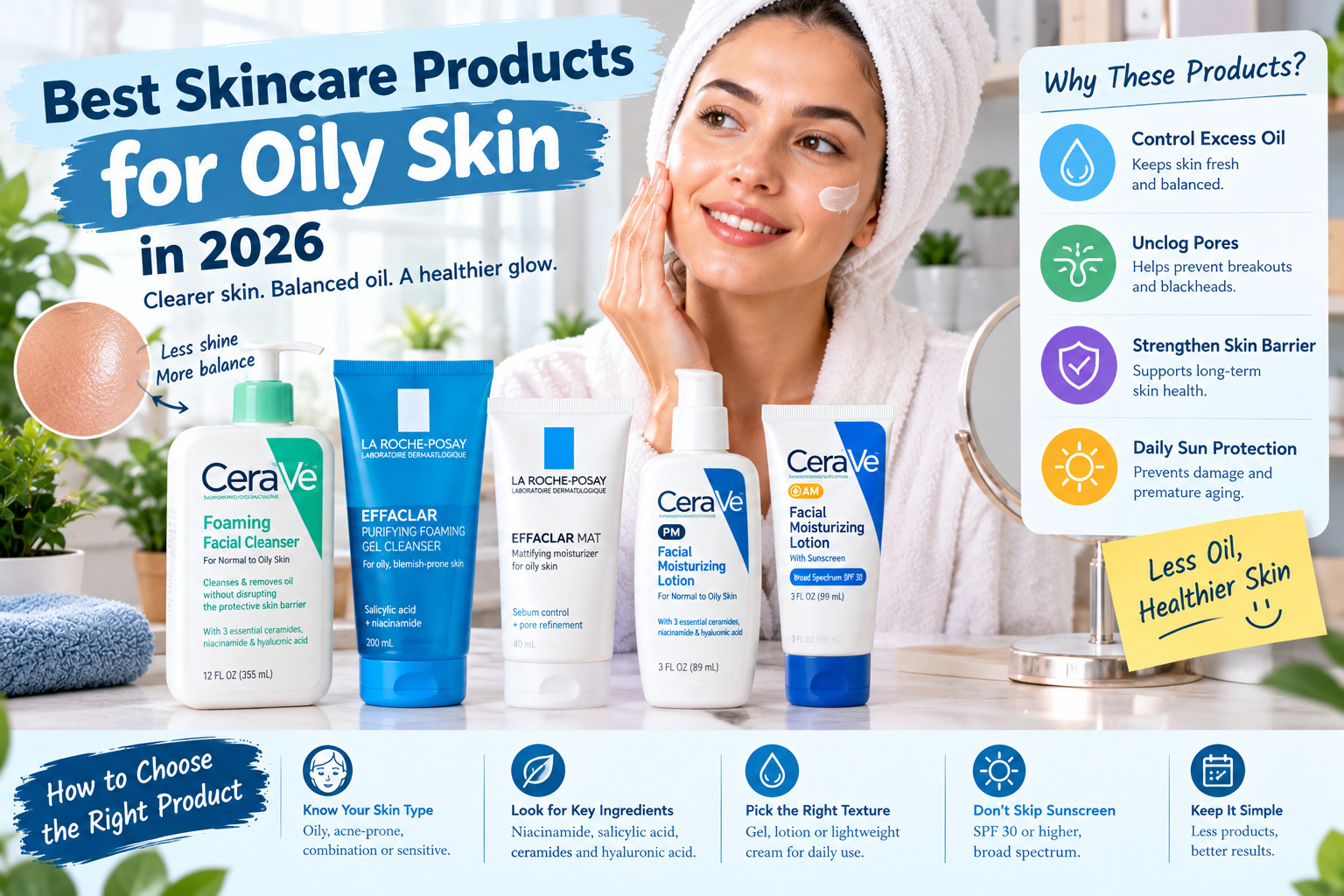
Best Skincare Products for Oily Skin in 2026: How to Choose the Right Routine
Oily skin can be challenging to manage. Excess sebum may leave the face looking shiny, make makeup wear unevenly, and contribute to clogged pores and breakouts. However, using strong cleansers or skipping moisturizer can make a skincare routine less comfortable and may worsen irritation. The goal is not to remove every trace of oil but to keep the skin clean, hydrated, and balanced.
The best skincare products for oily skin in 2026 are those that address excess shine without unnecessarily stripping the skin’s natural protective barrier. A simple routine usually includes a gentle cleanser, a lightweight moisturizer, and broad-spectrum sunscreen. Depending on individual needs, an additional product containing salicylic acid or niacinamide may be useful. This guide compares popular options and explains how to choose products based on your skin’s needs rather than marketing claims.
Understanding Oily Skin and Its Needs
Oily skin produces more sebum than some other skin types. Sebum is a natural substance that helps protect the skin, but excess production can contribute to a shiny appearance and clogged pores. Genetics, hormones, environmental conditions, and skincare habits can all influence how oily the skin becomes.
An effective routine focuses on gentle cleansing, adequate hydration, and sun protection. Dermatologists recommend choosing products labeled oil-free and non-comedogenic when appropriate, because these are designed to reduce the likelihood of clogging pores. Harsh scrubbing and overly aggressive cleansing can irritate the skin, so stronger products are not automatically better. American Academy of Dermatology: How to Control Oily Skin
Best Skincare Products for Oily Skin in 2026
1. CeraVe Foaming Facial Cleanser
Best for: Everyday cleansing of normal to oily skin
CeraVe Foaming Facial Cleanser is designed for normal to oily skin and helps remove excess oil, dirt, and everyday impurities. Its formula includes three essential ceramides, hyaluronic acid, and niacinamide. These ingredients help support the skin barrier while cleansing, making the product a practical starting point for people who want to reduce surface oil without relying on an excessively harsh face wash.
This cleanser may suit a morning and evening routine, especially for people who experience shine throughout the day. However, the right cleansing frequency depends on your skin’s tolerance and activity level. If your face feels tight, dry, or irritated after washing, consider using less product or reducing how often you cleanse. View CeraVe Foaming Facial Cleanser on the official website
2. La Roche-Posay Effaclar Purifying Foaming Gel Cleanser
Best for: Oily skin that is also prone to blemishes
La Roche-Posay Effaclar Purifying Foaming Gel Cleanser is formulated for oily and acne-prone skin. It helps remove impurities and excess sebum while providing a foaming cleansing experience. Its lightweight gel texture may appeal to people who prefer a refreshing cleanser rather than a rich cream.
This product can be considered if your main concern is persistent shine or a greasy feeling during the day. Nevertheless, cleansing alone will not treat every cause of acne, and results vary between individuals. Avoid combining multiple strong cleansing or exfoliating products if your skin becomes irritated. View Effaclar Purifying Foaming Gel on the official website
3. La Roche-Posay Effaclar Mat Mattifying Moisturizer
Best for: Oily skin with visible shine
La Roche-Posay Effaclar Mat is a facial moisturizer designed for oily skin that tends to develop excess shine. Its formula is intended to provide a mattifying finish and make the skin feel less greasy. It may be particularly appealing to people who want a moisturizer that sits comfortably under makeup or prefer a less shiny appearance during the day.
A mattifying product should not be confused with a treatment that permanently changes pore size or stops oil production. Pores are a normal part of skin, and their appearance can vary with oiliness and other factors. If you experience dryness or sensitivity, check the ingredient list carefully because the formula includes fragrance and may not suit everyone. View Effaclar Mat on the official website
4. CeraVe PM Facial Moisturizing Lotion
Best for: Lightweight nighttime hydration
CeraVe PM Facial Moisturizing Lotion is a lightweight facial moisturizer intended for nighttime use. Its formula includes ceramides, niacinamide, and hyaluronic acid, which help support the skin barrier and maintain hydration. A lightweight lotion can be a useful option for people with oily skin who want moisture without the feel of a heavy cream.
Oily skin still needs hydration, particularly when a routine includes cleansing or acne treatments that can cause dryness. Applying a suitable moisturizer after washing can help reduce discomfort and support the skin barrier. Introduce the lotion gradually if you have a history of sensitivity, and check the current ingredient list before purchasing. View CeraVe PM Facial Moisturizing Lotion on the official website
5. CeraVe AM Facial Moisturizing Lotion with Sunscreen SPF 30
Best for: Combining morning hydration with sun protection
CeraVe AM Facial Moisturizing Lotion with Sunscreen SPF 30 combines moisturizing ingredients with sun protection in one morning product. It may be a convenient option for people who want to simplify their routine. For oily skin, a comfortable formula can make it easier to maintain daily sun protection without feeling that too many separate products are needed.
Check the exact product label to confirm that it offers broad-spectrum protection and suits your skin. Apply enough to cover all exposed skin and reapply sunscreen according to its instructions, particularly after sweating, swimming, or towel drying. A moisturizer containing SPF does not eliminate the need for adequate application or reapplication. View CeraVe AM Facial Moisturizing Lotion on the official website
Skincare Products for Oily Skin: Comparison Guide
The following table summarizes the main purpose of each product. It is a practical comparison based on the manufacturers’ descriptions, not a clinical ranking or a guarantee that one product will work better for everyone.
| Product | Main purpose | Best suited for |
|---|---|---|
| CeraVe Foaming Facial Cleanser | Removes excess oil and everyday impurities | Normal to oily skin |
| La Roche-Posay Effaclar Purifying Foaming Gel | Cleanses oily, blemish-prone skin | Oily skin with imperfections |
| La Roche-Posay Effaclar Mat | Helps reduce the appearance of shine | Oily, shine-prone skin |
| CeraVe PM Facial Moisturizing Lotion | Lightweight hydration and barrier support | People seeking a nighttime moisturizer |
| CeraVe AM Facial Moisturizing Lotion SPF 30 | Morning hydration with sun protection | People seeking a combined daytime product |
Product names, ingredients, and availability can vary between countries. Confirm the current packaging and local product information before purchasing.
How to Choose Skincare Products for Oily Skin
Choose a Gentle Cleanser
A good cleanser should remove dirt, sunscreen, and excess oil without leaving the face feeling painfully tight or stripped. Foaming cleansers can be suitable for oily skin, but the strength of the formula matters more than the amount of foam it produces. Wash gently with lukewarm water, avoid rough scrubbing, and cleanse after sweating.
Look for a Lightweight Moisturizer
Skipping moisturizer because your skin is oily is a common mistake. Dehydration and irritation can occur in oily skin, particularly when using acne treatments or cleansing frequently. Look for a lightweight product labeled oil-free or non-comedogenic if you are concerned about clogged pores. Ingredients such as glycerin, hyaluronic acid, and ceramides can help support hydration without requiring a heavy texture.
Dermatologists recommend moisturizing even when the skin is acne-prone, especially if acne treatments cause dryness. Apply moisturizer after cleansing, while the skin is still slightly damp, to help retain water. American Academy of Dermatology: Why You May Need Moisturizer If You Have Acne
Use Broad-Spectrum Sunscreen Every Morning
Daily sunscreen helps protect against ultraviolet radiation, sunburn, premature skin aging, and skin cancer. Choose a broad-spectrum sunscreen with SPF 30 or higher, preferably one labeled non-comedogenic if you are prone to clogged pores. Lightweight fluids and gel-like formulas may feel more comfortable for some people with oily skin, but the best option is one you can apply generously and consistently.
Apply sunscreen to all exposed skin and follow the label’s directions. Reapply approximately every two hours when outdoors and after swimming, sweating, or towel drying. Sunscreen is an essential part of a routine even if your main concern is excess oil rather than dryness. American Academy of Dermatology: Choosing the Right Sunscreen
Consider Active Ingredients Carefully
Some people with oily or acne-prone skin may benefit from products containing salicylic acid, which helps exfoliate inside pores, or niacinamide, which can support the skin barrier and may help improve the appearance of oiliness. However, neither ingredient is necessary for everyone, and adding several active products at once can increase irritation.
Start with one new product at a time and follow its directions. If you develop persistent redness, burning, peeling, or discomfort, stop or reduce use and seek professional advice when needed. People with persistent or moderate-to-severe acne may benefit from a dermatologist’s assessment rather than continually adding cosmetic products.
A Simple Daily Skincare Routine for Oily Skin
Morning Routine
Start with a gentle cleanser if your skin needs it, followed by a lightweight moisturizer. Finish with a broad-spectrum sunscreen rated SPF 30 or higher. If you use a combined moisturizer and sunscreen, ensure you apply enough to achieve the labeled sun protection and reapply as directed.
Evening Routine
Remove makeup and sunscreen, then cleanse gently. Apply a lightweight moisturizer to support hydration overnight. If you use an acne treatment or exfoliating ingredient, introduce it according to the product instructions rather than layering several new treatments together.
A simple routine is often easier to maintain than a complicated collection of products. Give your skin time to adjust before deciding whether a product is suitable, unless you experience irritation or an allergic reaction that requires you to stop using it.
Common Skincare Mistakes That Can Make Oily Skin Worse
Washing your face repeatedly throughout the day can irritate the skin and may make it harder to maintain a healthy skin barrier. Harsh scrubs, strong alcohol-based products, and using multiple exfoliants together can also cause dryness and discomfort. Removing every trace of natural oil is neither necessary nor a reliable way to prevent acne.
Another common mistake is skipping moisturizer or sunscreen. Oily skin still needs hydration and protection from UV radiation. Finally, avoid judging a product solely by advertising claims or expecting immediate results. A consistent, gentle routine is generally more useful than frequently switching products.
How to Build an Affordable Skincare Routine for Oily Skin
You do not need an expensive ten-step routine to care for oily skin. Start with three essentials: a gentle cleanser, a suitable moisturizer, and broad-spectrum sunscreen. Once these products are comfortable and consistent, consider whether an additional treatment is genuinely needed for a specific concern.
Compare product sizes and prices, check the ingredients, and buy from reputable pharmacies or authorized retailers. Be cautious of products promising instant acne cures, permanently invisible pores, or complete elimination of oil. These claims can create unrealistic expectations and may not reflect the product’s actual purpose.
When to Consult a Dermatologist
Oily skin alone is not necessarily a medical problem, but persistent painful acne, deep nodules, scarring, severe irritation, or a rash may require professional assessment. A dermatologist can help distinguish ordinary oiliness from acne or another skin condition and recommend treatment appropriate for your needs.
If a skincare product causes swelling, severe burning, or a significant rash, stop using it and seek medical advice. Severe swelling or difficulty breathing after product exposure requires emergency medical care.
Final Verdict: The Best Skincare Products for Oily Skin in 2026
The best skincare routine for oily skin focuses on gentle cleansing, lightweight hydration, and consistent sun protection. CeraVe Foaming Facial Cleanser is a practical starting point for daily cleansing, while La Roche-Posay Effaclar Purifying Foaming Gel is another option for oily, blemish-prone skin. La Roche-Posay Effaclar Mat may suit people who want a mattifying moisturizer, and CeraVe PM Facial Moisturizing Lotion offers lightweight nighttime hydration. For mornings, a suitable broad-spectrum sunscreen is essential, whether used separately or in a combined moisturizer.
No single product is ideal for every skin type, and results depend on individual skin characteristics, ingredients, and consistency. Start with a simple routine, introduce new products gradually, and seek professional advice if acne or irritation persists. The most effective routine is one that protects the skin barrier, fits your daily life, and can be followed safely over time.


