
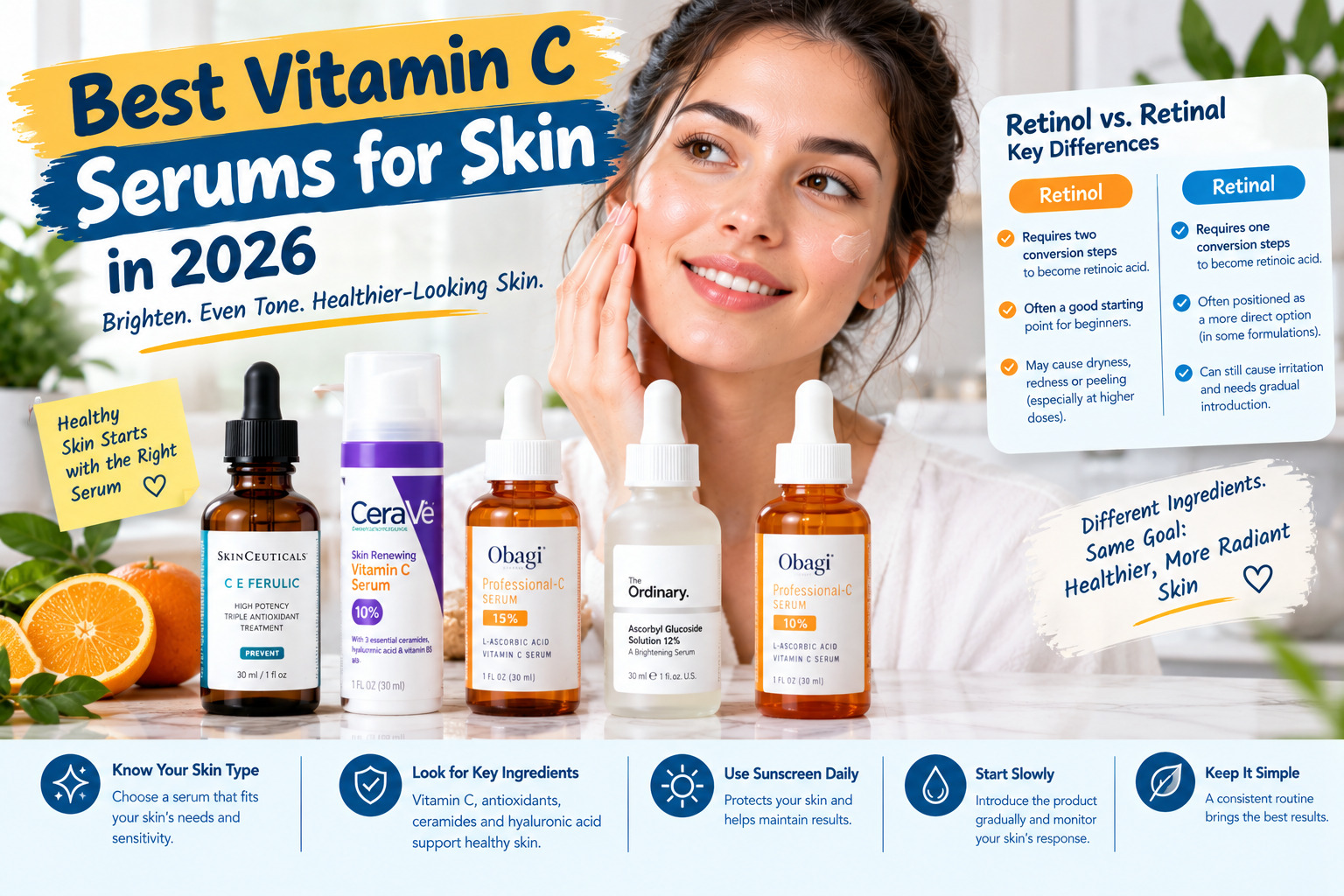
Best Vitamin C Serums for Skin in 2026: Top Picks for Brighter, Healthier-Looking Skin
Vitamin C serums remain a popular choice for people who want brighter-looking skin, a more even complexion, and support against environmental stressors. The right formula can help reduce the appearance of dark spots, improve dullness, and support the skin’s natural collagen production over time. However, not every serum suits every skin type, and a higher concentration does not automatically mean better results. This guide compares five vitamin C serum options for 2026 based on their formulations, intended benefits, and practical considerations, helping you choose a product that fits your skin’s needs and budget. Source: NBC Select’s 2026 vitamin C serum review
1. SkinCeuticals C E Ferulic — Best Premium Vitamin C Serum
SkinCeuticals C E Ferulic is a premium antioxidant serum formulated with 15% pure vitamin C, vitamin E, and ferulic acid. This combination is designed to help defend the skin against oxidative stress while improving the appearance of uneven tone, dullness, and fine lines. It is a strong option for shoppers seeking an established vitamin C formula and who are comfortable paying a premium price. Because pure L-ascorbic acid can cause stinging or irritation, people with sensitive skin should introduce it cautiously rather than assuming that an expensive product will automatically be suitable. View the official SkinCeuticals website
2. CeraVe Skin Renewing Vitamin C Serum — Best Everyday Option
CeraVe Skin Renewing Vitamin C Serum contains 10% pure vitamin C, also known as L-ascorbic acid, alongside three essential ceramides, hyaluronic acid, and vitamin B5. This combination makes it a practical option for people who want brightening benefits while also supporting skin hydration and the skin barrier. The formula is fragrance-free and designed for different skin types, including sensitive skin, although individual reactions remain possible. Its moderate concentration may be a sensible starting point for someone who is new to vitamin C, provided the product is introduced gradually and used according to its instructions. View the official CeraVe product page
3. Obagi Professional-C Serum 15% — Best for Uneven Skin Tone
Obagi Professional-C Serum 15% uses L-ascorbic acid to help improve the appearance of uneven skin tone, dullness, and fine lines while providing antioxidant support. The manufacturer identifies it as an option for normal, combination, and some oily or dry skin types. Its 15% concentration may appeal to people looking for a more concentrated formula, but it is not necessarily the best starting point for everyone. The product also contains fragrance and citrus-derived extracts, which may not suit people who react to fragrance or certain botanical ingredients. Review the complete ingredient list before purchasing, especially if your skin is reactive. View the official Obagi Professional-C Serum 15% page
4. The Ordinary Ascorbyl Glucoside Solution 12% — Best Alternative to Pure Vitamin C
The Ordinary Ascorbyl Glucoside Solution 12% uses ascorbyl glucoside, a vitamin C derivative, rather than pure L-ascorbic acid. Vitamin C derivatives are often chosen by people who prefer an alternative to formulas based on pure vitamin C, although their performance depends on the specific ingredient and overall formulation. This serum may be worth considering if your priority is improving the appearance of dullness and uneven tone with a derivative-based product. It should not be assumed to be irritation-free, and results may differ from those obtained with other forms of vitamin C. Check the current product instructions and ingredient list before use. View the official The Ordinary product page
5. Obagi Professional-C Serum 10% — Best Lower-Concentration Pure Vitamin C Option
Obagi Professional-C Serum 10% is another option for people who want a lower concentration of pure vitamin C than the brand’s 15% or 20% formulas. It is designed to help brighten the appearance of the complexion, improve the look of uneven tone, and provide antioxidant support. A lower concentration may be easier for some people to incorporate into a routine, but it does not guarantee that irritation will not occur. As with any active skincare product, suitability depends on the complete formulation, skin condition, and how frequently it is used. Compare the ingredient list and directions with your individual needs before making a purchase. View Obagi’s official Professional-C collection
What Does Vitamin C Serum Do for Your Skin?
Vitamin C is an antioxidant that helps counter free radicals generated by environmental exposures, including ultraviolet radiation and pollution. In topical skincare, suitable vitamin C formulations may help improve the appearance of dark spots, dullness, and uneven skin tone. Vitamin C also plays a role in collagen production, which is important for skin structure. However, cosmetic results are gradual and vary by person; a serum cannot guarantee the removal of pigmentation, eliminate wrinkles, or replace professional treatment for persistent skin concerns. Source: NBC Select’s dermatologist-informed guide
How to Choose the Right Vitamin C Serum
The best vitamin C serum depends on your skin type, tolerance, goals, and budget. People who want a well-rounded everyday option may prefer a formula that combines vitamin C with moisturizing or barrier-supporting ingredients. Those mainly concerned with visible discoloration may consider a pure L-ascorbic acid formula if their skin tolerates it. If your skin is sensitive, a lower concentration or a vitamin C derivative may be worth considering, but no ingredient form guarantees that a product will be irritation-free. Always check the full ingredient list rather than relying only on the product name or concentration printed on the package. Source: NBC Select’s vitamin C serum selection guide
Is a Higher Vitamin C Concentration Always Better?
No. Vitamin C serums are available in different concentrations and forms, and a stronger formula may cause more irritation without providing a meaningful additional benefit for every user. Pure L-ascorbic acid is well studied in topical skincare, but its stability and performance depend on factors such as the formulation, packaging, and storage conditions. A lower-strength product that you can use consistently may be a better choice than a highly concentrated formula that causes persistent redness or discomfort. Start with a product that matches your tolerance instead of selecting one solely because it has the highest percentage. Source: NBC Select’s 2026 review and dermatologist guidance
How to Use Vitamin C Serum Safely
For many people, the morning is a convenient time to use vitamin C serum. Begin with clean skin and follow the product’s specific directions, then apply moisturizer if needed and finish with a broad-spectrum sunscreen rated SPF 30 or higher. If you have sensitive skin or are new to active skincare ingredients, start with a small amount and use the serum less frequently at first if the label allows. Patch-test a new product, avoid applying it to broken or severely irritated skin, and keep it away from the eyes unless the product is specifically intended for that area. Stop using it if you experience persistent burning, swelling, or significant redness, and seek medical advice if the reaction is severe. Source: American Academy of Dermatology guidance on sun protection
How to Store Vitamin C Serum
Some vitamin C formulations, particularly those containing pure L-ascorbic acid, can lose stability when exposed to air, light, or unsuitable temperatures. Choose products with packaging designed to protect the formula, close the cap securely after use, and follow the manufacturer’s storage instructions. Check the expiry date and the recommended period after opening. A noticeable change in color, smell, or texture may indicate that a product has deteriorated; if you are unsure whether it remains suitable to use, follow the manufacturer’s advice rather than continuing to apply it. Source: Good Housekeeping’s 2026 vitamin C serum review
Common Mistakes to Avoid When Using Vitamin C
One common mistake is introducing several active skincare products at the same time, making it difficult to identify the cause of irritation. Another is choosing a high concentration without considering skin sensitivity, using more product than directed, or skipping sunscreen during the day. It is also unwise to assume that a serum will work faster simply because it is more expensive or contains a larger percentage of vitamin C. Keep the routine simple, introduce new products one at a time, and give your skin time to adjust. Persistent pigmentation, worsening irritation, or other ongoing skin problems may require assessment by a qualified dermatologist.
Final Verdict: Which Vitamin C Serum Is Best in 2026?
For a premium antioxidant formula, SkinCeuticals C E Ferulic is a leading option to consider. CeraVe Skin Renewing Vitamin C Serum stands out for its 10% pure vitamin C formula combined with ceramides and hydrating ingredients. Obagi Professional-C Serum 15% may suit shoppers seeking a more concentrated pure vitamin C product, while The Ordinary Ascorbyl Glucoside Solution 12% offers a derivative-based alternative. Obagi Professional-C Serum 10% provides another lower-concentration pure vitamin C option. The best choice is the one that fits your skin’s tolerance, ingredient preferences, and budget—and that you can use consistently alongside daily sun protection.
Product formulations, prices, and availability can change during 2026 and may vary by country. Confirm the current ingredient list and purchase from the manufacturer or an authorized retailer. These products are cosmetic skincare options, not guaranteed treatments for medical skin conditions.


