
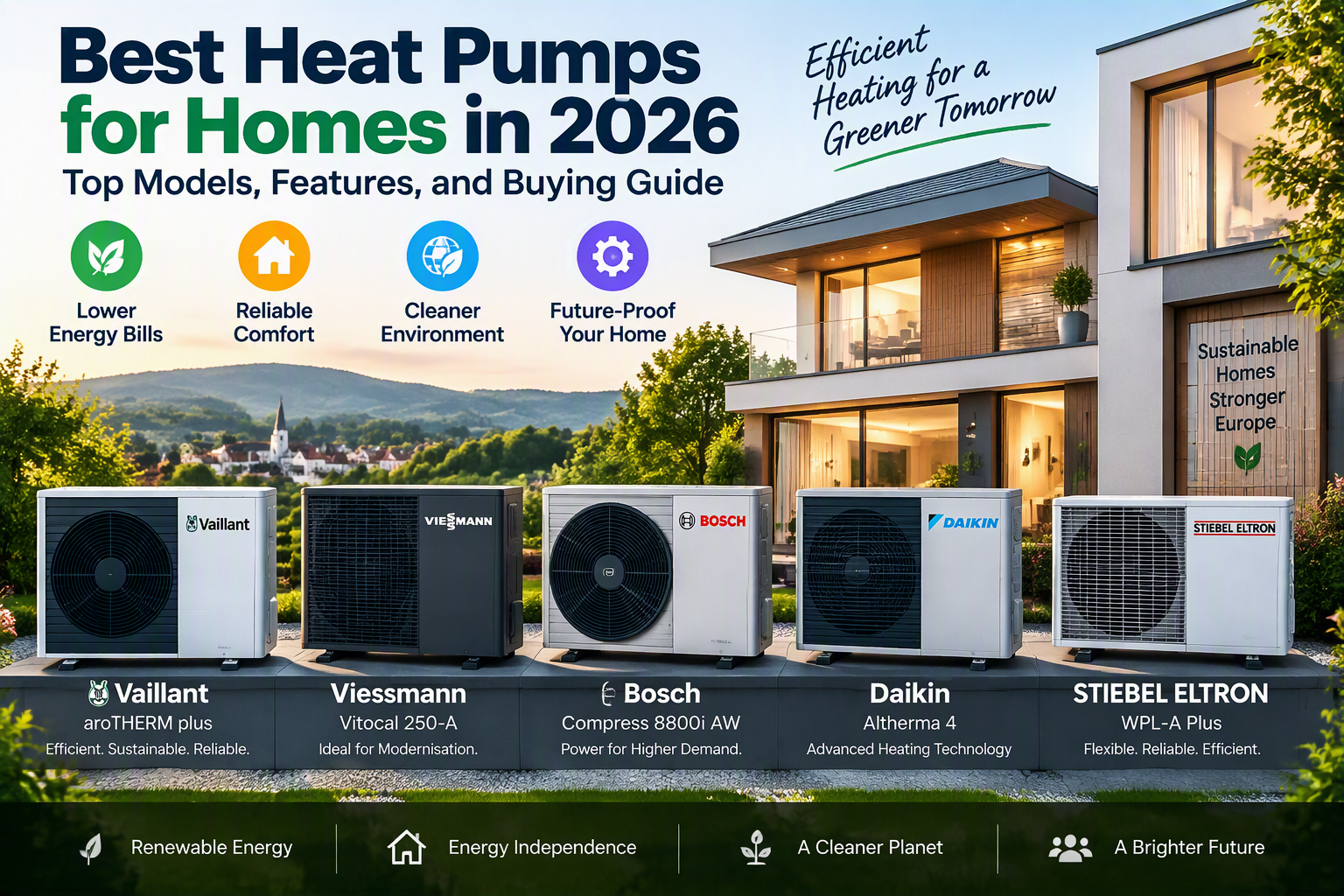
Best Heat Pumps for Homes in 2026: Top Models, Features, and Buying Guide
Why Choose a Heat Pump for Your Home in 2026?
Heat pumps are becoming an important option for homeowners who want an energy-efficient alternative to conventional heating systems. Instead of generating heat by burning fuel, a heat pump transfers thermal energy from the outdoor air, ground, or water into a building. This process can provide space heating and, in compatible systems, domestic hot water.
The best heat pumps for homes in 2026 combine efficient heating performance, intelligent temperature control, reliable operation, and compatibility with different types of residential buildings. Some systems are designed primarily for new homes with underfloor heating, while others are suitable for renovation projects and properties with existing radiators.
Air-to-water heat pumps are particularly popular because they extract heat from outdoor air and transfer it to a water-based heating system. They generally require less extensive groundworks than ground-source systems, making them a practical option for many European homes.
Leading manufacturers include Vaillant, Viessmann, Bosch, Daikin, and STIEBEL ELTRON. Their product ranges offer different heating capacities, installation configurations, control systems, and refrigerant technologies. The right model depends on the property’s heat demand, insulation, local climate, existing heating equipment, and available installation space.
This guide examines five residential heat pump options worth comparing in 2026, explaining their main features, advantages, and potential applications. It also includes Amazon Germany search links and official manufacturer websites to help readers explore available products and request suitable installation solutions.
1. Vaillant aroTHERM plus: Best Overall Heat Pump for Modern Homes
The Vaillant aroTHERM plus is an air-to-water heat pump range designed for residential heating and domestic hot water applications. It is worth considering for homeowners looking for a modern heating system that can work with compatible underfloor heating, radiators, and hot water storage equipment.
One of the range’s important features is its use of R290 refrigerant, also known as propane, in compatible models. R290 has a very low global warming potential compared with many conventional synthetic refrigerants. Because propane is flammable, however, the equipment must be installed and maintained according to the manufacturer’s safety requirements.
Depending on the selected model and installation, the aroTHERM plus can support both new-build projects and certain home renovation applications. Its suitability for an existing property depends on the building’s heat demand, radiator sizing, required water temperature, and the design of the heating system.
The range is available in different heating capacities, allowing installers to select a model suited to the property’s requirements. Correct sizing is essential because an oversized or undersized heat pump can affect comfort, efficiency, operating costs, and equipment performance.
Another benefit is the availability of compatible control systems and accessories that can help homeowners manage heating schedules and domestic hot water. The exact functions depend on the chosen controls and system configuration.
Key features and benefits:
- Air-to-water heat pump technology for residential heating.
- R290 refrigerant in compatible models.
- Options for heating and domestic hot water.
- Compatibility with suitable underfloor heating and radiator systems.
- Different output capacities for different property requirements.
- Compatible controls for managing heating operation.
- Potential to reduce reliance on fossil-fuel heating systems.
Best for: Homeowners seeking an air-to-water heat pump for a new home or a carefully planned heating renovation.
Purchase links:
- Amazon Germany: https://www.amazon.de/s?k=Vaillant+aroTHERM+plus+heat+pump
- Amazon EU search: https://www.amazon.de/s?k=Vaillant+air+to+water+heat+pump
- Official manufacturer website: https://www.vaillant.com/
Heat pumps of this size are generally supplied and installed through specialist heating companies. Amazon search results may include accessories or related equipment rather than a complete, installation-ready heating system.
2. Viessmann Vitocal 250-A: Best for Home Renovation Projects
The Viessmann Vitocal 250-A is an air-to-water heat pump range designed for residential heating and hot water production. It is particularly worth evaluating when upgrading an existing heating system, provided the selected configuration matches the building’s requirements.
Older homes can present additional challenges for heat pump installation because their insulation, radiators, and heating distribution systems may have been designed around conventional boilers. A suitable heat pump must provide enough heat under the property’s actual operating conditions without relying excessively on supplementary electric heating.
The Vitocal 250-A range is designed to support modernisation projects as well as suitable new residential installations. Depending on the model and system configuration, it can work with compatible existing heating infrastructure, reducing the need for extensive changes in some properties.
Selected models use R290 refrigerant and offer intelligent system controls. Viessmann’s compatible control environment can help homeowners manage heating schedules, monitor system operation, and coordinate supported heating components.
The main advantage of considering this range is the opportunity to design a complete heating solution around the property’s needs. A professional installer can assess the existing radiators, insulation, heat loss, hot water requirements, and electrical supply before recommending a suitable configuration.
Homeowners should not assume that every older property can be heated efficiently without modifications. Improvements such as better insulation, larger radiators, or adjustments to heating controls may improve performance and reduce running costs.
Key features and benefits:
- Air-to-water heat pump technology.
- Residential heating and domestic hot water options.
- R290 refrigerant on compatible models.
- Designed for suitable modernisation and new-build applications.
- Compatible heating controls and energy management features.
- Options for integration with appropriate heating components.
- Potential to reduce fossil-fuel consumption when replacing a conventional heating system.
Best for: Homeowners modernising an existing property and looking for a professionally designed heat pump solution.
Purchase links:
- Amazon Germany: https://www.amazon.de/s?k=Viessmann+Vitocal+250-A
- Amazon EU search: https://www.amazon.de/s?k=Viessmann+air+to+water+heat+pump
- Official manufacturer website: https://www.viessmann.com/
Before purchasing, confirm the exact Vitocal model, its heating capacity, compatible accessories, and installation requirements. The final system may include several components that are not supplied together in a single retail listing.
3. Bosch Compress 8800i AW: Best for Higher Heating Demand
The Bosch Compress 8800i AW is an air-to-water heat pump range designed for residential and other suitable building applications with higher heating requirements. It is particularly relevant to homeowners who need to assess heat pump options for older or larger properties.
The range includes higher-capacity configurations intended for applications where the heating demand exceeds that of many smaller residential systems. Depending on the model, design conditions, and installation, it can be considered for properties undergoing a heating system replacement.
A key feature of compatible models is the use of R290 refrigerant. The range also incorporates inverter-based technology, which allows heating output to adjust according to demand rather than operating only at a fixed output. The precise operating range and efficiency depend on the selected unit and environmental conditions.
For homeowners with existing radiators, the required flow temperature is an important consideration. A heat pump’s efficiency generally improves when it can deliver the required warmth using lower heating-water temperatures. The suitability of this Bosch range therefore depends on the building’s heat loss, radiator performance, and desired indoor temperatures.
Another advantage is the possibility of integrating the heat pump into a wider heating arrangement with compatible controls and hot water equipment. The final system design should account for the property’s electrical supply, outdoor unit placement, noise requirements, and maintenance access.
A professional heat-loss calculation is particularly important for higher-demand homes. Selecting a model based only on floor area can lead to an unsuitable installation because insulation, ceiling height, windows, air leakage, and local winter temperatures all influence heating requirements.
Key features and benefits:
- Air-to-water heat pump technology.
- Higher-capacity options for suitable residential applications.
- Inverter-based output control on compatible models.
- R290 refrigerant on the relevant range.
- Designed for integration with compatible heating systems.
- Potential suitability for certain renovation projects.
- Options for coordinated heating and domestic hot water systems.
Best for: Owners of larger or older properties who need a heat pump selected according to a detailed heating assessment.
Purchase links:
- Amazon Germany: https://www.amazon.de/s?k=Bosch+Compress+8800i+AW
- Amazon EU search: https://www.amazon.de/s?k=Bosch+air+to+water+heat+pump
- Official manufacturer website: https://www.bosch-homecomfort.com/
The Compress 8800i AW is a specialised heating product rather than a simple household appliance. Buyers should request a quotation from an authorised heating professional and compare the complete installed system cost.
4. Daikin Altherma 4: Best for Modern Residential Heating Technology
The Daikin Altherma 4 range is a residential air-to-water heat pump family designed to provide heating and domestic hot water. The range includes models using R290 refrigerant and is intended for applications where homeowners want an alternative to conventional fuel-based heating.
A key feature of the relevant Altherma 4 models is their ability to provide heating-water temperatures suitable for a range of residential heating applications. Daikin has announced configurations with leaving-water temperatures of up to 70°C, depending on the model. Actual performance and efficiency depend on outdoor temperature, required water temperature, and the specific system configuration.
The range includes different output classes, giving installers options for properties with different heat demands. A suitably selected model can work with compatible underfloor heating or radiator systems, although higher water temperatures generally require more electricity than lower-temperature operation under otherwise similar conditions.
Daikin also provides compatible control systems for managing heating and domestic hot water. Depending on the configuration, homeowners may be able to adjust temperature settings, schedule heating operation, and monitor aspects of system performance.
The main benefit is the flexibility to design a heating solution around the building’s requirements. However, buyers should not assume that every Altherma model has the same capacity, features, or installation arrangement.
Outdoor space, noise limits, refrigerant safety requirements, hot water storage, and compatibility with existing equipment should all be considered before selecting a unit.
Key features and benefits:
- Air-to-water heat pump technology for residential use.
- R290 refrigerant in the relevant Altherma 4 models.
- Heating and domestic hot water capability.
- Different output classes for different properties.
- Compatible heating controls and system accessories.
- Models designed to provide higher water temperatures under specified conditions.
- Potential to support lower-carbon home heating.
Best for: Homeowners seeking a modern residential heat pump with options for different building and radiator requirements.
Purchase links:
- Amazon Germany: https://www.amazon.de/s?k=Daikin+Altherma+4+heat+pump
- Amazon EU search: https://www.amazon.de/s?k=Daikin+Altherma+air+to+water+heat+pump
- Official manufacturer website: https://www.daikin.eu/
Because the Altherma range includes several configurations, confirm the exact model and its technical documentation before requesting an installation quote. Availability can vary by country and installer.
5. STIEBEL ELTRON WPL-A Plus: Best for Flexible Residential Installation
The STIEBEL ELTRON WPL-A Plus is an air-to-water heat pump range designed for outdoor installation and residential heating applications. It is worth considering for homeowners who want to compare different capacity options and compatible integrated heating packages.
The range includes several output sizes, allowing installers to select a unit based on the building’s heat demand. The manufacturer’s product family includes configurations intended for heating and cooling, depending on the chosen model and system design.
An important benefit of air-to-water technology is that it uses heat from outdoor air rather than requiring a ground loop or a water source. This can simplify site planning compared with some ground-source installations, although the outdoor unit still needs an appropriate location, adequate airflow, and compliance with applicable noise and installation requirements.
STIEBEL ELTRON also offers compatible system packages that combine an outdoor heat pump with indoor equipment and hot water storage. For example, selected packages include integrated storage components, helping installers plan the system as a coordinated solution rather than choosing every component independently.
The correct package depends on the household’s hot water demand, heating distribution, available indoor space, and electrical requirements. Buyers should check whether a particular listing covers only the outdoor unit or includes the indoor module, controls, and storage tank.
The WPL-A Plus range can be a useful candidate for new residential installations and suitable renovation projects. A detailed design remains essential to ensure that the selected model operates efficiently in the property’s climate and heating conditions.
Key features and benefits:
- Outdoor air-to-water heat pump design.
- Different output sizes for various residential requirements.
- Heating and cooling support in compatible configurations.
- Options for integrated heating and hot water packages.
- Compatible system controls and accessories.
- No ground loop required for the air-source configuration.
- Flexible system planning for suitable homes.
Best for: Homeowners comparing outdoor air-to-water heat pumps and coordinated heating packages.
Purchase links:
- Amazon Germany: https://www.amazon.de/s?k=STIEBEL+ELTRON+WPL-A+Plus
- Amazon EU search: https://www.amazon.de/s?k=STIEBEL+ELTRON+air+to+water+heat+pump
- Official manufacturer website: https://www.stiebel-eltron.com/
As with other residential heat pumps, this product range is usually purchased through heating specialists. Confirm the full system contents and installation costs before making a purchasing decision.
How to Choose the Best Heat Pump for Your Home
Choosing the best heat pump for your home in 2026 involves more than comparing brands or advertised efficiency figures. The ideal system must match the building’s heat demand, heating distribution, climate, hot water needs, and available installation space.
1. Choose the Right Type of Heat Pump
Air-source heat pumps extract thermal energy from outdoor air. Air-to-water models transfer this energy into water used by compatible radiators, underfloor heating, or hot water systems. They are widely considered for residential installations because they do not require a ground loop.
Ground-source heat pumps extract heat from the ground through buried pipes or other suitable ground collectors. Ground temperatures are generally more stable than outdoor air temperatures, but installation can involve excavation, drilling, and additional site work.
Water-source heat pumps use a suitable water source where local conditions and regulations permit. They can offer efficient operation, but access to an appropriate water source and the necessary permissions must be assessed.
For many homeowners comparing heating systems in Germany and the wider European market, an air-to-water heat pump is a practical starting point. However, the best choice depends on the site and building rather than the technology alone.
2. Calculate the Heating Capacity You Need
Heating capacity is usually expressed in kilowatts (kW). It describes the amount of heat the unit can deliver under specified conditions.
The correct capacity depends on the building’s heat loss, insulation, windows, air leakage, ceiling height, local design temperature, and hot water requirements. Floor area alone is not enough to determine the required output.
An undersized heat pump may struggle to maintain the desired temperature during cold weather. An oversized system can cost more than necessary and may operate less efficiently if it cycles too frequently.
A professional heat-loss calculation can help determine an appropriate size and identify whether improvements to insulation or heat distribution would be beneficial.
3. Compare Efficiency Ratings Carefully
Heat pump efficiency is commonly described using the coefficient of performance (COP) and seasonal performance measures such as SCOP.
COP compares the heat delivered with the electricity consumed at a specific set of operating conditions. For example, a COP of 4 means that the heat pump delivers four units of heat for each unit of electricity consumed under those test conditions.
This does not mean every heat pump will maintain a COP of 4 throughout the year. Outdoor temperature, heating-water temperature, defrost cycles, system design, and operating settings affect performance.
Seasonal efficiency figures provide a broader indication of performance across defined conditions, but comparisons are most meaningful when the products are assessed using the same test conditions and heating application.
4. Check Compatibility With Existing Radiators
Heat pumps often operate most efficiently when supplying water at relatively low temperatures. Underfloor heating is well suited to this approach because it can distribute heat over a large surface area.
Existing radiator systems may also work well with a heat pump, depending on radiator size, room heat loss, and the required water temperature. Some homes may benefit from larger radiators, improved insulation, or changes to heating controls.
If you are replacing a gas or oil boiler, ask an installer to assess the existing radiators and determine the lowest practical flow temperature that can keep the house comfortable during cold weather.
A heat pump designed for higher water temperatures can provide additional flexibility in some renovation projects, but higher operating temperatures may reduce efficiency.
5. Consider the Refrigerant
The refrigerant is the working fluid that transfers heat through the heat pump’s refrigeration cycle.
R290, or propane, is increasingly used in residential heat pumps because of its low global warming potential. Other systems may use different refrigerants with their own performance, environmental, and safety characteristics.
The refrigerant alone does not determine the overall efficiency or quality of a heat pump. Compare the complete system’s seasonal performance, sound levels, operating range, service requirements, and warranty conditions.
Because some refrigerants are flammable or require specialised handling, installation and maintenance must follow the manufacturer’s instructions and applicable regulations.
6. Review Noise Levels and Installation Location
The outdoor unit contains components such as a fan and compressor that generate sound during operation. Noise can be particularly important when the unit is installed near bedroom windows, neighbouring properties, or outdoor living spaces.
Compare the manufacturer’s sound data and ask the installer to assess how sound may travel around the property. The final noise level experienced by neighbours depends on the distance, surrounding surfaces, operating conditions, and installation position.
The outdoor unit also needs sufficient airflow, suitable drainage, and protection against installation conditions outside the manufacturer’s limits.
7. Check Domestic Hot Water Requirements
Many residential heat pump systems can provide domestic hot water using a compatible storage tank or integrated cylinder. The appropriate storage capacity depends on household size, bathing habits, and the number of bathrooms.
A larger household may need a different storage arrangement from a smaller household. Buyers should also compare recovery time, temperature settings, storage losses, and the space required for the cylinder.
Not every heat pump package includes a hot water tank. Check the exact equipment list before comparing prices.
8. Compare Smart Controls and Energy Management
Compatible controls can help homeowners schedule heating, adjust room temperatures, and monitor system operation. Some systems also support remote access or integration with selected energy management equipment.
Smart controls can improve convenience, but they cannot compensate for an incorrectly sized heat pump or a poorly designed heating system. Good system design and commissioning remain essential.
Before purchasing, check which controls are included, whether internet access is needed, and whether additional components are required for remote monitoring.
9. Evaluate Installation Costs and Warranty Conditions
The purchase price of a heat pump is only one part of the total investment. A complete installation may include the outdoor unit, indoor module, hot water cylinder, controls, pipework, electrical work, installation labour, commissioning, and any necessary changes to radiators or the building.
Compare quotations based on the same scope of work. Check whether the price includes removal of the old heating equipment, system balancing, commissioning, and any required electrical upgrades.
Warranty coverage can differ between the heat pump, compressor, controls, and other components. Review the warranty duration, maintenance requirements, exclusions, and availability of local service support.
Benefits of Installing a Heat Pump at Home
Improve Heating Energy Efficiency
A heat pump moves thermal energy rather than relying entirely on direct electrical resistance or fuel combustion to produce heat. Under suitable operating conditions, it can deliver more heat energy than the electrical energy it consumes.
Actual efficiency depends on outdoor conditions, required water temperature, equipment selection, and installation quality. Proper sizing and commissioning are essential to achieving the expected performance.
Reduce Direct Fossil-Fuel Use
Replacing a conventional gas or oil boiler with a heat pump can reduce the household’s direct use of fossil fuels for heating. The overall environmental benefit depends on the electricity supply, system efficiency, refrigerant, and equipment lifecycle.
Households that combine a heat pump with suitable renewable electricity may be able to reduce the carbon footprint of their heating further.
Provide Heating and Hot Water
Many residential heat pumps can supply space heating and domestic hot water through compatible equipment. This allows homeowners to coordinate their heating and hot water production within a single system.
The exact configuration depends on the model, storage tank, controls, and household requirements.
Support Cooling in Compatible Systems
Some heat pumps can provide cooling as well as heating. The availability and effectiveness of cooling depend on the model and the connected heat distribution system.
Underfloor cooling and fan-coil systems require appropriate design to avoid condensation and ensure comfortable indoor conditions. Radiators are not automatically suitable for cooling.
Improve Long-Term Heating Flexibility
A properly selected heat pump can form part of a wider home energy system that includes solar panels, smart controls, and suitable energy management equipment.
This can help homeowners coordinate heating demand with electricity availability and household routines. However, any expected savings should be calculated using realistic local energy prices and operating conditions.
How Much Does a Home Heat Pump Cost?
The cost of a residential heat pump varies considerably according to system capacity, technology, installation complexity, and the amount of additional equipment required.
A small air-source heat pump for a suitable property may cost substantially less than a larger system designed for a high heat demand. Ground-source installations can require additional expenditure for drilling or excavation, while air-to-water systems may require changes to existing radiators, electrical connections, or hot water storage.
When comparing quotations, distinguish between the equipment price and the complete installed cost. A low advertised price may cover only the outdoor unit, without the indoor module, cylinder, controls, labour, or commissioning.
The operating cost depends on the heat pump’s seasonal efficiency, household heat demand, electricity tariff, and heating settings. A useful estimate compares annual heating demand with the expected seasonal performance of the proposed system.
For example, if a property requires 12,000 kWh of heat per year and the heat pump achieves a seasonal performance factor of 3, it would use approximately 4,000 kWh of electricity to deliver that heat. This is a simplified calculation; actual consumption can differ because of hot water demand, auxiliary heaters, circulation pumps, and real-world operating conditions.
Homeowners should also investigate any grants or incentives available in their country or region. Eligibility, funding levels, and application requirements can change, so check current official government information before relying on financial support in a budget.
Where to Buy Heat Pumps in Germany and the European Union
Amazon Germany can be a starting point for researching heat pumps, heating accessories, thermostats, controls, and related equipment. However, complete residential heat pumps are specialised products and are often sold through professional heating installers or authorised distributors rather than ordinary online retail listings.
The Amazon links in this article lead to search results. They do not guarantee that a complete heat pump system is available, that a particular model is in stock, or that a listing includes installation.
For purchases elsewhere in the European Union, check the seller’s delivery area, warranty terms, regional product specifications, and access to local technical support. Some systems may require country-specific components or professional commissioning.
Before making a purchase, confirm the exact model number, heating capacity, refrigerant, sound specifications, included components, and compatibility with the property’s heating system. For a permanent residential installation, obtain a quotation from a qualified heating professional and compare the complete installed cost.
The product descriptions in this guide are original explanatory text written for informational purposes. Product and manufacturer names are used to identify the systems being discussed. Readers should consult official manufacturer documentation for current technical specifications, safety requirements, and compatibility information.
Frequently Asked Questions About Home Heat Pumps
What Is the Best Heat Pump for a Home in 2026?
The best option depends on the property’s heating demand, insulation, climate, existing heating system, and budget. The Vaillant aroTHERM plus, Viessmann Vitocal 250-A, Bosch Compress 8800i AW, Daikin Altherma 4, and STIEBEL ELTRON WPL-A Plus are ranges worth comparing for suitable residential installations.
A qualified installer can help select a model based on a heat-loss calculation and the home’s heating requirements.
Are Heat Pumps Suitable for Older Houses?
Yes, some older homes can use heat pumps successfully, but suitability depends on the building’s insulation, radiator size, heating-water temperature, and heat demand.
Improvements to insulation, radiators, or heating controls may be useful in certain properties. A professional assessment can help determine the most appropriate solution.
Do Heat Pumps Work in Cold Weather?
Air-source heat pumps can operate in cold weather, but their heating output and efficiency vary with outdoor temperature and the specific model.
Check the manufacturer’s performance data at low outdoor temperatures rather than relying only on headline efficiency figures measured under milder conditions.
Can a Heat Pump Replace a Gas Boiler?
A suitably selected heat pump can replace a gas boiler in many properties, but the installation must be designed around the building’s heat demand and heating distribution system.
Some homes may need radiator upgrades, improved insulation, or changes to their heating controls. The installer should assess the complete system before recommending a replacement.
Can a Heat Pump Provide Hot Water?
Many residential heat pumps can provide domestic hot water when connected to a compatible storage cylinder or integrated hot water system.
The storage capacity and recovery time should be selected according to household size and hot water demand.
Are Heat Pumps Cheaper to Run Than Gas Boilers?
Running costs depend on local electricity and gas prices, the efficiency of the heat pump, the efficiency of the existing boiler, and the property’s heating demand.
A heat pump may reduce operating costs when its seasonal performance and the electricity tariff compare favourably with the alternative heating system. Calculate the likely annual cost using local energy prices rather than assuming every installation will produce the same savings.
How Long Does a Residential Heat Pump Last?
The service life varies by model, operating conditions, installation quality, and maintenance. Buyers should review the manufacturer’s warranty, maintenance guidance, and availability of replacement parts and technical support.
Correct sizing, professional commissioning, and appropriate maintenance can help support reliable operation over the system’s service life.
Conclusion
The best heat pumps for homes in 2026 offer homeowners an opportunity to improve heating efficiency, reduce direct fossil-fuel use, and create a more flexible residential energy system. The Vaillant aroTHERM plus is worth considering for modern heating installations, the Viessmann Vitocal 250-A is relevant to suitable renovation projects, the Bosch Compress 8800i AW offers higher-capacity options, the Daikin Altherma 4 provides modern residential heating technology, and the STIEBEL ELTRON WPL-A Plus offers flexible installation configurations.
Before choosing a heat pump, compare heating capacity, seasonal efficiency, refrigerant, noise levels, domestic hot water requirements, compatibility with existing radiators, and total installation costs. A professional heat-loss calculation and a carefully designed installation are essential for achieving reliable comfort and efficient operation.
By selecting a heat pump that matches the property’s actual requirements, homeowners can make a more informed investment in energy-efficient heating and long-term household comfort.


