
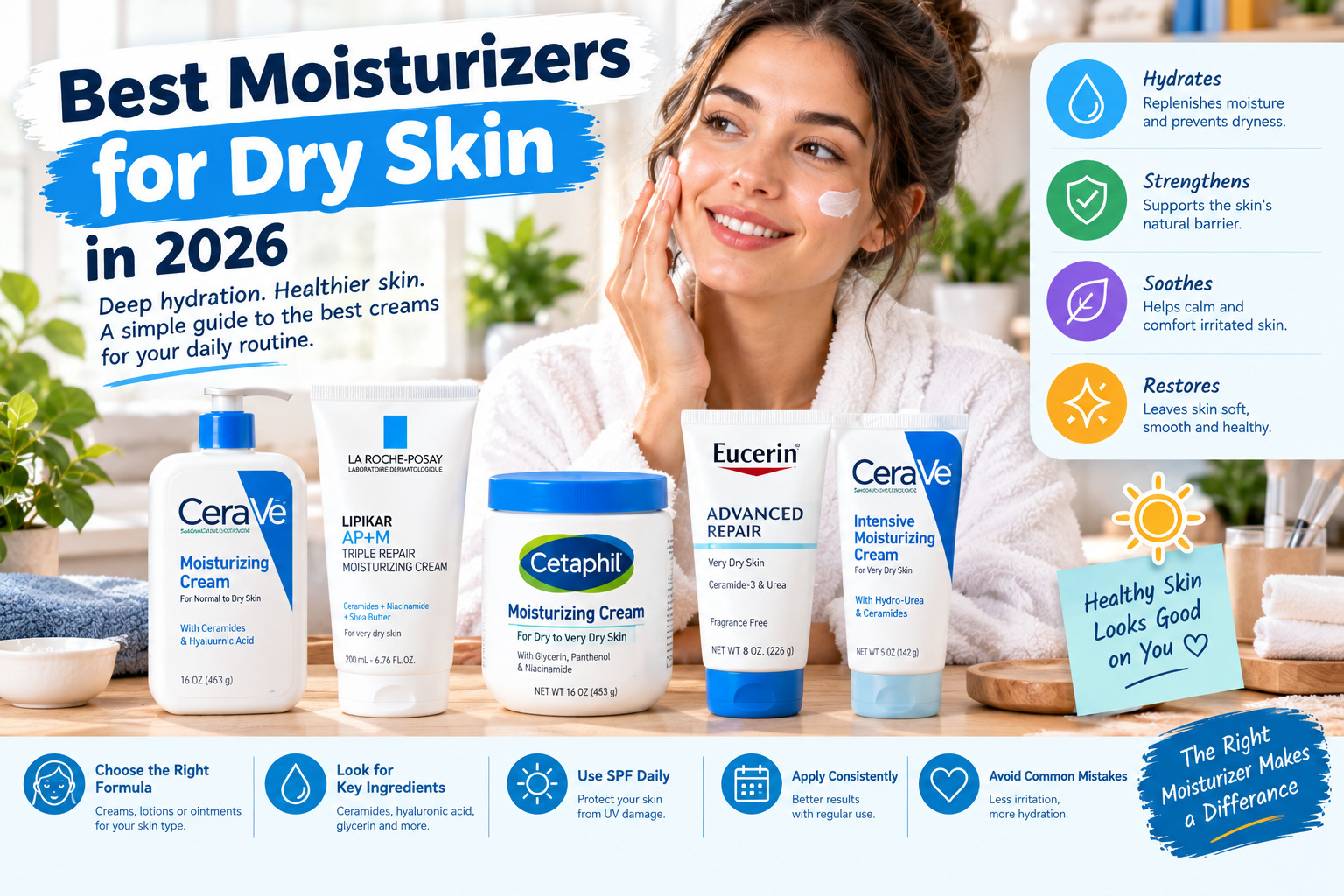
Best Moisturizers for Dry Skin in 2026: Top Creams for Lasting Hydration
Dry skin can feel tight, rough, flaky, or uncomfortable, especially after washing, showering, or spending time in cold or dry weather. Choosing the right moisturizer can help replenish moisture, support the skin’s natural protective barrier, and make everyday skincare more comfortable. However, not every formula works equally well for every person. The best moisturizer for dry skin in 2026 depends on how severe the dryness is, whether your skin is sensitive, and whether you need a lightweight facial cream or a richer product for the face and body.
This guide compares five popular moisturizers using their intended uses, key ingredients, textures, and official product information. It also explains how to choose a suitable formula, apply it effectively, and avoid common mistakes without relying on exaggerated skincare claims.
What Makes a Good Moisturizer for Dry Skin?
A good moisturizer helps the skin retain water and reduces moisture loss. Many effective formulas combine three types of ingredients: humectants, which attract water; emollients, which soften rough skin; and occlusives, which form a protective layer that slows water loss. Glycerin and hyaluronic acid are examples of humectants, while ceramides help support the skin barrier and petrolatum helps seal in moisture.
Creams and ointments are generally more suitable than lightweight lotions when dryness is pronounced. Lotions may still work well for mild dryness or for people who dislike a heavy finish. The goal is to find a formula that provides enough hydration without causing irritation or feeling uncomfortable during daily use. American Academy of Dermatology: How to Pick the Right Moisturizer
Best Moisturizers for Dry Skin in 2026
1. CeraVe Moisturizing Cream
Best for: Everyday hydration for dry skin on the face and body
CeraVe Moisturizing Cream is a rich, fragrance-free formula designed for normal to dry skin. It contains three essential ceramides, hyaluronic acid, dimethicone, and petrolatum. Together, these ingredients help hydrate the skin, support its protective barrier, and reduce moisture loss. The cream is designed for use on both the face and body, which can make it a practical option for people who want one moisturizer for several areas.
Its richer texture may be especially useful when skin feels tight after cleansing or becomes dry during colder months. Although it is formulated to be non-comedogenic, individual skin responses vary, so people who are prone to breakouts should monitor how their skin reacts when introducing a new product. View CeraVe Moisturizing Cream on the official website
2. La Roche-Posay Lipikar AP+MAX Triple Repair Moisturizing Cream
Best for: Very dry, rough, or uncomfortable skin
La Roche-Posay Lipikar AP+MAX Triple Repair Moisturizing Cream, previously marketed in the United States as Lipikar AP+M Balm, is a rich moisturizer intended for very dry skin. Its formula includes ceramides, niacinamide, and shea butter, ingredients that help support skin hydration and the protective barrier. The manufacturer describes it as suitable for the face and body and designed to provide long-lasting moisture.
This option may be worth considering when ordinary lightweight lotions do not provide enough comfort. Its richer formula is particularly relevant for rough or persistently dry areas, although the feel may be heavier than some people prefer for daytime facial use. Avoid applying it to broken skin, and follow the product label or professional advice if you have an existing skin condition. View Lipikar AP+MAX on the official La Roche-Posay website
3. Cetaphil Moisturizing Cream
Best for: Dry to very dry skin that needs a rich daily moisturizer
Cetaphil Moisturizing Cream is formulated for dry to very dry skin and is designed for daily use on the face and body. Its ingredients include glycerin, panthenol, and niacinamide. Glycerin helps attract moisture, while panthenol and niacinamide can support hydration and the skin’s protective barrier. The formula is marketed for sensitive skin, making it an option for people looking for a straightforward moisturizing cream.
Its rich texture can be useful when skin feels uncomfortable after washing or exposure to dry weather. Nevertheless, sensitive skin is not identical from person to person, and even products designed for sensitive skin can occasionally cause reactions. Review the current ingredient list before buying, particularly if you already know that certain ingredients irritate your skin. View Cetaphil Moisturizing Cream on the official website
4. Eucerin Advanced Repair Cream
Best for: Very dry skin on the body
Eucerin Advanced Repair Cream is designed for dry to very dry skin and combines moisturizing ingredients such as glycerin, urea, and ceramide-related skin-conditioning ingredients. Urea helps attract and retain water, while the overall formula is intended to improve the feel of rough, dry skin and support moisture retention. This makes it a product worth considering for areas such as the legs, arms, elbows, and other parts of the body that become especially dry.
Because urea can sometimes sting on cracked or irritated skin, it may not be the most comfortable first choice for every person with a damaged skin barrier. Check the product directions, test cautiously if you have sensitive skin, and discontinue use if persistent irritation develops. Product versions can differ by market, so confirm the ingredients and intended use on the package. View Eucerin Advanced Repair on the official website
5. CeraVe Intensive Moisturizing Cream
Best for: Dry to very dry skin that needs a richer formula
CeraVe Intensive Moisturizing Cream is designed for dry to very dry skin and offers a richer alternative to a standard daily moisturizing cream. According to the manufacturer, the formula contains 5% Hydro-Urea, shea butter, three essential ceramides, and ingredients intended to help maintain hydration and support the skin barrier. It is designed for use on the face and body.
This product may be useful when ordinary moisturizers feel insufficient, particularly during colder weather or periods of increased dryness. Its richer texture can be beneficial for some people but may feel too heavy for others, especially if they prefer lightweight facial products. Check the label for the current formulation and use it as directed. View CeraVe Intensive Moisturizing Cream on the official website
Moisturizer Comparison: Which Formula Suits Your Skin?
The following table summarizes the main differences between the selected products. The recommendations are based on their intended uses and published product information, not on a claim that one formula has been proven superior for everyone.
| Product | Main ingredients or features | Best starting point |
|---|---|---|
| CeraVe Moisturizing Cream | Ceramides, hyaluronic acid, dimethicone, petrolatum | Everyday face and body hydration |
| La Roche-Posay Lipikar AP+MAX | Ceramides, niacinamide, shea butter | Very dry, rough skin |
| Cetaphil Moisturizing Cream | Glycerin, panthenol, niacinamide | Dry to very dry skin |
| Eucerin Advanced Repair Cream | Glycerin, urea, moisturizing ingredients | Very dry body skin |
| CeraVe Intensive Moisturizing Cream | Hydro-Urea, shea butter, ceramides | Dryness that needs a richer cream |
Product availability and formulations may differ by country. Always check the product packaging and official local website before purchasing.
How to Choose the Best Moisturizer for Your Skin Type
For Dry Facial Skin
Choose a cream rather than a very lightweight lotion if your face frequently feels tight, rough, or flaky. Ingredients such as glycerin, ceramides, hyaluronic acid, and dimethicone can help support hydration and reduce moisture loss. Apply the product consistently, especially after washing your face, and avoid using several new skincare products at the same time.
For Very Dry Body Skin
A rich cream or ointment may be more effective at reducing moisture loss than a lightweight lotion. Focus on areas that become rough quickly, including the hands, elbows, knees, and lower legs. If you have recurring dryness, consider whether long, hot showers, harsh cleansers, or frequent washing are contributing to the problem.
For Sensitive Skin
Look for products labeled fragrance-free and review the ingredient list before use. Fragrance-free formulas may be a useful starting point because fragrance can irritate some people with dry or sensitive skin. However, no product can guarantee that every individual will tolerate it. Introduce new products gradually and stop using a moisturizer if it causes persistent burning, redness, swelling, or worsening irritation.
For Dry Skin That Is Also Prone to Breakouts
A richer cream may help dry areas, but its texture might not suit every acne-prone face. Look for a moisturizer labeled non-comedogenic when appropriate, and consider applying a richer product only to the areas that need it. If dryness and acne occur together, avoid aggressive cleansing and frequent exfoliation, which may worsen irritation.
How to Apply Moisturizer for Better Results
The way you apply moisturizer can make a meaningful difference to your routine. After washing, gently pat your skin with a clean towel instead of rubbing it vigorously. Apply moisturizer while the skin is still slightly damp to help retain moisture, and reapply whenever the skin feels dry or after washing your hands.
For the face, start with a comfortable amount and spread it evenly without rubbing aggressively. For the body, pay particular attention to dry areas and apply moisturizer after bathing. The American Academy of Dermatology recommends using moisturizer regularly and choosing creams or ointments for very dry skin. American Academy of Dermatology: Dermatologists’ Tips for Relieving Dry Skin
Common Moisturizing Mistakes to Avoid
One common mistake is choosing a product based only on its popularity or price instead of considering your skin’s needs. A lightweight lotion may be insufficient for very dry skin, while a thick cream may feel uncomfortable on someone who prefers a light finish. Another mistake is applying moisturizer only when dryness becomes severe rather than using it consistently.
Over-cleansing, using very hot water, and scrubbing flaky skin can also make dryness worse. Avoid combining too many exfoliating products when your skin is already irritated, and do not assume that natural ingredients are automatically safer for sensitive skin. If a product repeatedly causes discomfort, stop using it and reassess your routine.
When Dry Skin Needs Professional Advice
Occasional dryness often improves with gentle cleansing and regular moisturizing. However, persistent itching, deep cracks, bleeding, significant redness, pain, or a rash may indicate a condition that needs professional assessment. Eczema, psoriasis, and other medical conditions can cause symptoms that resemble ordinary dry skin.
If your skin does not improve despite consistent use of an appropriate moisturizer, or if a product causes repeated burning or irritation, consult a qualified dermatologist. Very dry or damaged skin may need a tailored treatment plan rather than additional over-the-counter products. American Academy of Dermatology: When to Seek Help for Dry Skin
Final Verdict: The Best Moisturizer for Dry Skin in 2026
The best moisturizer depends on the severity of dryness, the area being treated, personal texture preferences, and how well your skin tolerates the formula. CeraVe Moisturizing Cream is a practical starting point for everyday face and body hydration. La Roche-Posay Lipikar AP+MAX is worth considering for very dry skin, while Cetaphil Moisturizing Cream offers another rich daily option. Eucerin Advanced Repair Cream may suit very dry body skin, and CeraVe Intensive Moisturizing Cream provides a richer alternative for people who need more intensive moisture.
No single moisturizer is guaranteed to work for everyone, and product names or formulas can vary between markets. Prioritize a formula that meets your skin’s needs, use it consistently, and avoid products that trigger irritation. For persistent or severe symptoms, professional advice is more appropriate than repeatedly trying new creams.


