
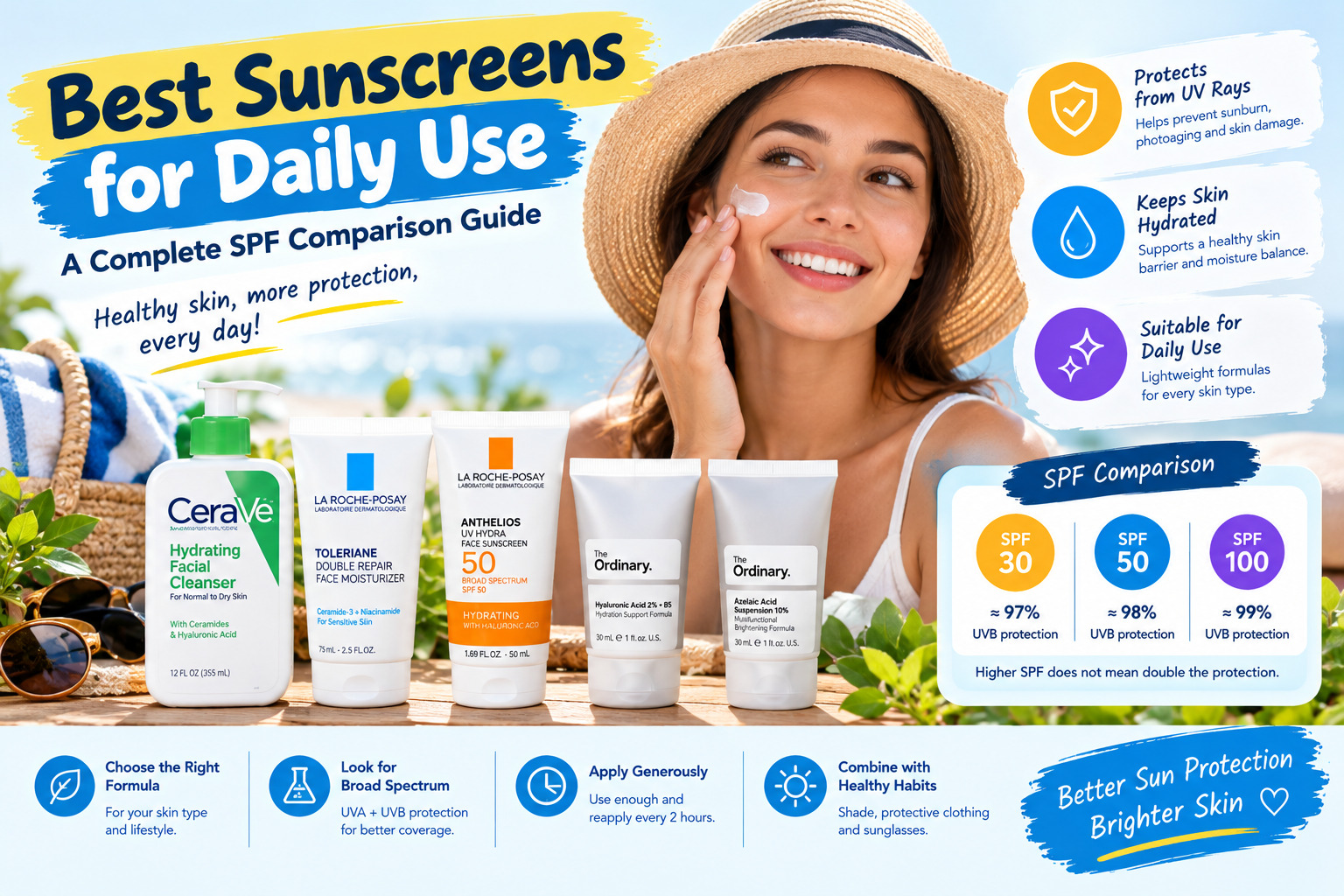
Best Sunscreens for Daily Use: A Complete SPF Comparison Guide
Daily sunscreen is one of the most important steps in a skincare routine. The right sunscreen helps protect the skin from ultraviolet (UV) radiation, reduces the risk of sunburn, and helps prevent premature skin aging when used correctly. However, choosing between SPF 30, SPF 50, mineral formulas, lightweight fluids, and moisturizing sunscreens can be confusing. This guide compares popular daily sunscreens, explains what SPF really means, and helps you choose an option that suits your skin type, lifestyle, and budget.
Why Daily Sunscreen Matters
Sun exposure occurs during everyday activities such as walking, driving, commuting, shopping, and sitting near windows. Ultraviolet radiation can damage the skin even when the weather is cloudy, and cumulative exposure contributes to premature skin aging and increases the risk of skin cancer. A broad-spectrum sunscreen, combined with shade and protective clothing, is an important part of a practical sun-protection routine. American Academy of Dermatology: How to Apply Sunscreen
Understanding SPF: What Do the Numbers Mean?
SPF stands for Sun Protection Factor. It primarily measures how well a sunscreen protects against UVB radiation, which is a major cause of sunburn. SPF does not independently describe the level of UVA protection, so choosing a product labeled broad spectrum is important because broad-spectrum sunscreens are designed to protect against both UVA and UVB radiation. U.S. Food and Drug Administration: Sunscreen Safety
SPF 30 filters approximately 97% of UVB rays under standardized testing conditions, while SPF 50 filters approximately 98%. These figures do not mean that SPF 50 provides twice as much protection as SPF 25, nor do they mean that either product blocks every harmful ray. Real-world protection depends heavily on applying enough sunscreen, covering exposed skin, and reapplying it as directed. American Academy of Dermatology: Sunscreen FAQs
SPF 30 vs. SPF 50 vs. SPF 100
SPF 30 is a practical minimum for everyday sun protection according to dermatology guidance, provided the product also offers broad-spectrum protection. It can be suitable for ordinary daily activities when applied generously and reapplied appropriately. SPF 50 offers slightly greater protection against UVB radiation and may be a useful choice for people who spend considerable time outdoors, particularly in sunny climates.
SPF 100 does not provide complete protection and should not be treated as a substitute for correct application or reapplication. Higher SPF numbers also do not allow you to remain in the sun indefinitely. For most people, choosing a comfortable broad-spectrum SPF 30 or higher sunscreen that they will use consistently is more useful than choosing a high number and applying too little. American Academy of Dermatology: Choosing the Right Sunscreen
Best Sunscreens for Daily Use
1. La Roche-Posay Anthelios UV Hydra Hydrating Face Sunscreen SPF 50
Best for: Daily facial protection with added hydration
La Roche-Posay Anthelios UV Hydra Hydrating Face Sunscreen SPF 50 is designed to combine broad-spectrum sun protection with a hydrating formula. The product contains hyaluronic acid and is marketed for different skin tones and skin types, including dry skin. Its lightweight finish may appeal to people who prefer a sunscreen that fits into a morning skincare routine without feeling like a heavy cream.
This option is worth considering if your skin tends to feel tight or dry after cleansing. However, individual reactions and finish preferences vary, so check the current ingredient list and product directions before purchasing. No sunscreen can guarantee that it will suit every sensitive skin type. View the official product page
2. CeraVe Hydrating Mineral Sunscreen Face Lotion SPF 50
Best for: People who prefer mineral UV filters
CeraVe Hydrating Mineral Sunscreen Face Lotion SPF 50 uses zinc oxide and titanium dioxide as its mineral sunscreen filters. The formula is designed to provide broad-spectrum protection while supporting skin hydration, making it an option for people who prefer mineral-based products or want to explore a sunscreen formulated for sensitive skin.
Mineral sunscreens can sometimes leave a white cast, depending on the formula and the user’s skin tone. This can affect how comfortable the product feels for daily use, particularly under makeup. Test the finish on your skin before committing to regular use, and confirm that the exact product available in your country has the protection rating you need. View the official product page
3. La Roche-Posay Anthelios UV Control Sunscreen SPF 50
Best for: People with oily or blemish-prone skin
La Roche-Posay Anthelios UV Control Sunscreen SPF 50 is marketed for acne-prone and rosacea-prone skin. Its formula includes azelaic acid and is described by the manufacturer as lightweight and non-comedogenic, meaning it is formulated to help reduce the likelihood of clogged pores. This may make it a useful option for people who find richer sunscreens uncomfortable.
Skin conditions differ, and a sunscreen is not a replacement for prescribed acne or rosacea treatment. If your skin reacts easily, introduce the product carefully and stop using it if you develop persistent irritation. Check the local product label because formulas and availability can vary between markets. View the official product page
4. La Roche-Posay Anthelios Mineral Sunscreen SPF 50
Best for: People looking for a mineral sunscreen for outdoor activities
La Roche-Posay Anthelios Mineral Sunscreen SPF 50 is a mineral-filter option formulated with zinc oxide and titanium dioxide. The manufacturer’s product information describes it as a broad-spectrum sunscreen designed for sensitive skin and outdoor protection. A mineral formula may be worth considering if you prefer to avoid chemical UV filters or have difficulty finding a comfortable formula.
Before using this product for swimming or heavy sweating, check the exact packaging for its water-resistance rating and follow the stated reapplication interval. Mineral does not automatically mean irritation-free, and texture, residue, and comfort remain important factors when choosing a daily sunscreen. View the official product page
Sunscreen Comparison: SPF, Skin Type, and Formula
The following comparison summarizes the main differences between the selected products. It is a practical guide rather than a clinical ranking, and it does not imply that one sunscreen is universally better than another.
| Sunscreen | SPF | Formula or key feature | Worth considering for |
|---|---|---|---|
| La Roche-Posay Anthelios UV Hydra | 50 | Hydrating formula with hyaluronic acid | Daily facial use and skin that feels dry |
| CeraVe Hydrating Mineral Face Lotion | 50 | Zinc oxide and titanium dioxide | People who prefer mineral filters |
| La Roche-Posay Anthelios UV Control | 50 | Lightweight, non-comedogenic formula with azelaic acid | Oily or blemish-prone skin |
| La Roche-Posay Anthelios Mineral Sunscreen | 50 | Mineral UV filters | People seeking mineral outdoor protection |
Product formulas, labels, and availability can differ by country. Confirm the SPF rating, broad-spectrum claim, ingredient list, and water-resistance information on the package before buying.
How to Choose Sunscreen for Your Skin Type
For Oily or Acne-Prone Skin
Look for a lightweight fluid, gel, or lotion labeled non-comedogenic when available. A formula that feels comfortable and does not leave your skin excessively greasy may be easier to apply in the recommended amount every morning. Avoid assuming that every mineral or chemical sunscreen will behave the same way, because texture and individual tolerance vary.
For Dry Skin
A moisturizing sunscreen may help simplify your morning routine. Look for a formula that feels comfortable on dry areas and does not cause tightness after application. If you need additional moisture, apply a suitable moisturizer first and allow it to settle before applying sunscreen.
For Sensitive Skin
Choose a sunscreen with a simple, well-tolerated formula and review the ingredient list for substances that have caused problems for you in the past. Fragrance-free products may be worth considering if fragrance tends to irritate your skin, but no label guarantees that a product will never cause a reaction. Test a new sunscreen on a small area according to product directions before using it widely.
For Combination or Normal Skin
A lightweight lotion or fluid can be a practical starting point. Consider whether your cheeks feel dry while your forehead and nose become oily, and choose a formula that remains comfortable across those areas. Daily consistency matters more than selecting a product based only on popularity or price.
How to Apply Sunscreen Correctly
Even a high-SPF sunscreen can provide less protection than expected if too little is applied. Apply it generously and evenly to all exposed skin, including the face, ears, neck, and other areas not covered by clothing. For facial application, the American Academy of Dermatology advises using at least about one teaspoon as a general minimum guide for most adults, adjusting as needed to cover the face adequately. Follow the specific product instructions and avoid contact with the eyes.
Apply sunscreen before going outdoors, following the label’s timing instructions. Reapply approximately every two hours while outdoors and after swimming, sweating, or towel drying. If you are swimming or exercising outdoors, choose a product labeled water-resistant and follow its stated duration, commonly 40 or 80 minutes. No sunscreen should be described as completely waterproof or sweatproof. American Academy of Dermatology: How to Apply Sunscreen · U.S. Food and Drug Administration: Sunscreen Label Guidance
Sunscreen and Makeup: Getting the Order Right
For a simple morning routine, apply cleanser and moisturizer first if needed, followed by sunscreen as the final step of skincare. Give the sunscreen time to settle according to its label before applying makeup. Makeup products that contain SPF may provide additional protection, but they should not automatically replace a properly applied broad-spectrum sunscreen unless enough product is used to deliver the labeled protection.
If you wear makeup throughout the day, plan how you will reapply sun protection when spending extended time outdoors. A reapplication method is useful only if it provides adequate coverage and is used according to the product directions.
Common Sunscreen Mistakes to Avoid
One common mistake is choosing sunscreen based only on its SPF number while ignoring broad-spectrum protection. Another is applying too little, which can substantially reduce the protection achieved compared with the product’s tested rating. Skipping reapplication after sweating, swimming, or spending extended periods outdoors can also leave skin less protected.
Other mistakes include using expired sunscreen, ignoring the package instructions, and assuming that cloudy weather eliminates UV exposure. Sunscreen works best as part of a broader approach that includes shade, protective clothing, and sunglasses. American Academy of Dermatology: Common Sunscreen Mistakes
How to Get Good Value When Buying Sunscreen
The most suitable sunscreen is not necessarily the most expensive one. Compare the price per milliliter, the size of the container, the protection rating, and how comfortable the formula feels on your skin. A product that you enjoy using every day may offer better practical value than a premium formula that you apply inconsistently.
Purchase sunscreen from reputable retailers, pharmacies, or authorized sellers whenever possible. Check packaging integrity, expiration dates, and storage instructions. Avoid products with unsupported promises such as complete UV protection, permanent prevention of skin aging, or guaranteed treatment of acne or pigmentation.
Final Verdict: Which SPF Is Best for Daily Use?
For most adults, a broad-spectrum SPF 30 or higher is a sensible starting point for daily protection, while SPF 50 provides slightly greater protection against UVB radiation. The best choice depends on your skin type, comfort, budget, climate, and time spent outdoors.
La Roche-Posay Anthelios UV Hydra SPF 50 is worth considering if you prefer a hydrating facial sunscreen; CeraVe Hydrating Mineral SPF 50 is an option for those who prefer mineral filters; and La Roche-Posay Anthelios UV Control SPF 50 may appeal to people with oily or blemish-prone skin. These are product options, not medical endorsements or a guarantee of results.
The most important habit is to choose a broad-spectrum sunscreen you can apply generously and consistently, reapply it as directed, and combine it with shade and protective clothing. If you have a persistent skin condition, a history of skin cancer, or repeated reactions to sunscreen, consult a qualified healthcare professional for advice tailored to your needs.


