
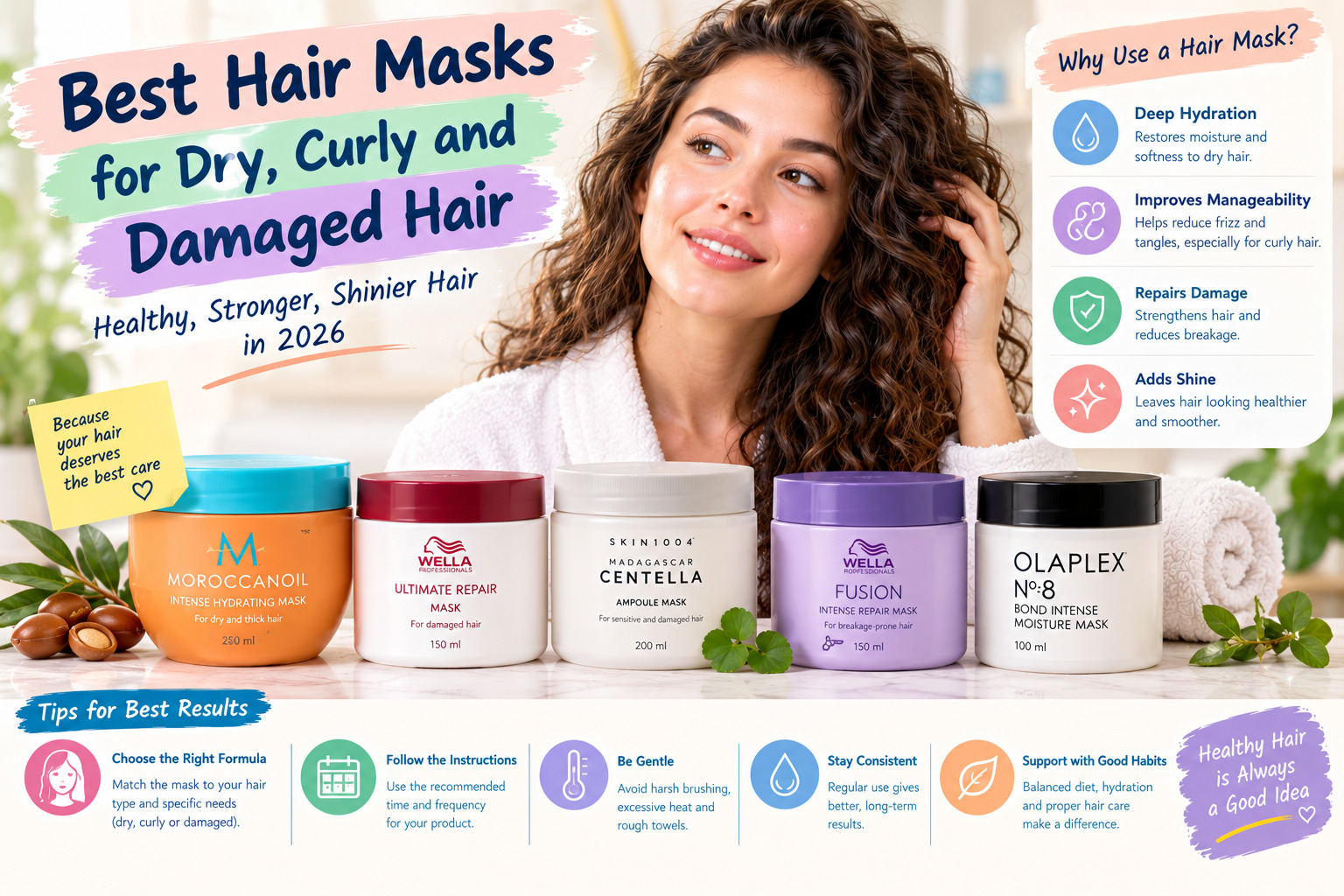
Best Hair Masks for Dry, Curly, and Damaged Hair in 2026
Dry, curly, and damaged hair often needs more conditioning than a basic shampoo-and-conditioner routine can provide. A well-chosen hair mask can help improve softness, reduce frizz, make detangling easier, and give hair a smoother, healthier-looking finish. However, not every mask works the same way. Some formulas focus on moisture and manageability, while others are designed for hair weakened by bleaching, coloring, frequent heat styling, or mechanical damage. This guide compares five hair masks worth considering in 2026 and explains how to choose the right formula for your hair texture, condition, and styling routine. Source: American Academy of Dermatology hair-care guidance
1. Moroccanoil Intense Hydrating Mask — Best for Dry, Thick Hair
Moroccanoil Intense Hydrating Mask is a rich conditioning treatment designed for medium-to-thick hair that feels dry, rough, or difficult to manage. Its formula includes argan oil and conditioning ingredients intended to improve softness, shine, elasticity, and manageability. This makes it a useful option for people whose hair needs extra conditioning after washing, particularly when dryness contributes to frizz and tangling. The manufacturer recommends applying it to towel-dried hair, distributing it through the lengths, leaving it on for five to seven minutes, and rinsing thoroughly. The formula contains fragrance, so people who are sensitive to fragranced hair products should review the ingredient list before use. View the official Moroccanoil Intense Hydrating Mask page
2. Wella Professionals Ultimate Repair Mask — Best for Chemically or Heat-Damaged Hair
Wella Professionals Ultimate Repair Mask is designed for hair affected by bleaching, coloring, heat styling, and other sources of damage. Its formula features AHA and Omega-9 alongside conditioning agents intended to improve the appearance and feel of weakened hair. It may be worth considering if your hair feels brittle, looks dull, tangles easily, or breaks more readily after chemical treatments. The manufacturer recommends applying the mask to clean, damp hair, focusing on the lengths and ends, leaving it on for five minutes, and rinsing thoroughly. It is suitable for a range of hair textures, although fine hair may need a smaller amount to avoid a heavy finish. View the official Wella Professionals Ultimate Repair Mask page
3. Wella Professionals Fusion Intense Repair Mask — Best for Hair Prone to Breakage
Wella Professionals Fusion Intense Repair Mask is formulated for damaged hair and is designed to help improve smoothness and resilience against breakage. The formula includes conditioning ingredients and silk amino acids, which help improve the feel and manageability of the hair fiber. This mask may suit people whose hair has become rough, tangled, or fragile after repeated styling or chemical processing. It is not a substitute for preventing further damage, however, so reducing excessive heat, rough brushing, and repeated chemical treatments remains important. Apply it to clean, damp hair, concentrate on the mid-lengths and ends, and follow the manufacturer’s recommended processing time. View the official Wella Professionals Fusion Intense Repair Mask page
4. Wella Professionals Ultimate Smooth Mask — Best for Frizzy, Unmanageable Hair
Wella Professionals Ultimate Smooth Mask is designed to nourish the hair and improve its smoothness and manageability. Its formula features squalane and Omega-9, ingredients used in hair-care products to condition the hair and improve its feel. It may be a useful option for people whose main concerns are frizz, rough texture, and hair that becomes difficult to style in humid weather. A smoothing mask can improve the appearance of the hair without permanently changing its natural curl pattern. People with fine hair should use an appropriate amount and rinse thoroughly to reduce the risk of a heavy or coated feeling. Check the manufacturer’s current instructions and ingredient list before use. View Wella Professionals’ official hair-mask collection
5. OLAPLEX No. 8 Bond Intense Moisture Mask — Best for Moisture and Manageability
OLAPLEX No. 8 Bond Intense Moisture Mask is a treatment designed to add moisture and improve the appearance and manageability of damaged hair. It may appeal to people who want a mask that combines conditioning with a focus on hair that has been weakened by styling or chemical processing. The best results depend on the hair’s condition, the complete routine, and using the product according to its instructions. A mask cannot permanently reverse split ends or restore severely damaged hair to its original state, but conditioning treatments may help hair feel softer and easier to detangle. Check the official product information for current directions and ingredient details before purchasing. View the official OLAPLEX website
What Is the Difference Between a Hydrating Hair Mask and a Repair Mask?
A hydrating mask mainly focuses on improving softness, flexibility, and manageability. These formulas are often useful for hair that feels dry, rough, or prone to tangling. A repair-focused mask is intended for hair weakened by coloring, bleaching, heat, or repeated mechanical stress. Depending on the formula, it may contain conditioning agents, proteins, amino acids, or ingredients marketed to support the hair fiber. Some products provide both conditioning and damage-focused benefits. Neither type can permanently mend split ends, and no single ingredient guarantees that damaged hair will be fully restored. The most suitable option depends on whether dryness, frizz, breakage, or a combination of concerns is your main problem. Source: American Academy of Dermatology hair-care advice
How to Choose a Hair Mask for Dry Hair
Dry hair often benefits from a mask that provides conditioning and helps reduce friction between strands. Creamy formulas containing ingredients such as fatty alcohols, conditioning agents, and oils can make hair feel softer and easier to comb. People with thick or coarse hair may prefer a richer mask, while those with fine hair may need a lighter formula or a smaller amount applied mainly to the ends. If your hair is dry because of frequent heat styling or chemical processing, reducing those sources of damage is just as important as choosing a conditioning product. A mask can improve the hair’s feel, but it cannot replace gentle handling and appropriate everyday care. Source: American Academy of Dermatology
How to Choose a Hair Mask for Curly Hair
Curly hair can be more prone to tangling and breakage during detangling, so a mask that improves slip and softness may make wash days easier. Look for a formula that suits your curl pattern and hair thickness without leaving excessive residue. Apply it evenly to clean, damp hair, then detangle gently with your fingers or a wide-tooth comb if appropriate for your texture. Avoid pulling through knots or forcing a comb through resistant sections. Curly hair does not always need the richest possible product: too much heavy conditioning can leave some hair feeling coated or limp. Experiment with the amount and frequency while following the product directions. Source: American Academy of Dermatology guidance for textured hair
How to Choose a Hair Mask for Damaged Hair
Hair that has been bleached, colored, chemically straightened, or frequently styled with heat may benefit from a mask that improves conditioning and reduces friction during combing. If breakage is a concern, pair a suitable treatment with gentler habits: reduce high-temperature styling, avoid repeated chemical processing when possible, and handle wet hair carefully. Use the mask as directed rather than leaving it on for longer in the hope of achieving faster results. Severely split or fractured ends cannot be permanently repaired by a cosmetic mask, although conditioning may temporarily improve their appearance. If breakage continues or you notice unusual hair loss, a qualified dermatologist can help identify the cause. Source: American Academy of Dermatology — habits that can damage hair
How Often Should You Use a Hair Mask?
The ideal frequency depends on the product instructions, hair thickness, dryness, and degree of damage. Many masks are intended for weekly use, while some manufacturers allow use once or twice a week. Start with the label’s directions and adjust only if the product permits and your hair needs it. Fine hair may become weighed down by frequent use of rich masks, while very dry, thick, or curly hair may benefit from more regular conditioning. A mask does not necessarily need to be left on for an extended period to work; follow the stated processing time and rinse thoroughly. Stop using a product if it causes scalp irritation, itching, or another unexpected reaction.
Common Hair-Care Mistakes That Make Damage Worse
Using a mask cannot fully compensate for repeated habits that weaken hair. Frequent high-heat styling, rough towel drying, aggressive brushing, tight hairstyles, and repeated bleaching can contribute to breakage. Instead, blot or wrap the hair gently in a towel, detangle with care, and use lower heat settings when styling is necessary. Apply shampoo primarily to the scalp and let the lather rinse through the lengths rather than aggressively rubbing the hair. Use conditioner after washing and consider a mask when extra conditioning is needed. These habits help reduce avoidable damage and support the benefits of a well-chosen hair treatment. Source: American Academy of Dermatology
Final Verdict: Which Hair Mask Is Best in 2026?
Moroccanoil Intense Hydrating Mask is worth considering for medium-to-thick hair that needs extra conditioning. Wella Professionals Ultimate Repair Mask is designed for hair affected by chemical treatments and heat, while Fusion Intense Repair Mask focuses on improving the feel and resilience of damaged strands. Ultimate Smooth Mask may appeal to people who want a smoother finish and better manageability, and OLAPLEX No. 8 is another option to investigate for moisture-focused care. The best choice depends on your hair’s texture, condition, ingredient sensitivities, and budget. For the most useful results, combine a suitable mask with gentle washing, careful detangling, and reduced heat damage.
Product formulations, packaging, prices, and availability can change during 2026 and may vary by country. Check the current product label and manufacturer instructions before use. These products are cosmetic hair treatments, not guaranteed medical treatments for scalp conditions or hair loss.


