
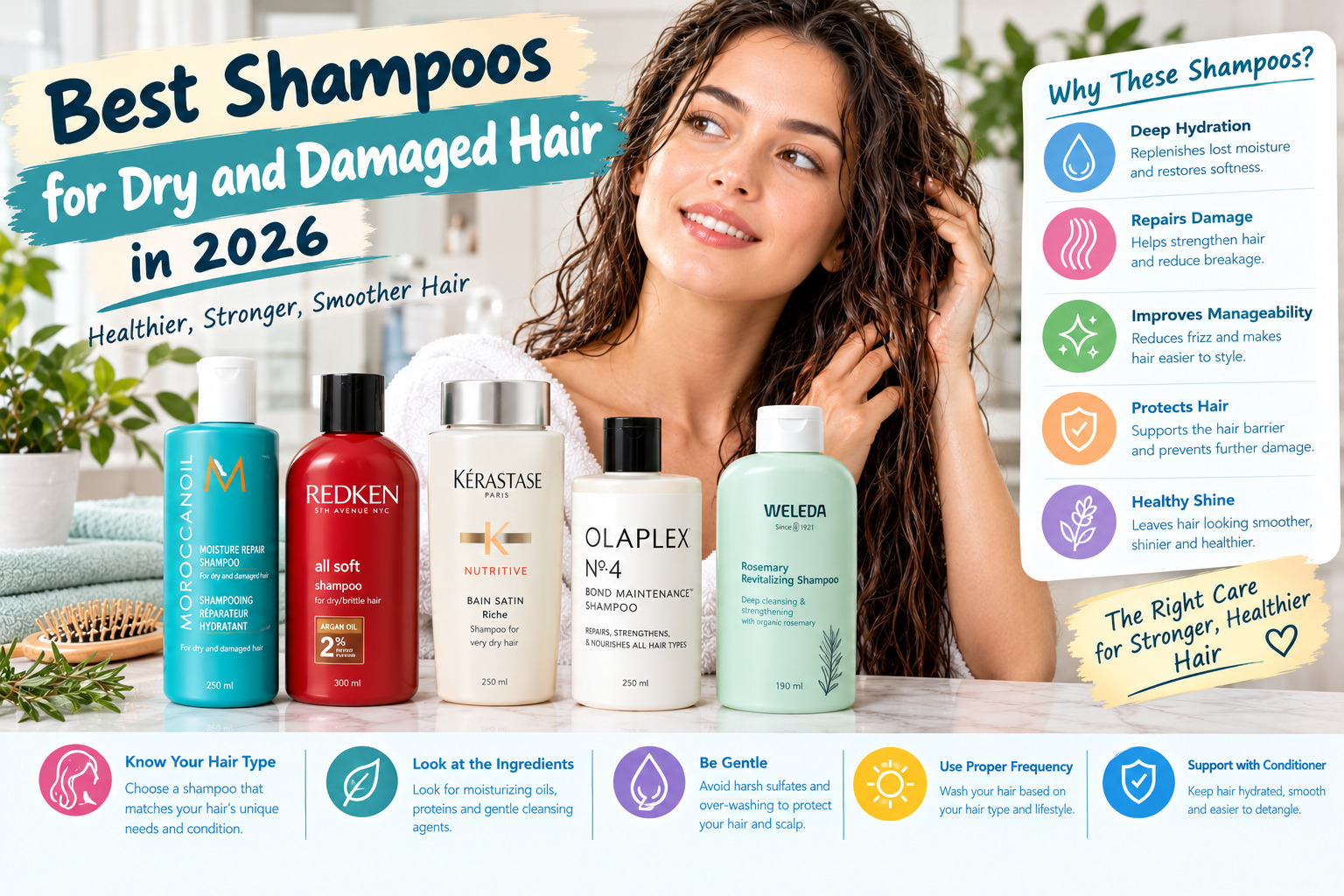
Best Shampoos for Dry and Damaged Hair in 2026
Dry, damaged hair can feel rough, look dull, become difficult to detangle, and break more easily. Frequent heat styling, bleaching, coloring, harsh cleansing, and environmental exposure can all contribute to these problems. Choosing the right shampoo can help clean the scalp while improving the softness, smoothness, and manageability of the hair.
The best shampoo depends on your hair texture, the degree of dryness, and whether your hair has been chemically treated. A moisturizing formula may be ideal for naturally dry hair, while a strengthening shampoo may be more suitable for strands weakened by bleaching or repeated heat styling.
1. OLAPLEX No. 4 Bond Maintenance Shampoo — Best for Damaged Hair
OLAPLEX No. 4 Bond Maintenance Shampoo is designed for hair affected by everyday wear, chemical treatments, and styling. Its concentrated formula is intended to cleanse gently while helping improve the appearance and feel of weakened strands. It may be a useful option for people who regularly color, bleach, or heat-style their hair and want a shampoo that fits into a strengthening routine.
This shampoo is not a substitute for a conditioner or intensive treatment. For the best routine, use it according to the label and follow with a conditioner suited to your hair texture. Individual results can vary depending on the type and extent of damage.
Official product information: https://olaplex.com/products/olaplex-n4-bond-maintenance-strengthening-shampoo-250ml
2. Redken All Soft Shampoo — Best for Dry, Brittle Hair
Redken All Soft Shampoo is formulated for dry, brittle hair that needs a softer, smoother feel. The brand highlights argan oil and conditioning ingredients in its formula, making it an option for people whose hair feels coarse, looks dull, or becomes difficult to manage after washing.
This shampoo may suit medium or thicker hair that benefits from additional softness. People with very fine hair should pay attention to how their hair feels after use, as richer conditioning routines can sometimes reduce volume. Pairing shampoo with a compatible conditioner can help improve detangling and reduce friction during grooming.
Official product information: https://www.redken.com/hair-care/all-soft-argan-oil-softening-shampoo.html
3. Kérastase Nutritive Bain Satin Riche — Best for Very Dry, Thick Hair
Kérastase Nutritive Bain Satin Riche Shampoo is designed for medium to thick hair that is dry or very dry. Its formula includes plant-based proteins and niacinamide, and the brand positions it as a nourishing cleanser that helps improve softness, shine, and manageability.
This is a premium option for people whose hair feels persistently dry and needs a richer cleansing routine. It may be less suitable for someone who prefers a very lightweight finish, particularly if their hair is fine or easily weighed down. Check the current product ingredients and directions before purchasing, since formulas and availability can vary by market.
Official product information: https://www.kerastase-usa.com/collections/nutritive/bain-satin-riche-shampoo.html
4. Choose a Gentle, Moisturizing Shampoo for Everyday Dryness
Not every person with dry hair needs a specialized bond-building product or an expensive salon shampoo. A gentle moisturizing shampoo may be a sensible starting point when the main concerns are roughness, frizz, and a lack of softness rather than severe chemical damage.
Look for a formula suited to your hair type and consider ingredients such as glycerin, panthenol, or conditioning agents that help hair feel smoother and easier to comb. Oils and richer conditioning ingredients may be helpful for coarse hair, while fine hair often responds better to lighter formulas. No single ingredient or product works equally well for everyone.
A useful starting point is to compare the ingredient list, directions, and intended hair type on the product’s official label before choosing a shampoo.
5. How to Choose the Right Shampoo for Your Hair
For dry, thick hair: A richer moisturizing shampoo may help improve softness and reduce the rough feeling associated with dryness. Follow with conditioner, especially on the mid-lengths and ends.
For fine, dry hair: Choose a lighter formula that cleans the scalp without leaving the lengths feeling heavy. Use a small amount of conditioner and concentrate it on the mid-lengths and ends.
For bleached or color-treated hair: Consider a shampoo specifically formulated for chemically treated hair. Use less heat where possible and follow the directions for any strengthening products you choose.
For curly or coily hair: Look for a cleansing routine that preserves manageability and reduces tangling. Curly hair may benefit from conditioning after washing and gentle detangling rather than vigorous rubbing with a towel.
For a sensitive scalp: Check the ingredient list for known personal irritants and stop using a product if it causes burning, itching, redness, or swelling. A shampoo marketed as natural, gentle, or sulfate-free is not automatically suitable for every person.
How to Wash Dry and Damaged Hair Correctly
Start by thoroughly wetting your hair with lukewarm water. Apply shampoo mainly to the scalp and massage gently with your fingertips instead of scratching with your nails. Let the lather rinse through the lengths rather than rubbing the ends aggressively.
Use the amount and washing frequency that suit your scalp and hair. If your scalp becomes oily quickly, you may need to wash more often; if your hair is very dry, frequent unnecessary washing may make it feel rougher. Follow the shampoo with a suitable conditioner and detangle carefully, starting at the ends.
Limit high-temperature styling and use a heat protectant when heat tools are necessary. Avoid rough towel-drying and tight hairstyles that place repeated tension on fragile strands. These everyday habits can help reduce additional breakage.
Dermatology guidance on hair-care habits: https://www.aad.org/public/everyday-care/hair-scalp-care/hair/habits-that-damage-hair
What Shampoo Can and Cannot Do for Damaged Hair
A suitable shampoo can remove dirt and excess oil while helping hair feel softer, smoother, and easier to manage. Some formulas are designed to support the appearance and strength of hair that has been weakened by styling or chemical processing.
However, shampoo cannot permanently restore a split end or reverse every form of structural damage. Trimming badly split ends, using conditioner, reducing heat exposure, and handling hair gently may be necessary alongside changing shampoo. Results depend on the cause of the damage, hair texture, and the rest of the hair-care routine.
If hair breakage is sudden or severe, or if you notice unexplained hair loss, scalp pain, persistent itching, or inflammation, seek advice from a qualified healthcare professional rather than relying on cosmetic products alone.
Final Verdict
The best shampoo for dry and damaged hair in 2026 is the one that addresses your main concern without irritating your scalp or leaving your hair difficult to manage. OLAPLEX No. 4 is worth considering for hair exposed to regular styling or chemical treatments, Redken All Soft is aimed at dry and brittle strands, and Kérastase Nutritive Bain Satin Riche is designed for medium to thick, very dry hair.
You do not need to buy the most expensive shampoo to build an effective routine. Compare the formula, intended hair type, directions, and price, then assess how your hair and scalp respond over several washes. Pairing an appropriate shampoo with conditioner and gentler styling habits is often more useful than expecting one product to solve every hair concern.


