Best Barcode Scanners for Retail Stores in 2026: Features, Benefits, and Buying Guide
Why Barcode Scanners Are Essential for Retail Stores
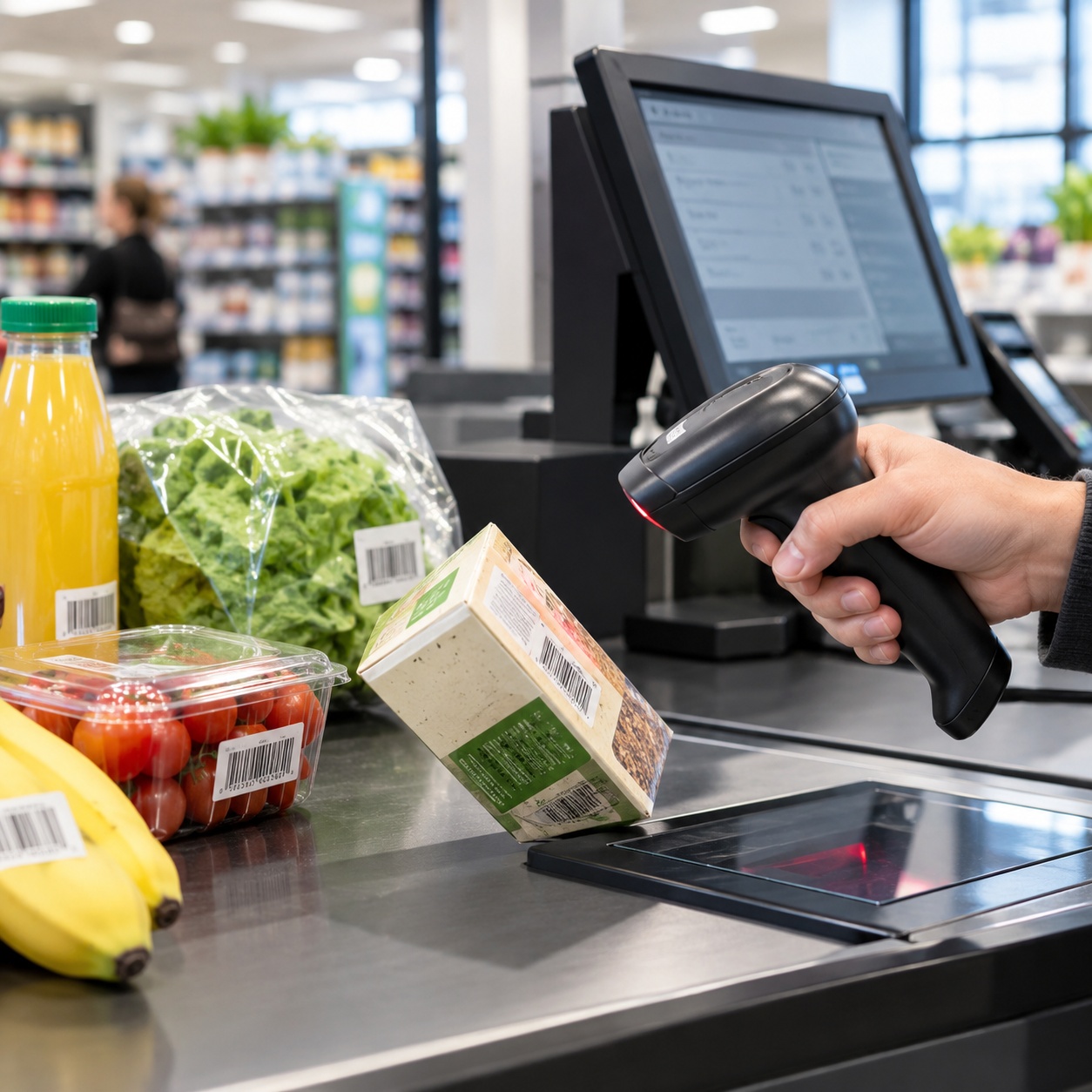
Barcode scanners are essential tools for modern retail businesses. They help shop owners process transactions, identify products, update inventory records, and reduce manual data-entry errors. From grocery stores and supermarkets to pharmacies, clothing shops, electronics retailers, and convenience stores, the right barcode scanner can make everyday operations faster and more efficient.
In 2026, retailers can choose from a wide range of barcode scanning devices, including wired handheld scanners, wireless Bluetooth models, presentation scanners, and advanced 2D barcode readers. Each type offers different features depending on the size of the business, the checkout environment, and the requirements of the point-of-sale (POS) system.
Choosing the best barcode scanner for a retail store requires more than comparing prices. Business owners should consider barcode compatibility, scanning speed, connection options, durability, battery life, and integration with existing software. This guide explores popular barcode scanner models and useful features to help retailers make an informed purchasing decision.
1. Zebra DS2208: A Versatile Barcode Scanner for Retail Shops
The Zebra DS2208 is a handheld 2D barcode scanner designed for retail checkout counters, small businesses, pharmacies, and other commercial environments. It is a practical option for retailers who need to read traditional product barcodes as well as supported 2D codes.
Main Features of the Zebra DS2208
The DS2208 uses imaging technology to capture supported barcodes rather than relying exclusively on traditional laser scanning. Depending on the code type and configuration, it can read common 1D barcodes, such as EAN and UPC, along with supported 2D formats, including QR codes.
The scanner is available in configurations designed for USB connectivity and can be integrated with compatible computers and POS systems. Retailers should check the exact package contents because cables, stands, and other accessories can vary between product listings.
Benefits for Retail Businesses
One of the main advantages of the Zebra DS2208 is its versatility. A single scanner can support everyday product checkout while also reading compatible digital codes displayed on customer devices.
Its handheld design gives employees flexibility when scanning items of different sizes. This can be helpful in convenience stores, clothing shops, electronics stores, and businesses that occasionally need to scan products away from the checkout counter.
The DS2208 is worth considering for retailers who want a commercial-grade scanner without immediately investing in a more specialized wireless or industrial model.
Where to buy:
- Zebra DS2208 on Amazon Germany
- Zebra DS2208 on Amazon France
- Zebra DS2208 on Amazon Italy
- Zebra DS2208 on Amazon Spain
2. Honeywell Voyager XP 1470g: A Reliable Scanner for Busy Checkout Counters
The Honeywell Voyager XP 1470g is a handheld 2D barcode scanner designed for retail environments that require frequent scanning. It is suitable for supermarkets, pharmacies, convenience stores, and other businesses that process regular customer transactions.
Main Features of the Honeywell Voyager XP 1470g
This model supports a range of common 1D and 2D barcode formats, depending on configuration and software requirements. Its imaging technology allows it to read compatible printed codes and supported digital barcodes.
The scanner is designed for everyday commercial use and provides wired connectivity through compatible configurations. Before purchasing, retailers should verify the connection interface and included accessories to ensure compatibility with their POS hardware.
Benefits for Retail Businesses
The Voyager XP 1470g is designed to help employees scan products efficiently during busy periods. Its handheld form makes it suitable for scanning products that are difficult to position directly in front of a fixed reader.
It can also be useful when stores need to read supported barcodes that are not perfectly positioned or printed in ideal conditions. Actual performance depends on barcode quality, size, contrast, distance, and the scanner configuration.
For retailers who prioritize reliable scanning and compatibility with existing checkout equipment, the Honeywell Voyager XP 1470g is a model worth comparing with other professional 2D scanners.
Where to buy:
- Honeywell Voyager XP 1470g on Amazon Germany
- Honeywell Voyager XP 1470g on Amazon France
- Honeywell Voyager XP 1470g on Amazon Italy
- Honeywell Voyager XP 1470g on Amazon Spain
3. Datalogic QuickScan QD2500: A Practical Scanner for Everyday Retail Tasks
The Datalogic QuickScan QD2500 is a wired 2D barcode scanner designed for retail counters and other commercial applications. It is suitable for small shops, specialty retailers, pharmacies, and businesses that need a straightforward barcode reading solution.
Main Features of the Datalogic QuickScan QD2500
The scanner supports common 1D and 2D barcode formats, including compatible product codes and QR codes. Its handheld design makes it suitable for scanning individual products at checkout or during selected inventory tasks.
The QD2500 is designed for wired operation, helping businesses avoid the need to manage a rechargeable scanner battery during normal use. Depending on the configuration, connection cables and other accessories may be sold as part of a kit or separately.
Benefits for Retail Businesses
One advantage of the QuickScan QD2500 is its suitability for everyday checkout operations. Employees can pick it up to scan products and return it to a counter or compatible stand when finished.
This design is useful for businesses that prefer a wired scanner with predictable operation and minimal battery maintenance. It can also suit shops that need to scan products at a fixed checkout station rather than throughout a large store.
Retailers should check the supported barcode formats and confirm that their POS software recognizes the scanner’s output correctly.
Where to buy:
- Datalogic QuickScan QD2500 on Amazon Germany
- Datalogic QuickScan QD2500 on Amazon France
- Datalogic QuickScan QD2500 on Amazon Italy
- Datalogic QuickScan QD2500 on Amazon Spain
4. Zebra DS2278: A Wireless Barcode Scanner for Flexible Retail Operations
The Zebra DS2278 is a cordless 2D barcode scanner designed for businesses that want more freedom of movement around the checkout counter. It is suitable for retail stores, pharmacies, stockrooms, and other environments where employees occasionally need to scan products away from a fixed workstation.
Main Features of the Zebra DS2278
The DS2278 supports common 1D and 2D barcode formats, including compatible product barcodes and QR codes. It uses wireless communication to connect with a compatible host system through the appropriate configuration and accessories.
Depending on the package, the scanner may be supplied with a charging and communication cradle or other accessories. Retailers should carefully check the model number and package contents before ordering because a scanner-only package may not include everything needed for the intended setup.
Benefits for Retail Businesses
Wireless operation allows staff to scan bulky items in a shopping cart, inspect products on shelves, and carry out some stock-related tasks without remaining physically connected to the checkout computer.
This flexibility can be particularly useful in hardware stores, electronics retailers, and shops that sell products that are inconvenient to move to the counter.
The DS2278 is a suitable option for businesses that need cordless scanning while maintaining a familiar handheld workflow.
Where to buy:
- Zebra DS2278 on Amazon Germany
- Zebra DS2278 on Amazon France
- Zebra DS2278 on Amazon Italy
- Zebra DS2278 on Amazon Spain
5. Honeywell Voyager 1250g: A Simple Option for Traditional Product Barcodes
The Honeywell Voyager 1250g is a handheld barcode scanner designed primarily for reading traditional linear barcodes. It can be suitable for shops that mainly scan conventional printed product labels and do not require a dedicated 2D scanning solution.
Main Features of the Honeywell Voyager 1250g
This scanner is designed for 1D barcode reading and offers wired connectivity in compatible configurations. Its handheld format is suitable for checkout counters, receiving desks, and selected inventory workflows.
Because this is a 1D-focused model, businesses should not assume that it can read QR codes or other 2D formats. Retailers who need 2D scanning should consider a compatible imaging scanner instead.
Benefits for Retail Businesses
For stores that work almost entirely with traditional EAN or UPC product labels, a dedicated 1D scanner may provide the functions they need without requiring features that will rarely be used.
The Voyager 1250g can be worth considering for basic barcode scanning tasks, provided that the model, interface, and supported barcode types match the store’s requirements.
Before buying, check the device’s condition, included cable, software compatibility, and seller information, especially when considering older or refurbished stock.
Where to buy:
- Honeywell Voyager 1250g on Amazon Germany
- Honeywell Voyager 1250g on Amazon France
- Honeywell Voyager 1250g on Amazon Italy
- Honeywell Voyager 1250g on Amazon Spain
6. Zebra DS9308: A Presentation Scanner for Checkout Counters
The Zebra DS9308 is a compact presentation-style barcode scanner designed for retail checkout environments. Unlike a conventional handheld scanner that must be picked up for each scan, a presentation scanner can remain on the counter so employees can move products in front of its scanning window.
Main Features of the Zebra DS9308
The DS9308 uses imaging technology to read supported 1D and 2D barcodes. Its compact design helps conserve counter space, making it suitable for convenience stores, pharmacies, small supermarkets, and specialty retailers.
Depending on the configuration, it can support the scanning of compatible barcodes on products and digital screens. Retailers should check the exact interface and included accessories before connecting it to a POS system.
Benefits for Retail Businesses
A presentation scanner can make checkout tasks more convenient when employees repeatedly scan small or medium-sized products. Keeping the device on the counter reduces the need to pick up and put down a handheld scanner for every transaction.
Its compact format can also help maintain an organized checkout area. However, the ideal setup depends on counter layout, product dimensions, barcode placement, and the way employees handle merchandise.
Where to buy:
- Zebra DS9308 on Amazon Germany
- Zebra DS9308 on Amazon France
- Zebra DS9308 on Amazon Italy
- Zebra DS9308 on Amazon Spain
7. Datalogic QuickScan QBT2500: A Cordless Scanner for Retail and Inventory
The Datalogic QuickScan QBT2500 is a cordless 2D barcode scanner designed for retail applications that benefit from wireless movement. It can be useful for shops, pharmacies, inventory stations, and businesses that need to scan items at different locations.
Main Features of the Datalogic QuickScan QBT2500
The QBT2500 supports common 1D and 2D barcode formats, depending on the configuration. Its wireless design allows communication with compatible systems through Bluetooth and the appropriate connection setup.
Package contents can differ, so buyers should verify whether the listing includes a charging cradle, interface cable, power accessories, or only the scanner itself.
Benefits for Retail Businesses
The wireless design gives employees greater freedom when handling large products, scanning shelves, or performing inventory checks. It can reduce cable clutter around the checkout counter and make some tasks easier to complete.
For retailers that need to move between a counter and nearby storage areas, this type of scanner can be more convenient than a permanently wired device.
Before purchasing, confirm the scanner’s communication range, battery specifications, supported barcode formats, and compatibility with the intended host device.
Where to buy:
- Datalogic QuickScan QBT2500 on Amazon Germany
- Datalogic QuickScan QBT2500 on Amazon France
- Datalogic QuickScan QBT2500 on Amazon Italy
- Datalogic QuickScan QBT2500 on Amazon Spain
8. Budget USB Barcode Scanners for Small Shops
Not every retail business needs a professional scanner with advanced wireless features. Small shops, market stalls, temporary retail spaces, and new businesses may find a basic USB barcode scanner sufficient for their daily needs.
Main Features of Budget USB Scanners
Many entry-level USB barcode scanners connect directly to a compatible computer and operate as a keyboard input device. After a successful scan, the barcode number is entered into the active field in the same way that text is typed.
Some affordable models read only 1D barcodes, while others support both 1D and 2D formats. Common features may include a trigger button, automatic scanning modes, a stand, and configuration options for adding an Enter or Tab suffix after each scan.
The exact capabilities vary significantly between models, so retailers should review the manufacturer’s specifications before purchasing.
Benefits for Small Businesses
A basic USB scanner can be an economical choice for shops that use a computer-based point-of-sale system or maintain stock records in compatible software.
Wired connectivity avoids routine battery charging and is generally straightforward to set up when the scanner uses a supported interface. However, a scanner alone does not provide inventory management or checkout software; those functions must be handled by a compatible application.
Where to buy:
- USB barcode scanners on Amazon Germany
- USB barcode scanners on Amazon France
- USB barcode scanners on Amazon Italy
- USB barcode scanners on Amazon Spain
9. Wired vs. Wireless Barcode Scanners: Which Is Better for Retail?
Choosing between wired and wireless barcode scanners depends on the way a shop operates. Both options can be suitable for retail, but they provide different advantages.
Wired Barcode Scanners
Wired scanners connect to a compatible computer or POS terminal through an interface such as USB. They are suitable for fixed checkout counters where employees scan products in one place.
Their main advantages include continuous power through supported connections, reduced battery maintenance, and a simple physical connection. They can also be an economical option for small businesses with limited scanning requirements.
The main limitation is movement. Cable length and workstation layout can restrict the distance between the scanner and the connected system.
Wireless Barcode Scanners
Wireless scanners use technologies such as Bluetooth or a dedicated radio connection, depending on the model. They are suitable for shops that need to scan bulky items, perform inventory checks, or move between checkout counters and storage areas.
Their main advantages include greater mobility, reduced cable clutter, and more flexible working arrangements. Some models also support charging cradles that provide a convenient storage location between uses.
However, wireless scanners require appropriate battery management and a compatible receiver, cradle, or host connection. Buyers should verify these requirements before placing an order.
10. 1D vs. 2D Barcode Scanners: What Should Retailers Choose?
Barcode compatibility is one of the most important considerations when selecting a scanner. Retailers should determine which code formats appear on their products, labels, receipts, coupons, and digital screens.
1D Barcode Scanners
One-dimensional scanners read traditional linear barcodes, such as common EAN and UPC formats used on many retail products. They can be suitable for shops that only need to identify products with standard printed labels.
A 1D scanner may be an economical choice for a basic checkout counter or inventory station. However, it will not necessarily read QR codes, Data Matrix codes, or other two-dimensional formats.
2D Barcode Scanners
Two-dimensional scanners use imaging technology to read supported formats such as QR codes and Data Matrix, as well as common linear barcodes. This makes them more versatile for retailers that scan digital coupons, mobile codes, and newer product labels.
A 2D scanner may be a better long-term investment for businesses that expect their barcode requirements to expand. Nevertheless, scanning a particular code does not guarantee that the POS software can interpret or process the information it contains.
Retailers should confirm that both the scanner and the checkout system support the required barcode formats and data structures.
11. How to Choose the Best Barcode Scanner for Your Shop
The best barcode scanner for a retail store depends on its daily workload, checkout layout, software, and budget. A small convenience store may need only one wired scanner, while a supermarket or multi-location retailer may require multiple devices with standardized configurations.
Start by checking your POS system’s compatibility requirements. Confirm whether it supports USB, Bluetooth, or another connection method and whether the scanner needs a particular driver or configuration.
Next, consider the barcode types you need to read. If you use only conventional linear product labels, a 1D scanner may be sufficient. If you need QR codes, digital coupons, or Data Matrix codes, choose a 2D imaging model that explicitly supports those formats.
Durability also matters. A scanner used throughout a long working day should be comfortable to hold and suitable for the conditions in your shop. Consider the manufacturer’s stated drop resistance, environmental protection rating, warranty, and availability of replacement accessories.
Finally, check the complete package before purchasing. A wireless scanner without its required cradle or receiver may not be ready to use with your existing system. Likewise, a wired scanner may require a specific cable or configuration to communicate correctly with your POS terminal.
12. Recommended Barcode Scanners for Different Retail Businesses
Best for Small Convenience Stores
A wired 2D scanner such as the Zebra DS2208 or Datalogic QuickScan QD2500 can be a practical choice for a convenience store that needs straightforward checkout scanning. Both are worth considering when compatibility, reliability, and support for common barcode formats are priorities.
Best for Pharmacies
Pharmacies may benefit from a 2D scanner such as the Honeywell Voyager XP 1470g or Zebra DS2208, provided that the device supports the codes and software used by the pharmacy.
Because pharmaceutical products can have specialized labeling and traceability requirements, buyers should confirm that the scanner and connected system support the required barcode structures and data handling.
Best for Clothing and Electronics Stores
Wireless models such as the Zebra DS2278 or Datalogic QuickScan QBT2500 may be useful when employees need to scan products away from the checkout counter.
These devices can help with shelf checks, product lookups, and stock counting when used with compatible applications.
Best for High-Volume Checkout Counters
A presentation scanner such as the Zebra DS9308 may suit businesses that process many transactions and prefer a fixed scanner that remains on the counter.
For particularly demanding checkout environments, retailers should also compare professional presentation or in-counter scanning systems and confirm their compatibility with the existing POS setup.
Best for Startups and Budget-Conscious Shops
An affordable USB barcode scanner may be sufficient for a small shop that uses compatible POS or inventory software. Before choosing a budget model, verify its supported barcode formats, connection interface, scanning performance, and warranty.
Spending more on wireless operation or advanced durability makes sense only when those features solve a real problem in the business.
Conclusion
The best barcode scanners for retail stores in 2026 combine reliable barcode reading, suitable connectivity, practical ergonomics, and compatibility with the store’s point-of-sale system. The Zebra DS2208 offers a versatile wired 2D option, while the Honeywell Voyager XP 1470g and Datalogic QuickScan QD2500 are worth considering for everyday checkout operations. Businesses that need more mobility can compare the Zebra DS2278 and Datalogic QuickScan QBT2500, while the Zebra DS9308 offers a compact presentation-style alternative.
Before purchasing, identify the barcode formats your business uses, verify POS compatibility, and check exactly which cables, cradles, and accessories are included. Choosing a scanner that matches your workflow can help reduce manual entry, improve checkout efficiency, and make inventory tasks more convenient as your retail business grows.


