
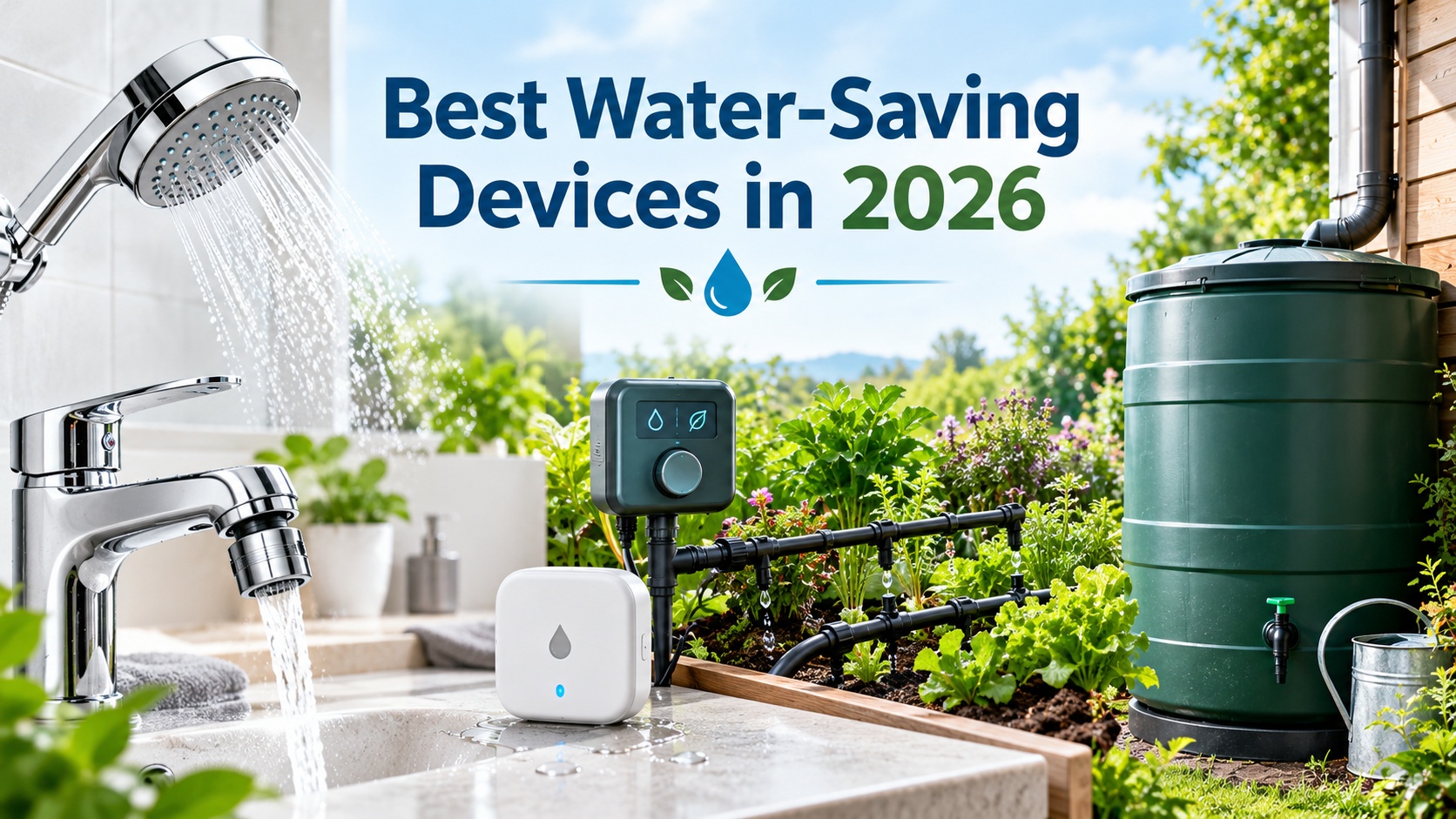
Best Water-Saving Devices in 2026: Smart Solutions to Reduce Water Consumption
Why Choose Water-Saving Devices in 2026?
Water-saving devices are becoming increasingly important for households that want to reduce water consumption, manage utility bills, and use natural resources more responsibly. From low-flow showerheads and faucet aerators to smart irrigation controllers and automatic leak detectors, modern water-saving products help reduce unnecessary water use without making everyday activities less convenient.
In 2026, homeowners and renters can choose from a wide range of affordable accessories and smart technologies. Some products reduce the amount of water flowing through a tap or shower, while others detect leaks, control outdoor irrigation, or provide information about household water consumption.
The best water-saving devices depend on the size of the household, existing plumbing, local water pressure, and the activities that consume the most water. In many homes, bathrooms, kitchens, toilets, and gardens offer practical opportunities to reduce water waste.
This guide explores the best water-saving devices for homes and gardens, explaining their main features, benefits, and purchasing considerations. It also includes Amazon Germany and European marketplace search links to help consumers compare available products, specifications, and prices.
1. Water-Saving Showerheads
Water-saving showerheads are among the most practical devices for reducing household water consumption. They are designed to deliver a comfortable shower while using less water than many conventional showerheads.
Many models use flow restrictors, specially designed spray nozzles, or air-mixing technology to create a satisfying water stream with a reduced flow rate. Some products also provide several spray patterns, allowing users to switch between different levels of coverage and intensity.
One important feature to consider is the flow rate, measured in litres per minute. A showerhead with a flow rate of approximately 6 to 9 litres per minute may offer substantial savings compared with a conventional model that uses considerably more water. Actual performance depends on water pressure, shower duration, and the specific product design.
The main advantages include reduced water consumption and lower energy demand when less hot water needs to be heated. This can be especially valuable in households where several people shower every day.
When purchasing a water-saving showerhead, check the connector size, installation requirements, cleaning instructions, and compatibility with your hot-water system. Some older hydraulic instantaneous water heaters may not operate correctly at very low flow rates, so manufacturer guidance is important.
Amazon Germany: https://www.amazon.de/s?k=water+saving+showerhead
Amazon Europe: https://www.amazon.fr/s?k=water+saving+showerhead
2. Faucet Aerators and Water-Saving Tap Attachments
Faucet aerators are small attachments fitted to suitable water taps. They introduce air into the water stream or otherwise regulate the flow, helping reduce water consumption while maintaining a useful stream for washing hands, rinsing, and other everyday activities.
These accessories are usually inexpensive and relatively easy to install. Many screw directly onto compatible taps, while some require an adapter to fit a particular thread size.
Important features include the rated flow rate, connection type, material quality, and compatibility with the existing faucet. Some aerators allow different spray patterns, while others focus on delivering a consistent stream at a reduced flow.
The main benefit is that a small accessory can reduce water use at frequently used sinks without requiring a complete tap replacement. Reducing hot-water flow can also lower the energy required to heat water.
However, not every aerator is suitable for every application. Kitchen taps used for filling large pots may require a higher flow rate than bathroom taps, and some fittings are designed specifically for certain tap models.
Before purchasing, measure or identify the existing tap connection and check whether the aerator is intended for indoor drinking-water taps. Choose products made from suitable materials and follow the manufacturer’s cleaning instructions to prevent mineral deposits from affecting performance.
Amazon Germany: https://www.amazon.de/s?k=water+saving+faucet+aerator
Amazon Europe: https://www.amazon.it/s?k=water+saving+faucet+aerator
3. Water-Saving Toilet Flush Systems
Toilets can account for a significant portion of household water consumption, particularly when older cisterns use large volumes of water for every flush. Water-saving flush systems help reduce this consumption by allowing users to select an appropriate flush volume.
Common options include dual-flush mechanisms, adjustable cistern valves, and replacement flush buttons. Dual-flush systems generally provide a smaller flush for liquid waste and a larger flush when more water is required.
Useful features include separate flush controls, adjustable water-volume settings, compatibility with the cistern, and durable valve components. Some modern systems also offer improved refill control to help prevent water from continuing to run after flushing.
The main advantage is that water use can be reduced every time the toilet is used. In a household with several occupants, the cumulative savings may become significant over time.
Before buying a replacement system, identify the toilet cistern model and check the dimensions, mounting arrangement, and flush-valve compatibility. Some older toilets may require a complete internal mechanism replacement rather than a simple button upgrade.
Installation should follow the manufacturer’s instructions. After fitting a new mechanism, check that the cistern refills correctly and that the toilet does not continue leaking into the bowl.
Amazon Germany: https://www.amazon.de/s?k=dual+flush+toilet+conversion+kit
Amazon Europe: https://www.amazon.fr/s?k=dual+flush+toilet+conversion+kit
4. Smart Water Leak Detectors
Smart water leak detectors help identify unwanted water leaks before they cause extensive damage or waste large quantities of water. They are particularly useful near washing machines, dishwashers, water heaters, sinks, and other plumbing fixtures.
Basic models use a sensor that detects water on the floor and triggers an audible alarm. Smart versions may connect to a home Wi-Fi network, a compatible hub, or a smartphone application to send alerts when a leak is detected.
More advanced systems may include automatic shut-off valves that stop the water supply when a serious leak is identified. These products can offer additional protection, although they may require professional installation and compatibility checks.
Useful features include reliable sensor contacts, loud alarms, mobile notifications, battery monitoring, and support for multiple sensors throughout the home. Some systems also record events or provide information about sensor status.
The main benefits are early leak detection, reduced risk of water damage, and the possibility of limiting water loss from unnoticed leaks. They are especially useful in properties that are frequently empty during working hours or holidays.
When selecting a detector, check its connectivity requirements, battery life, notification features, and whether it requires a separate hub. If you want automatic shut-off, confirm that the valve system matches your plumbing and local installation requirements.
Amazon Germany: https://www.amazon.de/s?k=smart+water+leak+detector
Amazon Europe: https://www.amazon.es/s?k=smart+water+leak+detector
5. Smart Water Flow Monitors
Smart water flow monitors measure or estimate water movement through a plumbing system and provide information about consumption. Depending on the design, they may be installed on a main water line, connected to a compatible meter, or fitted to a particular appliance.
Some systems display real-time flow data, daily usage, and historical consumption through a mobile application. More advanced products can identify unusual patterns that may indicate a leak or an appliance using more water than expected.
Useful features include accurate flow measurement, consumption reports, leak alerts, configurable notifications, and compatibility with the home’s plumbing. Some devices also support integration with smart-home systems.
The main advantage is visibility. Instead of guessing where water is being used, household members can review consumption data and identify opportunities to improve their habits.
However, not all water monitors provide the same level of accuracy or functionality. Some require a professional plumber, while others need a specific meter type or a stable wireless connection.
Before purchasing, confirm whether the device is compatible with your water meter and pipe dimensions. Review installation requirements carefully, particularly for systems that connect directly to drinking-water pipes.
Amazon Germany: https://www.amazon.de/s?k=smart+water+flow+monitor
Amazon Europe: https://www.amazon.fr/s?k=smart+water+flow+monitor
6. Smart Irrigation Controllers
Smart irrigation controllers help manage garden watering according to a schedule and, in some systems, local weather conditions or soil moisture readings. They are useful for lawns, flower beds, vegetable gardens, and other outdoor planting areas.
Traditional irrigation timers operate according to a preset schedule. Smart controllers may offer more advanced features, including smartphone control, rain delays, weather-based adjustments, and multiple watering zones.
The main benefit is better control over when and how long the garden is watered. By avoiding irrigation during rain or unsuitable conditions, a smart controller can help prevent unnecessary water use.
Some models work with existing irrigation systems, while others are designed for garden hoses or particular valve arrangements. Compatibility should be checked before purchase.
Important features include the number of zones supported, Wi-Fi connectivity, weather integration, manual control, and the ability to adjust schedules for different plants. Soil moisture sensors can provide additional information about when watering is actually needed.
For best results, combine a suitable controller with efficient watering practices. Watering during cooler parts of the day can reduce evaporation, while targeted irrigation can deliver water more directly to plant roots.
Amazon Germany: https://www.amazon.de/s?k=smart+irrigation+controller+water+saving
Amazon Europe: https://www.amazon.it/s?k=smart+irrigation+controller+water+saving
7. Soil Moisture Sensors for Gardens
Soil moisture sensors help gardeners determine whether plants need watering. They measure moisture levels in the soil and provide readings that can help prevent unnecessary irrigation.
Basic models display moisture readings directly on a small screen or through a simple indicator. Smart versions may connect to a mobile application or work with a compatible irrigation controller to automate watering decisions.
Useful features include a clear moisture display, suitable probe length, weather resistance for outdoor use, and compatibility with the type of soil and plants being monitored.
The main advantage is that watering decisions can be based on soil conditions rather than a fixed schedule. This can be particularly helpful for container plants, vegetable gardens, flower beds, and areas with different sunlight exposure.
However, readings vary according to sensor design, soil composition, placement, and calibration. A single sensor may not represent moisture levels across an entire garden.
For more reliable results, place sensors in representative areas and follow the manufacturer’s instructions. Gardeners should also consider the specific needs of each plant, because some species prefer consistently moist soil while others need it to dry between watering sessions.
Amazon Germany: https://www.amazon.de/s?k=soil+moisture+sensor+garden
Amazon Europe: https://www.amazon.fr/s?k=soil+moisture+sensor+garden
8. Rain Sensors for Automatic Irrigation Systems
Rain sensors are designed to interrupt or delay scheduled irrigation when rainfall has already provided sufficient moisture. They are often used with automatic garden watering systems and irrigation controllers.
Depending on the design, a rain sensor may detect rainfall directly or estimate whether watering should be postponed based on accumulated precipitation. Some models connect by wire to an existing controller, while others communicate wirelessly.
Useful features include adjustable rainfall thresholds, weather-resistant construction, compatibility with the irrigation controller, and straightforward installation.
The main advantage is that the irrigation system does not continue following a fixed schedule when rain makes watering unnecessary. This can reduce water waste and help prevent overwatering in gardens.
Some advanced controllers already include online weather data, so a separate rain sensor may not be necessary. Consumers should check the features of their existing system before purchasing additional equipment.
When choosing a sensor, confirm its electrical compatibility, mounting requirements, and suitability for local outdoor conditions. Correct placement is important because the sensor must receive representative rainfall without being blocked by roofs or trees.
Amazon Germany: https://www.amazon.de/s?k=rain+sensor+automatic+irrigation
Amazon Europe: https://www.amazon.es/s?k=rain+sensor+automatic+irrigation
9. Drip Irrigation Kits
Drip irrigation kits deliver water through small tubes and emitters placed near plants. Instead of spraying a broad area, the system directs water toward the soil around plant roots.
These kits are useful for vegetable gardens, raised beds, flower borders, greenhouses, and container plants. Many include tubing, connectors, adjustable drippers, and fittings for connecting to a suitable water source.
The main advantage is targeted watering. Delivering water close to plant roots can reduce unnecessary wetting of paths and other surfaces. It may also reduce evaporation compared with some overhead watering methods, depending on the system and conditions.
Important features include tube length, the number of emitters, adjustable flow, connector compatibility, and whether the kit includes a filter or pressure regulator. Some systems are designed for small balconies, while others can cover larger garden areas.
Drip irrigation requires proper installation and occasional maintenance. Emitters can become blocked by sediment or mineral deposits, and tubing should be checked for leaks or damage.
Choose a kit that matches the garden’s size and plant layout. Using a timer or compatible irrigation controller can further improve convenience and help avoid watering for longer than necessary.
Amazon Germany: https://www.amazon.de/s?k=drip+irrigation+kit+garden
Amazon Europe: https://www.amazon.fr/s?k=drip+irrigation+kit+garden
10. Rainwater Collection Barrels
Rainwater collection barrels capture rainwater from suitable roof drainage systems for later use in gardens and other permitted outdoor applications. They can help reduce demand for treated drinking water when watering plants.
Common features include a storage tank, inlet connection, lid or mesh cover, overflow outlet, and a tap for filling watering cans. Some larger systems can connect to a garden hose or a dedicated irrigation setup.
The main benefits are convenient access to collected rainwater and the ability to make use of rainfall that would otherwise flow into the drainage system. Rainwater can be particularly useful for watering ornamental plants and gardens where local rules permit its use.
Tank capacity is an important purchasing consideration. Smaller barrels suit balconies and compact gardens, while larger tanks can store more water but require more space and a suitable base.
Consumers should check the dimensions, inlet arrangement, overflow management, UV resistance, and winter storage instructions. The barrel should be installed securely and positioned so that it can receive rainwater from an appropriate downpipe.
Collected rainwater should not be assumed to be safe for drinking or food preparation. Use it only for suitable purposes and follow local public-health guidance.
Amazon Germany: https://www.amazon.de/s?k=rainwater+collection+barrel+garden
Amazon Europe: https://www.amazon.fr/s?k=rainwater+collection+barrel+garden
11. Automatic Hose Timers
Automatic hose timers control when a garden hose or compatible irrigation system starts and stops. They are useful for people who want to water plants on a regular schedule without manually opening and closing the tap each time.
Many models connect between an outdoor tap and a garden hose. Basic versions provide adjustable start times and watering durations, while more advanced models may offer multiple programmes, rain delays, or smartphone control.
The main advantage is precise scheduling. A timer can help prevent watering from continuing longer than intended and makes it easier to maintain a consistent garden routine.
Important features include the number of watering programmes, battery life, connector compatibility, manual override, and weather resistance. Some products support two outlets, allowing separate watering schedules for different areas.
Before purchasing, check the required tap connection and operating pressure. Make sure the timer is designed for outdoor use and follow instructions for preventing damage during freezing weather.
For better water efficiency, combine a timer with drip irrigation or a moisture sensor where appropriate. Avoid fixed schedules that continue watering when rainfall or soil conditions make it unnecessary.
Amazon Germany: https://www.amazon.de/s?k=automatic+garden+hose+timer
Amazon Europe: https://www.amazon.it/s?k=automatic+garden+hose+timer
12. Water-Efficient Washing Machine Accessories
Water-efficient washing machines are primarily selected when replacing an appliance, but some accessories and monitoring tools can help households use existing machines more efficiently.
Useful options include washing machine water-consumption monitors where compatible, leak sensors, and accessories designed to detect or prevent water leaks. For most households, correct appliance operation is just as important as additional equipment.
Modern washing machines generally adjust water use according to the selected programme, load, and sensor readings. Running appropriate full loads, selecting suitable programmes, and maintaining the machine can help avoid unnecessary water and energy use.
The main advantages of water-efficient laundry practices include reduced water consumption, lower hot-water demand where applicable, and potentially lower utility bills.
When choosing a new washing machine, compare its declared water consumption per cycle, energy efficiency, capacity, and performance under the relevant European product information requirements. A larger machine is not automatically more efficient if it is regularly operated with very small loads.
If purchasing a monitoring or leak-prevention accessory, confirm that it is compatible with your appliance and installation. Never modify water or electrical connections in ways that conflict with the manufacturer’s safety instructions.
Amazon Germany: https://www.amazon.de/s?k=washing+machine+water+leak+detector
Amazon Europe: https://www.amazon.fr/s?k=washing+machine+water+leak+detector
13. Water-Saving Kitchen Faucets
Water-saving kitchen faucets are designed to control water flow while providing practical performance for washing dishes, rinsing vegetables, and preparing food.
Some models include integrated aerators, flow restrictors, or eco settings. Others feature pull-out spray heads, multiple spray modes, or a lever designed to make flow and temperature easier to control.
One useful feature is the ability to select an appropriate flow rate for everyday tasks. A lower flow may be suitable for handwashing or rinsing, while filling large pots may require more water.
The main benefits include more controlled water use, potentially lower hot-water consumption, and improved convenience when a faucet combines efficient flow with a practical design.
When purchasing a new faucet, check the installation dimensions, number of mounting holes, connection hoses, pressure requirements, and compatibility with the sink. Some installations may require a qualified plumber.
A faucet with an eco setting can be helpful, but actual savings depend on how it is used. Avoid leaving water running unnecessarily, and choose a flow rate that meets the household’s practical needs without making routine tasks difficult.
Amazon Germany: https://www.amazon.de/s?k=water+saving+kitchen+faucet
Amazon Europe: https://www.amazon.fr/s?k=water+saving+kitchen+faucet
14. Thermostatic Shower Mixers
Thermostatic shower mixers regulate the mixture of hot and cold water to maintain a more stable shower temperature. Although they are not designed solely to reduce water consumption, they can help reduce the time spent adjusting the temperature before showering.
Many models feature temperature controls, safety stops, and flow controls. Some allow users to reduce the flow while keeping the temperature setting consistent, making it easier to pause the water during washing.
The main benefits include improved comfort, reduced temperature fluctuations, and the potential to avoid wasting water while searching for a suitable temperature.
Thermostatic mixers are available in exposed and concealed designs, but not every model fits every plumbing installation. Water pressure, pipe connections, hot-water systems, and installation space all matter.
Before purchasing, confirm the required connection dimensions and minimum operating pressures. Some older water heaters may have specific compatibility limitations, so check the heater and mixer manufacturers’ guidance.
A thermostatic mixer can complement other water-saving devices, particularly an efficient showerhead. Its overall impact depends on shower duration, selected flow rate, and household habits.
Amazon Germany: https://www.amazon.de/s?k=thermostatic+shower+mixer+water+saving
Amazon Europe: https://www.amazon.it/s?k=thermostatic+shower+mixer+water+saving
15. Water Leak Alarm Systems with Automatic Shut-Off Valves
Water leak alarm systems with automatic shut-off valves provide a more advanced approach to preventing water waste and property damage. These systems combine sensors with a valve that can stop the water supply when a leak is detected.
They may be installed near washing machines, dishwashers, water heaters, or the main water supply, depending on the system design. Some models operate locally, while others provide smartphone notifications or smart-home integration.
Useful features include multiple sensor support, a reliable valve mechanism, manual override, backup power options, and clear alerts about system status.
The main benefit is the ability to respond to a leak even when nobody is present to turn off the water manually. This can be particularly valuable in homes that are frequently empty or in properties where a leak could cause significant damage.
However, automatic shut-off systems are more complex than simple water alarms. They may require professional installation and must be compatible with the pipe diameter, water pressure, and plumbing arrangement.
Before purchasing, review the installation requirements, valve specifications, sensor coverage, and maintenance needs. For critical plumbing installations, professional advice can help ensure that the system is fitted safely and operates as intended.
Amazon Germany: https://www.amazon.de/s?k=automatic+water+shut+off+valve+leak+detector
Amazon Europe: https://www.amazon.fr/s?k=automatic+water+shut+off+valve+leak+detector
How to Choose the Best Water-Saving Devices in 2026
Choosing the best water-saving devices begins with identifying where water is used most often. In many homes, showers, toilets, kitchen taps, laundry, and outdoor irrigation provide the clearest opportunities for improvement.
Check the actual flow rate. For showerheads and faucet attachments, look for a stated flow rate in litres per minute. Marketing terms such as eco or water-saving do not guarantee a particular level of efficiency.
Confirm compatibility. Showerheads, faucet aerators, toilet flush systems, irrigation timers, and leak detectors must fit the existing equipment. Check connector sizes, pressure requirements, pipe dimensions, and any necessary adapters before ordering.
Compare installation costs. Some accessories can be installed without specialist help, while smart monitors, automatic shut-off valves, and certain plumbing fixtures may require a qualified professional. Consider the total cost rather than the product price alone.
Look at maintenance requirements. Sensors may need new batteries, filters may require cleaning, and irrigation emitters can become blocked. A device that is easy to maintain is more likely to continue working effectively over time.
Consider smart features carefully. Wi-Fi monitoring and mobile alerts can make water use easier to track, but they may require a hub, subscription, stable internet connection, or specific smart-home platform. Choose features that solve a real problem rather than paying for unnecessary complexity.
Calculate potential savings realistically. Water savings depend on current consumption, household habits, local water charges, energy costs for heating water, and the device’s actual performance. Avoid assuming that every product will produce the same results in every home.
Review credible product information. Look for clear specifications, installation instructions, safety information, and verified environmental claims. In Germany and across the European Union, relevant environmental labels and official consumer guidance may help buyers assess certain products.
Are Water-Saving Devices Worth Buying?
Water-saving devices can be worthwhile when they address a genuine source of unnecessary consumption. Simple products such as faucet aerators, efficient showerheads, and suitable dual-flush systems may offer practical benefits without requiring major changes to a home.
Smart leak detectors and automatic shut-off systems serve a different purpose. They can help identify problems early and reduce the amount of water lost through leaks, while smart irrigation controllers and soil moisture sensors can help manage outdoor watering more carefully.
The financial return varies according to the device’s purchase price, installation costs, household usage, and local water and energy rates. Products that reduce hot-water consumption may provide additional savings because less energy is needed for heating.
Before purchasing several devices at once, begin with the areas where the most water is used or where leaks are most likely to occur. Measure existing flow rates when possible, review water bills, and compare products based on their actual specifications.
Combining efficient equipment with simple habits—such as fixing leaking taps, taking shorter showers, running full washing-machine loads, and watering gardens only when necessary—can produce a more consistent reduction in water use.
Conclusion: The Best Water-Saving Devices for a More Efficient Home
The best water-saving devices in 2026 help households manage water consumption more efficiently while maintaining everyday comfort. Water-saving showerheads, faucet aerators, dual-flush toilet systems, smart leak detectors, water flow monitors, and efficient kitchen faucets are practical options for many homes.
For gardens, smart irrigation controllers, soil moisture sensors, rain sensors, drip irrigation kits, hose timers, and rainwater collection barrels can help reduce unnecessary watering. Thermostatic shower mixers and automatic shut-off systems provide additional comfort and protection when selected for the right installation.
For consumers in Germany and across the European Union, Amazon marketplaces offer convenient starting points for comparing water-saving devices, checking specifications, and reviewing available models. Before buying, verify compatibility, installation requirements, delivery availability, and maintenance costs.
By choosing suitable devices, monitoring consumption, repairing leaks promptly, and using water only when necessary, households can reduce avoidable waste and work toward a more water-efficient home.


