
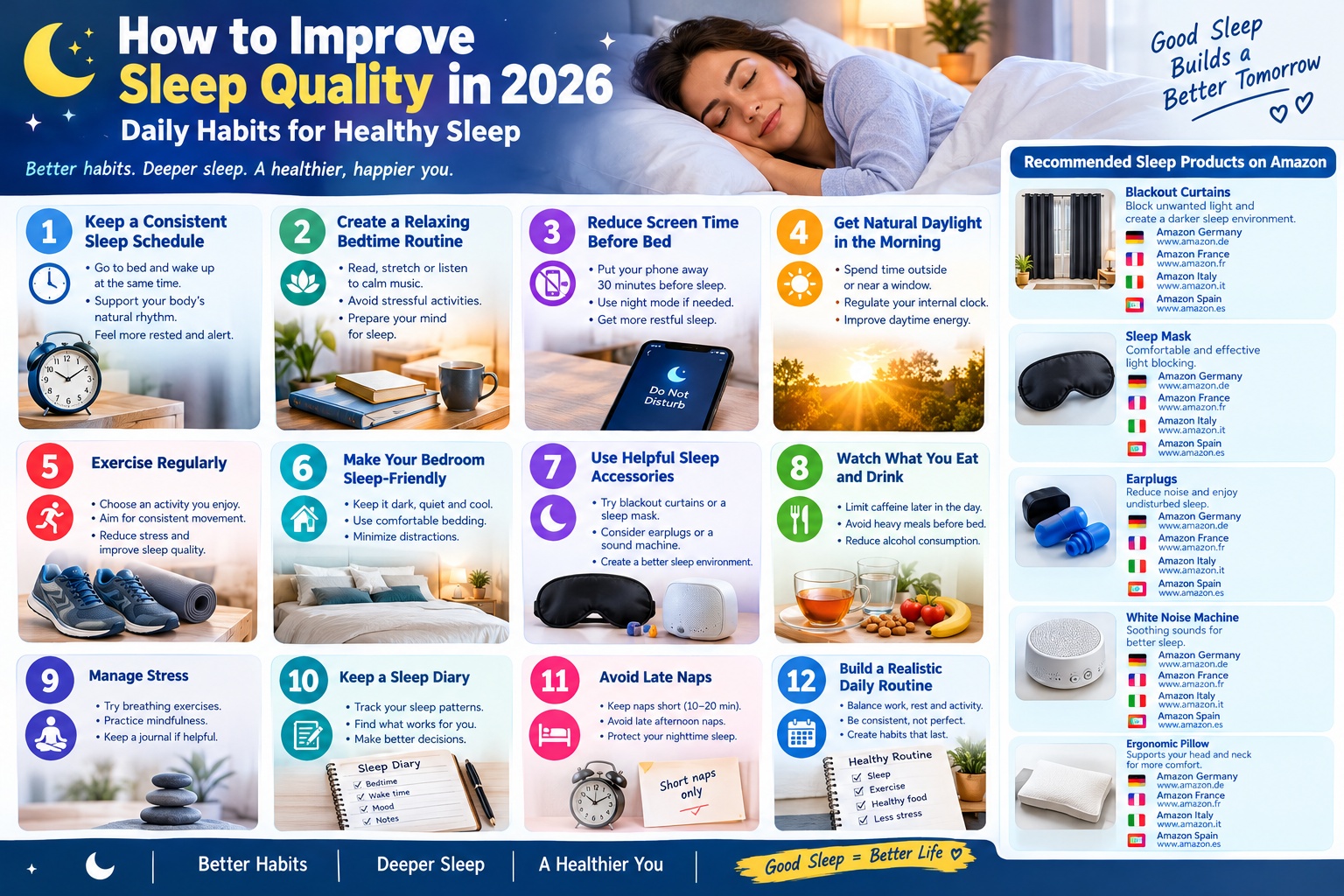
Why Sleep Quality Matters in 2026
1. Maintain a Consistent Sleep Schedule
One of the most effective healthy sleep habits is going to bed and waking up at approximately the same time every day. A regular schedule helps your body’s internal clock establish a predictable rhythm, making it easier to recognize when it is time to sleep and when it is time to wake up.
Irregular sleeping hours can disrupt this rhythm. For example, staying up very late on weekends and waking up much later than usual may make it harder to fall asleep at your normal bedtime on Sunday night.
To build a consistent sleep schedule, choose a realistic wake-up time that fits your work, study, and family responsibilities. Then plan your bedtime to allow enough time for rest. Try to follow this schedule on weekends as well as weekdays.
If your current routine is very irregular, gradually adjust your bedtime and waking time rather than trying to change everything overnight.
Key features of this habit: Consistent bedtimes, regular wake-up times, predictable daily routines, and sufficient time for sleep.
Main benefits: A more stable sleep rhythm, easier bedtime preparation, and improved consistency in your daily energy levels.
2. Create a Relaxing Bedtime Routine
A calming bedtime routine helps separate the busy activities of the day from the process of preparing for sleep. Instead of working, scrolling through social media, or watching exciting content until the moment you go to bed, give yourself time to slow down.
Your routine could include reading a printed book, taking a warm shower, listening to quiet music, stretching gently, or practicing slow breathing. Choose activities that make you feel comfortable and relaxed rather than adding more tasks to your schedule.
For example, you could dim the lights, prepare your bedroom, put your phone away, and spend 15 to 30 minutes reading or listening to calming audio.
Consistency matters more than complexity. You do not need an elaborate routine or expensive sleep products to benefit from a regular period of relaxation before bedtime.
Key features of a healthy bedtime routine: Low stimulation, gentle activities, reduced lighting, and a predictable sequence of relaxing actions.
Main benefits: Less bedtime stress, an easier transition from daily activities to rest, and a routine that encourages healthy sleep habits.
3. Reduce Screen Time Before Bed
Phones, tablets, computers, and televisions can interfere with a relaxing bedtime routine. Engaging content, notifications, work messages, and bright screens can keep your attention active when you want to prepare for sleep.
Try putting electronic devices away at least 30 minutes before bedtime. If possible, create a longer screen-free period, especially if you regularly struggle to fall asleep.
You can make this habit easier by charging your phone outside the bedroom, enabling Do Not Disturb mode, disabling unnecessary notifications, or using a traditional alarm clock instead of keeping your phone beside your pillow.
If you must use a screen in the evening, reduce its brightness and choose calmer content. Night mode or blue-light reduction may improve visual comfort, but it should not be considered a complete solution to sleep difficulties.
Key features: Reduced evening screen exposure, fewer notifications, lower brightness, and a more peaceful bedroom.
Main benefits: Less bedtime distraction, fewer interruptions from devices, and more time for relaxing activities.
4. Get Natural Daylight During the Morning
Exposure to natural light during the day, particularly in the morning, helps regulate your body’s internal clock. It can support daytime alertness and help reinforce the distinction between daytime activity and nighttime rest.
Try opening your curtains after waking up, eating breakfast near a bright window, or taking a short outdoor walk in the morning. Even a simple walk before work or study can help establish a more consistent daily routine.
If you work indoors, make an effort to spend some time outside during daylight hours. Your exact light exposure needs depend on factors such as season, location, weather, and individual circumstances.
In the evening, gradually reduce bright lighting to create a more relaxing environment.
Key features: Morning daylight, regular outdoor activity, and a clear distinction between daytime brightness and evening dimness.
Main benefits: Support for the body’s natural sleep-wake rhythm, better daytime alertness, and a more consistent daily routine.
5. Exercise Regularly to Support Better Sleep
Regular physical activity can support sleep quality and overall health. Activities such as walking, cycling, swimming, strength training, and gentle yoga can help you build a healthier daily routine.
You do not need to begin with intense workouts. If you spend much of the day sitting, start with a short walk and gradually increase your activity as your fitness improves.
Try to schedule exercise at a time that suits your lifestyle. Many people find morning or afternoon exercise convenient, while others prefer early-evening activity. If vigorous exercise close to bedtime leaves you feeling alert, move it earlier in the day.
The important point is to find an activity you enjoy and can maintain consistently.
Key features: Regular movement, manageable exercise sessions, consistent activity, and a schedule that supports relaxation at night.
Main benefits: Better general fitness, improved mood, support for stress management, and potential improvements in sleep quality.
6. Make Your Bedroom Dark, Quiet, and Comfortable
Your bedroom environment can influence how easily you fall asleep and whether you remain asleep throughout the night. Excessive light, disturbing noises, uncomfortable bedding, and an unsuitable room temperature may interrupt rest.
Start with simple changes. Close curtains, turn off unnecessary lights, reduce noise where possible, and keep your bedding clean and comfortable. Many people sleep better in a slightly cool room, although the ideal temperature varies from person to person.
If outside light enters your bedroom, consider blackout curtains or a comfortable sleep mask. If noise is a problem, suitable earplugs or a sound machine may help. Choose products based on the specific issue you are trying to solve rather than buying every available sleep accessory.
A comfortable pillow and mattress are also important. Your pillow should support your head and neck without forcing your neck into an uncomfortable position.
Key features: Darkness, reduced noise, comfortable bedding, suitable temperature, and minimal distractions.
Main benefits: A more sleep-friendly environment, fewer avoidable disturbances, and improved comfort throughout the night.
7. Use Blackout Curtains to Reduce Light
Blackout curtains are useful for bedrooms affected by streetlights, early sunrise, outdoor security lighting, or other sources of unwanted brightness.
Many blackout curtains use dense or specially layered fabrics designed to reduce the amount of light entering through windows. Some also provide thermal insulation, which may help moderate temperature changes near the window.
When choosing blackout curtains, measure your window carefully and check the product’s dimensions, fabric, installation method, and light-blocking claims. Curtains that are too narrow or too short may allow light to enter around the edges.
Blackout curtains are particularly useful for people who work night shifts, sleep during daylight hours, or prefer a darker bedroom.
Key features: Light-blocking fabric, different sizes and designs, and optional thermal insulation.
Main benefits: Less unwanted light, a darker sleeping environment, and greater control over bedroom conditions.
Amazon Germany: Blackout Curtains on Amazon Germany
Amazon France: Blackout Curtains on Amazon France
Amazon Italy: Blackout Curtains on Amazon Italy
Amazon Spain: Blackout Curtains on Amazon Spain
8. Choose a Comfortable Sleep Mask
A sleep mask is a simple, portable way to reduce light exposure when curtains cannot completely darken your room. It can be useful at home, during travel, in shared accommodation, or when sleeping during daylight hours.
Sleep masks are available in several styles, including lightweight fabric masks, silk masks, contoured masks with space around the eyes, and adjustable designs.
When selecting a sleep mask, consider comfort, breathability, strap adjustment, fabric softness, and how well it blocks light around the nose. Side sleepers may prefer a lightweight design that does not create uncomfortable pressure against the face.
A sleep mask is optional, and it will not solve sleep problems caused by stress, irregular schedules, or medical conditions. Its main purpose is to address unwanted light.
Key features: Light-blocking material, adjustable straps, comfortable fabric, and designs for different sleeping positions.
Main benefits: Reduced light exposure, portability, and a more convenient way to create darkness when travelling or sleeping during the day.
Amazon Germany: Sleep Masks on Amazon Germany
Amazon France: Sleep Masks on Amazon France
Amazon Italy: Sleep Masks on Amazon Italy
Amazon Netherlands: Sleep Masks on Amazon Netherlands
9. Reduce Noise with Earplugs or a Sound Machine
Unexpected noises can make it difficult to fall asleep or cause repeated awakenings during the night. Traffic, neighbors, household sounds, and other environmental disturbances may be especially frustrating for light sleepers.
Earplugs can help reduce some external noise when they fit correctly and are used according to the manufacturer’s instructions. Reusable silicone earplugs and disposable foam earplugs are common options, but comfort and noise reduction vary.
Another option is a sound machine that plays steady background sounds, such as gentle rainfall, a fan-like hum, or white noise. Some devices offer multiple sound settings, timers, adjustable volume, and night lights.
Choose a comfortable volume and place the machine away from your head. Background sound does not need to be loud to be useful, and people who find it distracting may prefer a quieter bedroom instead.
Key features: Noise reduction, different earplug materials, adjustable sound settings, and optional timers.
Main benefits: Reduced disturbance from some environmental sounds and a more consistent sound environment when outside noise is unavoidable.
Amazon Germany: Sleeping Earplugs on Amazon Germany
Amazon France: Sleeping Earplugs on Amazon France
Amazon Italy: Sleeping Earplugs on Amazon Italy
Amazon Germany: White Noise Machines on Amazon Germany
Amazon Spain: White Noise Machines on Amazon Spain
10. Select a Pillow That Supports Your Sleeping Position
A comfortable pillow helps support your head and neck while you sleep. The best option depends on your sleeping position, shoulder width, mattress firmness, and personal comfort preferences.
Side sleepers often need a higher pillow to fill the space between the shoulder and head. Back sleepers may prefer a medium-height pillow that supports the neck without pushing the head too far forward. Stomach sleepers may find a thinner pillow more comfortable.
Pillows are available in memory foam, latex, down, feather, polyester fibre, and other materials. Some models have adjustable filling, allowing users to change the pillow’s height and firmness.
Before purchasing, check the dimensions, material, care instructions, and return policy. A more expensive pillow is not automatically better, and comfort is highly individual.
Key features: Different heights and firmness levels, supportive materials, adjustable filling, and washable covers.
Main benefits: Improved sleeping comfort, better support for the head and neck, and a more personalized sleep setup.
Amazon Germany: Ergonomic Sleeping Pillows on Amazon Germany
Amazon France: Ergonomic Sleeping Pillows on Amazon France
Amazon Italy: Ergonomic Sleeping Pillows on Amazon Italy
Amazon Spain: Ergonomic Sleeping Pillows on Amazon Spain
11. Avoid Caffeine Late in the Day
Caffeine is a stimulant found in coffee, tea, energy drinks, cola, and some other products. It can increase alertness and make it harder for some people to fall asleep, especially when consumed later in the day.
Sensitivity varies considerably. Some people can drink coffee in the afternoon without noticing a problem, while others experience disrupted sleep after consuming smaller amounts.
If you have difficulty sleeping, try reducing caffeine later in the day and observe whether your sleep improves. You may need to stop consuming it several hours before bedtime, depending on your sensitivity.
Remember that some teas and soft drinks also contain caffeine. Check labels when choosing beverages in the afternoon or evening.
Key features of this habit: Awareness of caffeine sources, earlier consumption, and adjustments based on individual sensitivity.
Main benefits: Less stimulant exposure near bedtime and a better chance of feeling naturally ready for sleep.
12. Avoid Heavy Meals and Alcohol Close to Bedtime
Large meals immediately before bed may cause discomfort or worsen acid reflux in some people. Alcohol may make a person feel sleepy initially, but it can disrupt sleep later in the night and reduce its restorative quality.
Try to finish large evening meals a few hours before bedtime when practical. If you need a snack, choose something light that does not cause discomfort.
Avoid relying on alcohol as a way to fall asleep. Although it can cause drowsiness, it is not a reliable sleep aid and may contribute to nighttime awakenings.
People who experience frequent heartburn may also benefit from discussing their symptoms with a healthcare professional.
Key features: Earlier evening meals, lighter snacks when needed, and avoiding alcohol as a sleep aid.
Main benefits: Greater comfort at bedtime and fewer potential disruptions associated with late heavy meals or alcohol.
13. Manage Stress with Relaxation Techniques
Stress and racing thoughts can make it difficult to relax when you go to bed. Work deadlines, financial worries, family responsibilities, and everyday pressures may keep your mind active long after the day has ended.
Relaxation techniques can help create a calmer transition to sleep. You might try slow breathing, gentle stretching, mindfulness, quiet reading, or writing down the next day’s tasks.
A simple technique is to spend five minutes breathing slowly and comfortably while allowing your shoulders and jaw to relax. If a particular worry keeps returning, write it in a notebook and identify one practical action you can take the following day.
These techniques do not eliminate every source of stress, and they may not resolve persistent insomnia on their own. However, they can become useful parts of a healthy evening routine.
Key features: Slow breathing, mindfulness, journaling, gentle stretching, and planned relaxation.
Main benefits: A calmer bedtime routine, improved stress awareness, and a practical way to reduce evening stimulation.
14. Limit Long or Late Afternoon Naps
Short naps can be refreshing for some people, but long or late naps may reduce the natural sleep pressure that builds throughout the day.
If you struggle to fall asleep at night, consider limiting naps or taking them earlier in the afternoon. A brief nap of around 10 to 20 minutes may help you feel more alert without leaving you feeling excessively groggy, although individual responses vary.
If you regularly need long naps because you feel exhausted despite spending enough time in bed, consider whether your nighttime sleep is adequate or whether another issue may be affecting your energy.
People who work shifts or have specific medical needs may require different sleep schedules, so nap recommendations should fit their circumstances.
Key features: Shorter naps, earlier timing, and monitoring how naps affect nighttime sleep.
Main benefits: Better preservation of nighttime sleepiness and a more consistent daily sleep routine.
15. Keep a Sleep Diary to Identify Patterns
A sleep diary can help you understand which daily habits are associated with better or worse sleep. You do not need a smartwatch or a paid application to start recording useful information.
Each morning, note approximately when you went to bed, how long it seemed to take to fall asleep, how often you woke up, and when you got up. You can also record caffeine consumption, exercise, naps, evening screen time, and how rested you feel.
After two or three weeks, look for recurring patterns rather than judging individual nights. You may notice that late coffee, inconsistent bedtimes, or noisy surroundings coincide with poorer sleep.
Avoid becoming overly focused on exact numbers. A sleep diary is intended to support useful decisions, not to create anxiety about achieving perfect sleep.
Key features: Simple daily records, bedtime and waking times, lifestyle observations, and periodic reviews.
Main benefits: Greater awareness of sleep patterns, easier identification of possible triggers, and more informed conversations with healthcare professionals when needed.
16. Use Sleep Tracking Apps Carefully
Sleep tracking apps and wearable devices can help you observe general sleep patterns, bedtime consistency, and estimated sleep duration. Some also provide reminders, alarms, and weekly summaries.
However, consumer sleep trackers do not measure every aspect of sleep perfectly. Their estimates of sleep stages may differ from clinical measurements, and different devices can produce different results on the same night.
If you use a sleep tracker, focus on long-term patterns and how you feel during the day instead of trying to achieve a perfect sleep score every night. You can also use a simple diary if you prefer not to share health-related data with an app.
Review privacy settings and permissions before installing sleep applications or connecting health devices to other services.
Key features: Sleep logs, estimated duration, routine reminders, historical charts, and optional wearable integration.
Main benefits: Easier observation of habits, convenient records, and additional context for making practical lifestyle changes.
17. Build a Simple Daily Routine for Better Sleep
A realistic routine is often easier to maintain than a long list of rules. The following example shows how you might organize healthy sleep habits throughout a typical day.
Morning: Wake up at a consistent time, open the curtains, get some daylight, and eat breakfast if it suits your routine.
During the day: Stay physically active, take regular movement breaks, and avoid consuming caffeine late in the day if it affects your sleep.
Afternoon: Continue normal activities, get daylight when possible, and avoid long or late naps if they make it harder to sleep at night.
Evening: Finish large meals well before bedtime when practical, reduce bright lighting, and gradually move away from stimulating work or entertainment.
Thirty to sixty minutes before bed: Put away unnecessary screens, prepare your bedroom, and choose a calming activity such as reading or gentle stretching.
At bedtime: Go to bed when you feel sleepy and allow enough time for rest. If you cannot sleep and become frustrated, get up briefly and do something quiet in dim lighting, then return to bed when you feel sleepy.
The most important goal is consistency, not perfection. Adapt this routine to your work schedule, family responsibilities, and personal sleep needs.
18. How Much Do Sleep Improvement Products Cost?
Sleep improvement products are available at a wide range of prices, so you can begin with a small budget and purchase only what addresses a genuine problem.
A basic sleep mask or simple earplugs may be relatively inexpensive. Blackout curtains, supportive pillows, and white noise machines typically vary in price according to their materials, dimensions, features, and brand.
More expensive products may include smart lighting, connected sound machines, advanced bedding, or temperature-control accessories. These are optional and are not necessary for everyone.
Before buying, identify what is disrupting your sleep. If morning light wakes you too early, blackout curtains may be useful. If traffic noise is the main issue, earplugs or a sound machine may be more relevant. If you wake with an uncomfortable neck, reassessing your pillow may be a better starting point.
Compare product dimensions, material quality, care instructions, customer feedback, delivery charges, and return policies. Prices and stock levels change frequently, and Amazon marketplace listings may vary between Germany and other European countries.
19. Common Sleep Mistakes to Avoid
Even people who understand the importance of sleep can develop habits that make restful nights more difficult.
One common mistake is maintaining a different sleep schedule every day. Large changes in bedtime and waking time may make it harder to establish a consistent rhythm.
Another mistake is using the bed as a place for work, stressful conversations, and extended screen time. When possible, keep your bedroom associated with sleep and relaxation.
Consuming caffeine too late, drinking alcohol to become sleepy, eating heavy meals immediately before bed, and exercising vigorously at a time that leaves you alert can also interfere with rest.
Some people become overly focused on sleep tracking and worry about every change in their sleep score. This can add unnecessary stress to bedtime. Use tracking tools as a source of general information rather than a measure of personal success.
Finally, do not assume that every sleep problem can be solved by changing your habits. Persistent difficulties may have medical, psychological, environmental, or work-related causes that require a different approach.
20. When to Seek Professional Help for Sleep Problems
Healthy sleep habits can improve many everyday sleep difficulties, but they do not resolve every sleep disorder.
Consider speaking with a qualified healthcare professional if you regularly struggle to fall asleep, frequently wake during the night, wake too early, or feel exhausted despite allowing enough time for sleep.
Persistent loud snoring, gasping during sleep, witnessed breathing interruptions, or significant daytime sleepiness may indicate a condition that needs medical assessment. Avoid relying on consumer sleep trackers or accessories to diagnose these symptoms.
A healthcare professional can help identify possible causes and recommend appropriate evaluation or treatment. For persistent insomnia, cognitive behavioural therapy for insomnia, commonly known as CBT-I, is an established treatment that may be recommended depending on your circumstances.
Seeking help is especially important when poor sleep affects your ability to work, study, drive safely, or manage daily responsibilities.
Frequently Asked Questions About Improving Sleep Quality
What Is the Best Daily Habit for Better Sleep?
Maintaining a consistent bedtime and wake-up time is one of the most useful habits to start with. Regular daylight exposure, physical activity, and a relaxing evening routine can also support healthier sleep.
How Many Hours of Sleep Do Adults Need?
Most adults need at least seven hours of sleep per night, although individual requirements vary. Sleep quality, regularity, and how you feel during the day are also important.
Do Blackout Curtains Really Help Improve Sleep?
Blackout curtains can be useful when unwanted light enters the bedroom. They are particularly helpful for people affected by streetlights, early sunrise, or daytime sleeping, but they cannot solve every cause of poor sleep.
Is It Better to Sleep in a Cold or Warm Room?
Many people find a slightly cool bedroom comfortable for sleep, but the ideal temperature depends on individual preference, bedding, clothing, and the surrounding climate. Aim for a comfortable environment rather than following one exact temperature.
Should I Stop Using My Phone Before Bed?
Reducing phone use before bedtime can help limit stimulation, notifications, and bright light. Try putting your phone away at least 30 minutes before sleep and extending that period if it helps you relax.
Can Exercise Improve Sleep Quality?
Regular physical activity can support sleep and overall health. Choose an exercise schedule you can maintain, and move vigorous workouts earlier if exercising close to bedtime makes you feel more alert.
Are Sleep Tracking Apps Necessary?
No. Sleep tracking apps are optional tools that can help you observe patterns, but a simple sleep diary and consistent daily habits may be sufficient for many people.
What Should I Do If I Cannot Sleep at Night?
Avoid forcing yourself to sleep or repeatedly checking the clock. If you remain awake and become frustrated, get up briefly, keep the lights dim, and do something quiet until you feel sleepy. If the problem persists, seek professional advice.
Conclusion: Improve Sleep Quality with Small, Consistent Daily Habits
Learning how to improve sleep quality in 2026 begins with practical habits that support your body’s natural sleep-wake rhythm. Maintaining a regular schedule, getting daylight during the day, exercising regularly, reducing evening screen time, managing stress, and creating a comfortable bedroom can all contribute to healthier sleep.
Useful products such as blackout curtains, sleep masks, earplugs, sound machines, and supportive pillows may help when light, noise, or discomfort is preventing you from resting well. However, these accessories are optional, and the most valuable improvements often begin with free changes to your daily routine.
Start with one or two habits that address your biggest sleep challenges, follow them consistently, and observe how you feel over several weeks. Avoid chasing perfect sleep scores or expecting every night to be identical.
If sleep difficulties continue despite healthy habits, or if you experience symptoms such as persistent daytime exhaustion, loud snoring, or interrupted breathing during sleep, consult a qualified healthcare professional.
By combining realistic daily routines with a comfortable sleeping environment and appropriate support when needed, you can build a sustainable foundation for better sleep, improved daytime energy, and long-term well-being.


