
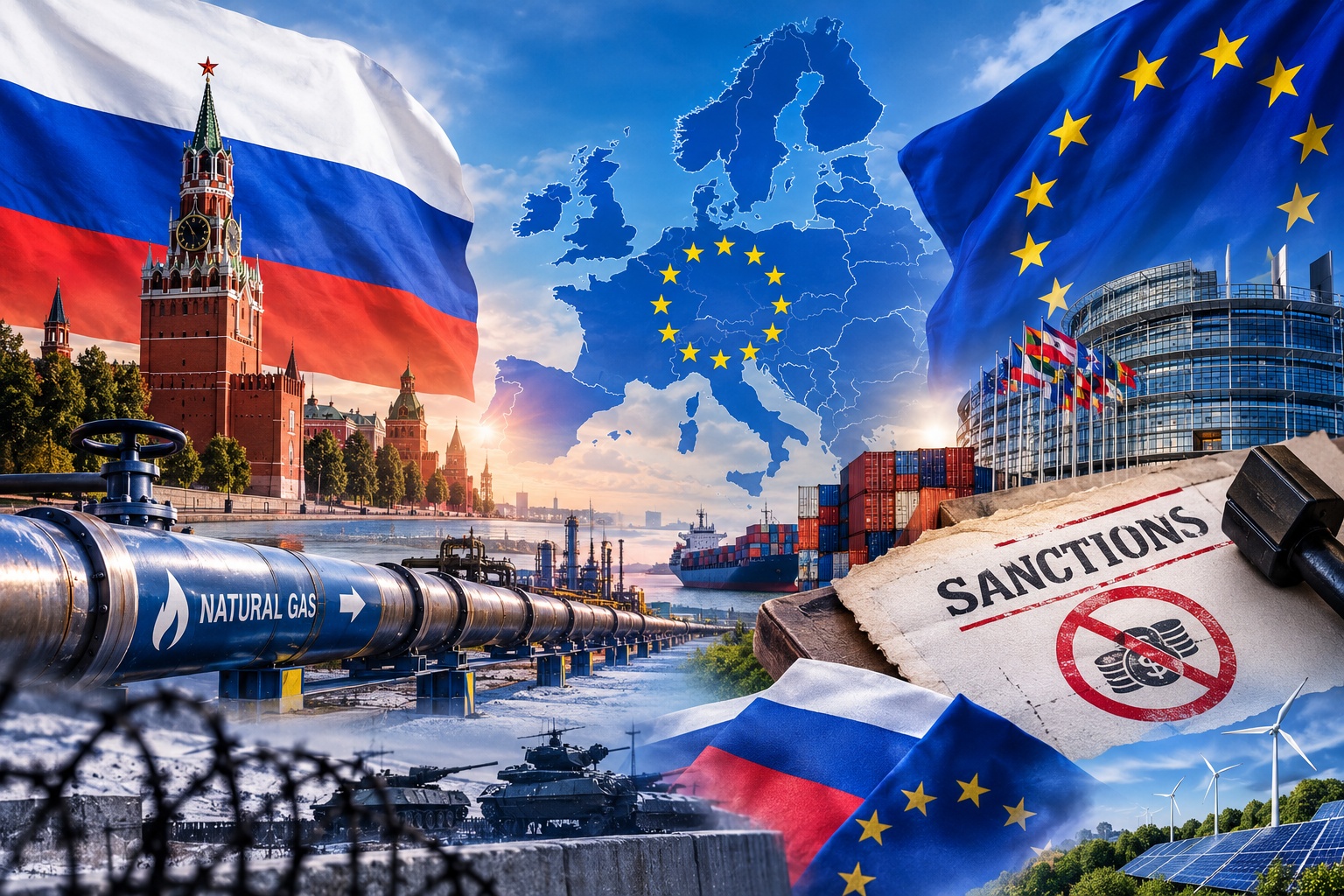
Russia-Europe Relations in 2026: Sanctions, Energy, Security, and the Future of Diplomacy
Introduction
Russia-Europe relations are among the most important geopolitical relationships shaping the European continent. For decades, Russia and European countries maintained extensive connections through energy supplies, international trade, industrial cooperation, diplomacy, and cultural exchanges. However, disagreements over European security, Russia’s war against Ukraine, economic sanctions, and competing strategic interests have fundamentally changed the relationship.
In 2026, relations remain tense, with European governments continuing to support Ukraine, strengthen their security arrangements, and reduce certain economic dependencies on Russia. At the same time, questions surrounding energy security, trade restrictions, diplomatic negotiations, and the future of European stability remain central to the debate. Understanding these developments helps explain their consequences for European economies, international markets, and global political relations.
Source: European Council — EU Sanctions Against Russia
The Historical Background of Russia-Europe Relations
Russia and Europe have a long history of political, economic, cultural, and security connections. Their relationship has evolved through periods of cooperation, rivalry, and confrontation. During the Cold War, the Soviet Union and Western European countries belonged to opposing political and military blocs, although diplomatic negotiations and economic contacts continued in various forms.
After the dissolution of the Soviet Union in 1991, relations between Russia and many European countries entered a new phase. Trade expanded, European companies invested in Russian markets, and energy cooperation became an important part of the relationship. Several European governments viewed economic interdependence as a way to encourage stability and maintain communication with Moscow.
However, disagreements over NATO enlargement, regional influence, political developments in neighboring countries, and Russia’s actions in Ukraine gradually weakened trust. Russia’s annexation of Crimea in 2014 marked a major turning point, while the full-scale invasion of Ukraine in February 2022 produced a much more substantial deterioration in relations.
Source: NATO — Relations with Russia
The Impact of the War in Ukraine
Russia’s full-scale invasion of Ukraine in February 2022 transformed relations between Moscow and European governments. The European Union condemned the invasion and introduced extensive sanctions, while member states increased political, financial, humanitarian, and military support for Ukraine.
The conflict has affected European security planning, public spending, energy policy, international trade, and diplomatic relations. European governments have also reconsidered the risks associated with dependence on Russian energy supplies and certain industrial materials. Russia, in turn, has criticized European sanctions and Western military support for Ukraine.
The war has made security a central concern for European policymakers. Governments are strengthening defense capabilities, reviewing military preparedness, and coordinating with NATO allies. The long-term direction of relations will depend heavily on developments in Ukraine, the prospects for a sustainable peace, and the willingness of the parties to address security concerns through diplomatic channels.
Sources: European Council — EU Sanctions Against Russia | NATO — Relations with Russia
European Sanctions Against Russia in 2026
Economic sanctions remain one of the European Union’s main instruments for responding to Russia’s war against Ukraine. These measures target selected individuals, companies, financial institutions, industrial activities, and trade flows. Their stated objectives include restricting access to resources and technologies that support Russia’s military capabilities and increasing economic pressure on the Russian government.
On June 25, 2026, the Council of the European Union extended its existing economic sanctions against Russia for another 12 months, until July 31, 2027. The measures cover areas including trade, finance, energy, and dual-use technology. Certain restrictions also apply to Russian oil imports, financial transactions, and services associated with sanctions evasion.
On October 12, 2026, the EU adopted a major additional set of sanctions listings targeting almost 1,600 individuals and entities connected to Russia’s military-industrial sector and the supply chains supporting its war effort. More than half of the new listings were associated with the production chain for ballistic missiles, according to EU officials.
The scope and legal consequences of sanctions vary by measure and listed party. Businesses operating internationally should consult the applicable EU regulations and official sanctions lists before entering transactions involving Russian entities, financial services, or controlled goods.
Sources: European Council — Economic Sanctions Extended Until July 2027 | European External Action Service — October 2026 Sanctions Listings
Energy Relations Between Russia and Europe
Energy has historically been one of the most significant components of Russia-Europe economic relations. Russian natural gas and oil supplied important parts of European energy demand, while European customers provided substantial revenue to Russian energy producers. This relationship supported commercial ties but also created strategic vulnerabilities associated with concentrated supply sources.
Since 2022, European countries have accelerated efforts to diversify energy supplies, expand liquefied natural gas infrastructure, improve energy efficiency, and develop renewable energy capacity. These changes have altered the structure of European energy markets and reduced the role of Russian energy in many national supply strategies.
The transition has not been identical across Europe. Countries differ in their energy infrastructure, industrial requirements, access to alternative suppliers, and ability to absorb changes in energy prices. Replacing established supply arrangements can involve investment in pipelines, terminals, electricity networks, and alternative technologies.
Energy security is therefore likely to remain an important factor in European policy toward Russia. The balance between affordability, supply reliability, environmental objectives, and geopolitical risk will continue to influence decisions by governments and businesses.
Sources: European Commission — Energy | International Energy Agency
Trade and Economic Relations
Before the deterioration of political relations, Russia and European countries maintained significant commercial ties across manufacturing, transportation, finance, agriculture, chemicals, and energy. European companies operated in the Russian market, while Russian businesses relied on European customers, technology, and financial services.
Sanctions and Russia’s countermeasures have changed these connections substantially. Some commercial activities have been prohibited, certain companies have withdrawn or reduced their operations, and businesses have faced greater compliance requirements. Restrictions on selected technologies and financial transactions have also made particular forms of cross-border commerce more difficult.
The impact differs between industries and countries. Companies that previously depended on Russian raw materials may need alternative suppliers, while businesses that sold products in Russia may have lost access to customers or encountered legal restrictions. These changes can influence production costs, investment decisions, and the competitiveness of European industries.
Any assessment of Russia-Europe trade should distinguish between legally prohibited transactions, permitted activities subject to restrictions, and commercial decisions made independently by individual companies. Current regulations should be checked before business decisions are made.
Sources: European Commission — EU Sanctions | European Council — Sanctions Against Russia
European Security and NATO-Russia Relations
Security is a defining issue in relations between Russia and European countries. NATO has described Russia as the most significant and direct threat to the security of its allies, citing the war against Ukraine and other activities that the alliance considers destabilizing.
Following Russia’s annexation of Crimea in 2014, NATO suspended practical civilian and military cooperation with Russia while retaining some channels of communication. Relations deteriorated further after the full-scale invasion of Ukraine in 2022.
European governments have responded by reviewing defense plans, strengthening deterrence, improving military readiness, and increasing coordination with allies. These measures reflect concerns about the possibility of further instability and the importance of protecting national sovereignty and territorial integrity.
Maintaining communication remains important even during periods of severe political disagreement. Military-to-military contacts and crisis-management mechanisms can help reduce misunderstandings, manage incidents, and lower the risk of unintended escalation.
Source: NATO — Official Relations with Russia
Diplomacy and the Possibility of Peace Negotiations
Diplomacy remains essential to addressing the consequences of the war in Ukraine and managing the wider Russia-Europe relationship. Negotiations may involve ceasefire arrangements, security guarantees, humanitarian issues, prisoner exchanges, territorial questions, and mechanisms for monitoring agreements.
European governments have emphasized the importance of Ukraine’s sovereignty and territorial integrity, while Russia has advanced its own demands and security arguments. These competing positions have made a comprehensive political settlement difficult to achieve.
A durable peace would require more than a temporary reduction in fighting. It would depend on the terms of any agreement, the willingness of the parties to comply, credible security arrangements, and mechanisms for resolving future disputes. European countries would also have to consider how sanctions, reconstruction, and diplomatic relations might evolve under different political circumstances.
Until an enforceable settlement is achieved, governments and businesses must account for continuing uncertainty. Diplomatic progress should be evaluated through verified agreements and their implementation rather than statements of intent alone.
Sources: European Council | United Nations — Ukraine
The Role of the European Union
The European Union plays a central role in shaping Europe’s economic and political response to Russia. Although member states retain their own national interests and foreign policy priorities, EU institutions coordinate many common trade restrictions, financial measures, diplomatic positions, and support programs for Ukraine.
The EU’s collective approach can increase the impact of economic measures by aligning policies across multiple national markets. However, maintaining agreement among member states requires negotiations because countries differ in their geographic exposure, energy systems, industrial structures, and assessments of security risks.
European institutions also monitor compliance with sanctions and provide guidance on the legal obligations of companies and individuals. These rules are particularly important for banks, exporters, shipping businesses, and firms dealing in products that may be subject to export controls.
The future of EU-Russia relations will therefore depend not only on developments on the battlefield but also on decisions made collectively by European governments and institutions.
Sources: European External Action Service | European Commission — Sanctions
The Impact on European Businesses and Consumers
Changes in Russia-Europe relations can affect businesses and consumers through energy prices, transportation costs, supply-chain adjustments, and restrictions on international transactions. Companies that depend on imported raw materials or specialized industrial components may face higher costs when established suppliers become unavailable.
Businesses may respond by diversifying suppliers, redesigning products, relocating certain operations, or investing in alternative technologies. These adjustments can improve resilience over time, but they may also require substantial investment and create short-term operational challenges.
Consumers may experience indirect effects through changes in the prices of energy-intensive goods, transport, food production, and other products. The extent of these effects depends on global market conditions, government policies, alternative supply availability, and the ability of companies to absorb additional costs.
For businesses operating across borders, accurate information and careful compliance checks are essential. Companies should rely on current official regulations rather than outdated summaries when assessing whether a particular transaction is permitted.
Sources: European Commission — Energy | European Commission — Sanctions
Climate Policy and Environmental Cooperation
Climate change remains a challenge that requires international coordination, scientific research, and investment in cleaner technologies. Russia and European countries possess significant scientific and industrial capabilities, although political tensions have limited cooperation in many areas.
Potential areas of shared interest include methane-emission monitoring, environmental research, energy efficiency, biodiversity protection, and climate-related scientific data. However, the extent of cooperation depends on diplomatic conditions, funding, regulatory restrictions, and the availability of suitable institutional partnerships.
Europe’s efforts to expand renewable energy and reduce dependence on fossil fuels also have implications for its relationship with Russia. Changes in energy infrastructure and consumption patterns can reduce exposure to supply disruptions while supporting longer-term environmental objectives.
Climate cooperation should therefore be understood within the wider context of energy security, industrial policy, and international relations rather than as a separate issue unaffected by political developments.
Sources: United Nations Framework Convention on Climate Change | International Energy Agency
The Future of Russia-Europe Relations
The future of Russia-Europe relations will depend on several interconnected factors, including developments in Ukraine, European defense policy, sanctions, energy diversification, and the prospects for diplomatic negotiations. These issues are closely linked, meaning that progress in one area may not immediately resolve disagreements in others.
A significant improvement in relations would likely require verifiable changes in the security environment, meaningful diplomatic engagement, and decisions concerning the legal and political consequences of the war. Even if negotiations advance, rebuilding economic trust could take considerable time.
European governments are also likely to continue assessing strategic dependencies and strengthening resilience in areas such as energy, critical infrastructure, cybersecurity, and defense production. Russia’s future economic relationship with European markets will be influenced by both political decisions and the practical costs of restoring commercial links.
Several outcomes remain possible, ranging from prolonged confrontation to gradual improvements in specific areas. The direction of change will depend on political decisions and events that cannot be predicted with certainty.
Sources: European Council | NATO — Relations with Russia
Conclusion
Russia-Europe relations in 2026 are shaped by the war in Ukraine, extensive sanctions, changing energy markets, security concerns, and reduced economic trust. The relationship that once included substantial energy and commercial cooperation has undergone a profound transformation, with European governments placing greater emphasis on security, diversification, and support for Ukraine.
The European Union’s continuing sanctions and NATO’s assessment of the security environment demonstrate the depth of the current political divide. At the same time, diplomacy remains necessary to manage risks, address humanitarian concerns, and explore the conditions required for a lasting peace.
Understanding Russia-Europe relations requires careful attention to official policy decisions, verified developments, economic data, and the legal framework governing international transactions. The future of the relationship will have important consequences for European stability, global energy markets, international trade, and the wider geopolitical landscape.


