
Trade Wars and Tariffs: Causes, Economic Effects, and Global Consequences
Introduction
Trade wars and tariffs have become important issues in international economics because they influence the prices consumers pay, the costs businesses face, and the relationships between trading countries. Governments may introduce tariffs to protect domestic industries, respond to unfair trade practices, raise public revenue, or pursue strategic economic objectives. However, when trading partners respond with additional restrictions, a dispute can escalate into a trade war that disrupts supply chains and creates uncertainty for businesses and investors. Understanding these measures is essential for explaining how government trade policies affect national economies and global markets.
Official source: https://www.wto.org/english/blogs_e/ce_ralph_ossa_e/blog_ro_11apr25_e.htm
What Is a Trade War?
A trade war occurs when countries impose or increase trade barriers against one another, often in response to measures introduced by their trading partners. These actions may include higher tariffs, import restrictions, or other trade measures. One government may claim that it is protecting domestic producers or responding to unfair competition, while the affected country may consider the action discriminatory or economically damaging. If both sides continue escalating their restrictions, businesses can lose access to markets, imported inputs can become more expensive, and international trade relationships may deteriorate. Not every trade dispute becomes a trade war, but prolonged retaliation can make economic consequences more severe.
Official source: https://www.wto.org/english/tratop_e/dispu_e/dispu_e.htm
What Are Tariffs?
Tariffs are customs duties imposed on imported goods. They increase the cost of bringing certain products into a country and can give domestic producers a price advantage over competing imports. Governments may also use tariffs to generate revenue or pursue specific trade-policy objectives. The economic effect depends on the tariff rate, the product concerned, the availability of alternative suppliers, and the extent to which importers, foreign exporters, businesses, and consumers absorb the additional cost. Tariffs are therefore not simply a charge on foreign companies; their costs can spread throughout the domestic economy.
Official source: https://www.wto.org/english/tratop_e/tariffs_e/tariffs_e.htm
How Tariffs Work in Practice
Consider a product imported at a customs value of $100. If a 10% tariff applies and the full duty is passed through, the importer would owe $10 in tariff payments, bringing the cost to $110 before other expenses such as transport, insurance, handling, and domestic taxes. The final retail price may rise, but the increase is not necessarily identical to the tariff rate. Importers may absorb part of the cost, suppliers may reduce their prices, and exchange-rate movements or competition may influence the result. This example illustrates the basic mechanism rather than predicting the exact price change for any particular product.
Official source: https://www.wto.org/english/blogs_e/ce_ralph_ossa_e/blog_ro_11apr25_e.htm
Why Governments Impose Tariffs
Governments introduce tariffs for several reasons. They may seek to protect industries facing intense foreign competition, support employment in politically or economically important sectors, raise customs revenue, or respond to practices they consider unfair. Tariffs may also form part of negotiations intended to encourage another country to change its policies. In certain circumstances, trade restrictions can be connected to national security or broader strategic objectives. Nevertheless, tariffs involve trade-offs: protecting one industry can increase costs for other businesses that depend on imported materials, while higher prices may reduce consumers’ purchasing power.
Official source: https://www.wto.org/english/tratop_e/tariffs_e/tariffs_e.htm
Protecting Domestic Industries and Jobs
One argument for tariffs is that they give domestic producers time to compete with imported products. If imports become more expensive, some consumers and businesses may switch to locally produced alternatives, potentially supporting domestic output and employment. However, the outcome depends on whether local firms have the capacity, technology, skills, and resources to expand production. Protection can become costly if it reduces competitive pressure for too long or raises the price of inputs used by domestic manufacturers. A protected industry may gain while other industries lose competitiveness, meaning the overall employment effect can differ from the result seen in a single sector.
Official source: https://www.wto.org/english/blogs_e/ce_ralph_ossa_e/blog_ro_11apr25_e.htm
The Impact of Tariffs on Consumers
Consumers can be affected when tariffs increase the cost of imported products or the materials used to manufacture domestic goods. Depending on market conditions, businesses may pass some or all of these additional costs into prices. This can affect household budgets, particularly when tariffs apply to widely used products or essential production inputs. Consumers may also face fewer choices if trade barriers reduce the number of suppliers competing in the market. The actual impact varies by product, income level, availability of alternatives, and the extent to which domestic producers respond by increasing supply or adjusting prices.
Official source: https://www.wto.org/english/blogs_e/ce_ralph_ossa_e/blog_ro_11apr25_e.htm
How Trade Wars Affect Businesses
Businesses can be affected directly through tariffs on imported goods and indirectly through higher costs for components, machinery, packaging, and other inputs. Companies that export may also lose sales if trading partners impose retaliatory duties on their products. In response, firms may renegotiate contracts, change suppliers, adjust prices, delay investment, or move parts of their production to different locations. These adjustments can be expensive, especially for smaller companies with limited financing and fewer alternative suppliers. Uncertainty about future trade rules can also make long-term business planning more difficult.
Official source: https://www.imf.org/en/publications/wp/issues/2022/02/25/the-effect-of-tariffs-in-global-value-chains-513172
Trade Wars and Global Supply Chains
Modern products often rely on materials and components sourced from several countries. A vehicle, electronic device, or industrial machine may cross borders multiple times during production. When tariffs are introduced at different stages of this process, costs can accumulate throughout the supply chain. Companies may respond by sourcing materials domestically, finding alternative foreign suppliers, redesigning products, or relocating production. Diversification can reduce exposure to future disruptions, but changing suppliers may require new investment, testing, logistics arrangements, and regulatory approvals. The consequences therefore extend beyond the country or industry directly targeted by a tariff.
Official source: https://www.imf.org/en/publications/wp/issues/2022/02/25/the-effect-of-tariffs-in-global-value-chains-513172
Retaliatory Tariffs and Escalation
Retaliatory tariffs occur when a government responds to trade restrictions imposed by another country. For example, if Country A increases duties on imported machinery from Country B, Country B may introduce higher duties on selected agricultural products or manufactured goods from Country A. Such responses can put pressure on industries that depend on export markets. However, retaliation can also raise costs for domestic importers and consumers in the responding country. As restrictions expand, businesses may struggle to predict which products will be affected next, making trade negotiations and clear communication especially important.
Official source: https://www.wto.org/english/tratop_e/dispu_e/dispu_e.htm
The Effect of Trade Wars on Inflation
Tariffs can contribute to price pressures when they increase the cost of imported consumer goods or business inputs. Companies facing higher costs may raise prices, reduce profit margins, seek cheaper suppliers, or change their production methods. The effect on overall inflation depends on the scale of the measures, the products affected, domestic demand, exchange rates, and the response of businesses and policymakers. Tariffs do not automatically cause a broad or lasting rise in inflation, but extensive restrictions can make some goods more expensive and complicate efforts to maintain price stability.
Official source: https://www.imf.org/en/publications/wp/issues/2019/01/15/macroeconomic-consequences-of-tariffs-46469
Trade Wars and Economic Growth
International trade allows countries to specialize in activities where they can produce relatively efficiently and to access products that may be costly to make domestically. Trade barriers can disrupt these relationships, reduce competition, and increase the cost of intermediate goods. Some domestic industries may benefit temporarily from reduced foreign competition, but other sectors may face higher costs and weaker export opportunities. Research by the International Monetary Fund has found that tariff increases can be associated with weaker output and productivity over the medium term. The size of the impact varies across countries and depends on the type and scale of restrictions, the economic structure, and the policy response.
Official source: https://www.imf.org/en/publications/wp/issues/2019/01/15/macroeconomic-consequences-of-tariffs-46469
The Effect on Developing Countries
Developing economies can be particularly exposed to trade disruptions when they depend on a narrow range of exports, imported machinery, or internationally traded commodities. A trade war between major economies may redirect orders, change global prices, or create uncertainty for manufacturers and suppliers in third countries. Some producers may benefit when buyers seek alternative sources, but others may lose access to important markets or face more expensive imported inputs. The overall result depends on export concentration, infrastructure, financing, trade agreements, and the ability to move into new products or markets.
Official source: https://www.imf.org/en/publications/wp/issues/2023/12/22/divided-we-fall-differential-exposure-to-geopolitical-fragmentation-in-trade-542842
The United States–China Trade Tensions
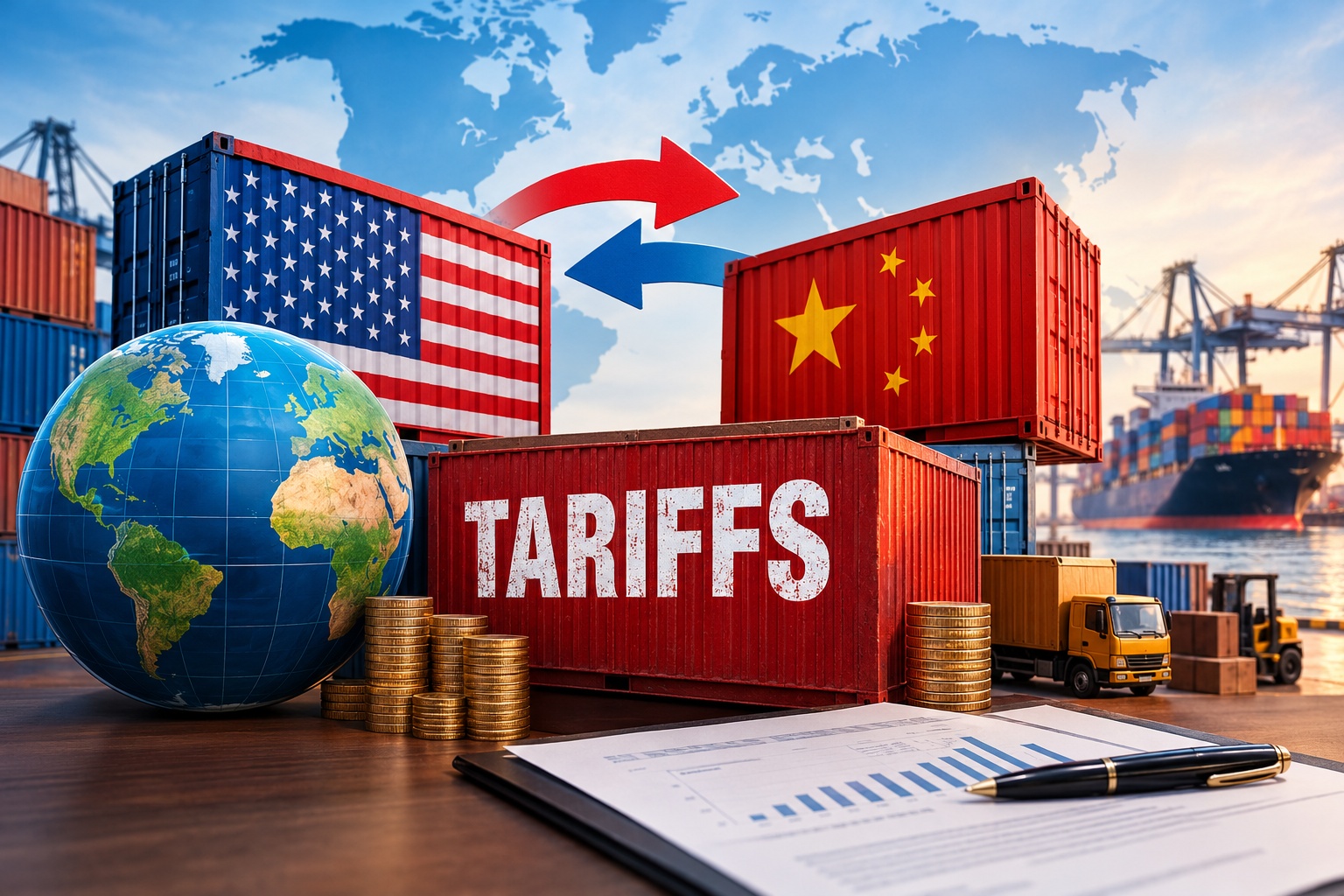
Trade tensions between the United States and China have illustrated how tariffs can become part of a wider economic and strategic dispute. Measures affecting goods traded between the two economies have influenced business decisions, sourcing strategies, and expectations about future trade policy. Companies operating across both markets may face higher costs or need to reorganize parts of their supply chains. The effects are not limited to the two countries because international production networks connect suppliers and customers across many economies. Any assessment of a specific tariff must identify the product, date, country of origin, applicable rate, and any exemptions or subsequent changes rather than assuming that all goods face identical treatment.
Official source: https://www.wto.org/english/tratop_e/dispu_e/dispu_e.htm
Trade Wars and Agricultural Products
Agriculture is often affected by trade disputes because food products and agricultural commodities are important exports for many countries. Retaliatory duties can reduce access to overseas markets for farmers, food processors, and agricultural exporters. At the same time, tariffs on imported food or agricultural inputs can affect costs for domestic consumers and producers. The final impact depends on the products covered, seasonal conditions, alternative markets, transport costs, and the ability of producers to redirect sales. Because agricultural trade is closely connected to rural employment and food supply, changes in trade policy can have effects throughout the wider food economy.
Official source: https://www.wto.org/english/tratop_e/agric_e/agric_e.htm
The Role of the World Trade Organization
The World Trade Organization (WTO) provides a framework of agreements and procedures governing trade between its members. It supports negotiations, monitors trade policies, and provides a forum for resolving disputes under the applicable rules. WTO agreements include commitments relating to tariffs, market access, and other trade measures, although the precise obligations differ by agreement and member. The organization does not automatically prevent every trade dispute, and the effectiveness of its procedures depends on the rules involved and the participation of members. Its framework is intended to make international trade more predictable and provide a rules-based process for addressing disagreements.
Official source: https://www.wto.org/english/thewto_e/whatis_e/whatis_e.htm
Trade Disputes and Negotiation
Negotiation can help countries resolve trade disputes without allowing them to escalate indefinitely. Governments may discuss tariff reductions, exemptions, market access, technical standards, or changes to specific policies. Formal dispute-settlement procedures can also help determine whether a measure is consistent with the relevant trade agreements. Negotiated solutions may reduce uncertainty for businesses and give governments a clearer basis for future trade relations. However, negotiations can be difficult when the dispute involves national security, domestic political pressure, industrial strategy, or broader geopolitical competition.
Official source: https://www.wto.org/english/tratop_e/dispu_e/dispu_e.htm
Tariffs Compared With Other Trade Barriers
Tariffs are only one form of trade restriction. Governments may also use import quotas, licensing requirements, technical regulations, product standards, or other measures that affect the ability of goods to enter a market. Some non-tariff measures serve legitimate purposes, including product safety, consumer protection, and environmental objectives, while others may restrict trade more than necessary. The economic effect depends on the design and implementation of the measure and on the relevant international obligations. Distinguishing between tariffs and other barriers is essential when evaluating the real cost of a trade policy.
Official source: https://www.wto.org/english/thewto_e/whatis_e/tif_e/agrm6_e.htm
Can Tariffs Improve a Country’s Trade Balance?
A tariff may reduce imports of the products it covers if buyers switch to domestic goods or alternative suppliers. However, the effect on a country’s overall trade balance is less predictable. Exchange-rate changes, domestic saving and investment, consumer demand, production capacity, and retaliatory measures can influence exports and imports at the same time. Businesses that rely on imported components may become less competitive in overseas markets, while trading partners may reduce purchases from the country imposing tariffs. For this reason, tariffs alone cannot guarantee a lasting improvement in the overall trade balance.
Official source: https://www.wto.org/english/blogs_e/ce_ralph_ossa_e/blog_ro_11apr25_e.htm
How Businesses Can Respond to Trade Uncertainty
Businesses can reduce exposure to trade disputes by understanding the tariff classifications and origin rules that apply to their products, monitoring official policy announcements, and reviewing their supplier contracts. Where practical, companies may diversify suppliers and export markets, assess alternative transport routes, and build contingency plans for sudden cost changes. Importers should verify applicable duties with official customs authorities or qualified trade professionals before pricing products or committing to shipments. These steps cannot eliminate trade-policy risk, but they can help companies make better-informed decisions and avoid relying on assumptions that may become outdated.
Official source: https://www.wto.org/english/tratop_e/tariffs_e/tariffs_e.htm
The Future of Global Trade
The future of international trade will depend on how governments balance economic security, domestic political priorities, business competitiveness, and international cooperation. Some countries may continue to diversify supply chains or introduce targeted restrictions in strategically important sectors. Others may seek stronger regional trade relationships and renewed negotiations to reduce uncertainty. Greater fragmentation could increase costs and reduce efficiency, while predictable rules and cooperation can help businesses plan investment and production. The long-term outcome will depend on policy decisions, technological change, geopolitical developments, and the willingness of countries to manage disagreements through negotiation.
Official source: https://www.imf.org/en/Blogs/Articles/2023/08/28/the-high-cost-of-global-economic-fragmentation
Conclusion
Trade wars and tariffs can reshape international commerce by changing prices, production costs, investment decisions, and access to export markets. Governments may use tariffs to protect selected industries, raise revenue, or respond to trade-policy concerns, but these measures can also create costs for consumers and businesses that depend on imported products and global supply chains. Retaliation can widen the effects and make economic planning more difficult. A balanced assessment must consider both the intended benefits and the wider consequences, including effects on productivity, employment, inflation, and international cooperation. Predictable trade rules, transparent policies, and effective negotiation remain important tools for reducing unnecessary disruption to the global economy.


